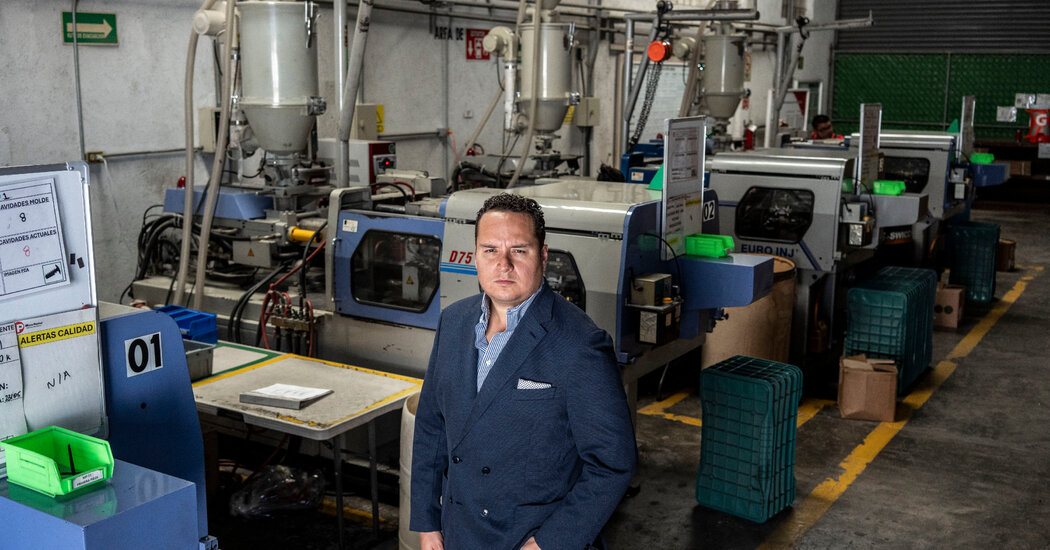
A Mexican small business owner benefits from U.S. tariffs on Chinese imports, as companies seek local suppliers in Mexico, boosting sales and opportunities for local manufacturers amid trade tensions.
European and U.S. retailers are implementing strategies such as carrying more stock, switching to local suppliers, and reducing dependence on China to build more resilient supply chains amidst disruptions in the Red Sea. With limited financial flexibility, retailers are wary of hiking prices and are absorbing higher transport costs. Some are using sea-air freight and limiting discounting to protect inventory, while others are considering "nearshoring" to source closer to their markets. However, the focus remains on cost management and maintaining profitability in the face of supply chain challenges.
Mexico has become a destination for a growing number of refugees in recent years, offering a less restrictive asylum system and plentiful job opportunities due to the country's labor shortage. The number of asylum cases approved in Mexico has risen significantly, with most arrivals coming from Honduras, Haiti, Venezuela, El Salvador, and Cuba. Mexico has over one million job openings nationwide, particularly in the manufacturing sector, and employers often struggle to find workers. The U.N. refugee agency and Mexican officials are working to resettle migrants in Mexico, Costa Rica, and Colombia to reduce illegal migration to the U.S. The U.N. program has helped thousands of refugees find jobs and settle in Mexico.
Latin America and the Caribbean (LAC) are showing signs of cautious optimism and potential for growth. Despite challenges such as political instability and infrastructure limitations, the region has seen a surge in foreign direct investment, with LAC's growth forecasts being raised for the third consecutive year. Factors contributing to this optimism include LAC's strategic commodities, proximity to the United States for nearshoring opportunities, potential as an energy powerhouse, improving political stability, and the rapid expansion of the digital economy. While there are still obstacles to overcome, there is a relatively bullish case for Latin America's future.
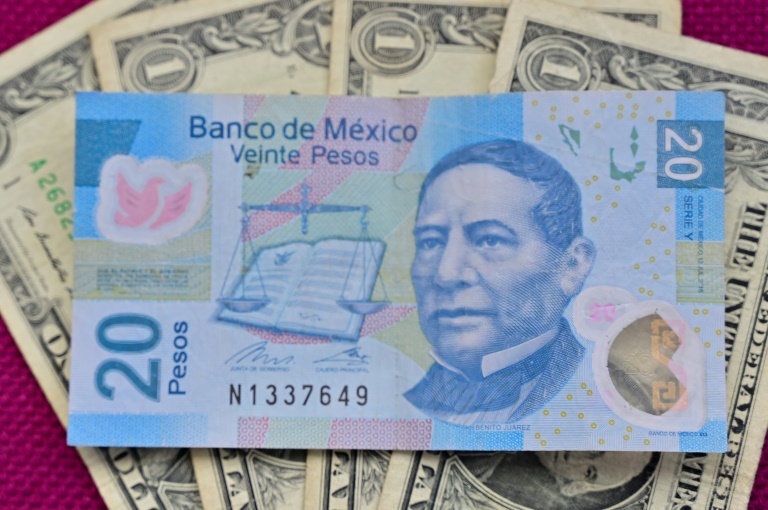
The Mexican peso has become one of the world's best performing currencies this year, thanks to high interest rates, financial stability, and inflows of remittances and foreign investment. The currency has posted double-digit percentage gains against the dollar in 2023, reaching its strongest levels since 2016. The peso's strength is partly due to the high level of the Mexican benchmark interest rate, which is now 11.25 percent, and the "nearshoring" trend of US companies moving their production closer to home in Mexico instead of Asia. However, the strong currency reduces the earnings of exporters, while financial analysts expect a slight depreciation in the Mexican currency due to narrowing interest rate differentials.
The Mexican peso has become one of the world's best performing currencies this year, thanks to high interest rates, financial stability, and inflows of remittances and foreign investment. The currency has posted double-digit percentage gains against the dollar in 2023, reaching its strongest levels since 2016. The peso's strength is partly due to the high level of the Mexican benchmark interest rate, which is now 11.25 percent, and the "nearshoring" trend of US companies moving their production closer to home in Mexico instead of Asia. However, the strong currency reduces the earnings of exporters, while financial analysts expect a slight depreciation in the Mexican currency due to narrowing interest rate differentials.
SVB Financial, the parent company of Silicon Valley Bank, has filed for Chapter 11 bankruptcy protection with $2.2 billion in liquidity. Virgin Orbit has paused operations for at least a week while it looks for funding to support the business. New Zealand has banned TikTok from phones of parliamentarians, while the US government is increasing its pressure on TikTok to separate from parent company ByteDance or risk being banned in the US. Google has warned users to take action to protect themselves from Samsung chips that can be exploited to compromise Android devices.