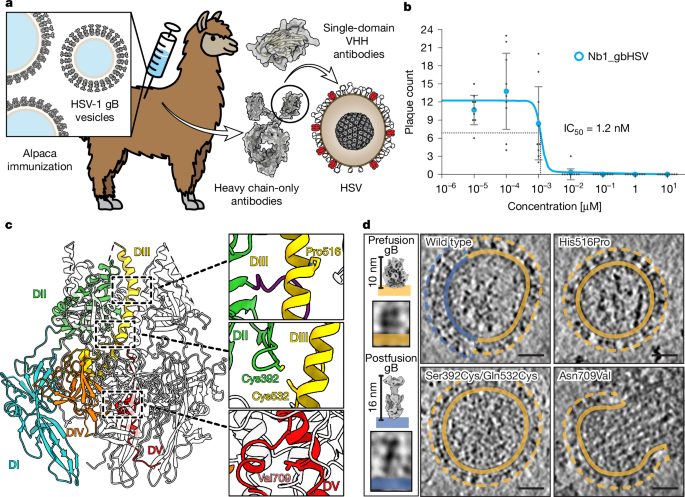
Researchers developed a prefusion-specific nanobody that neutralizes HSV-1 and HSV-2 by binding to glycoprotein B, preventing its conformational change necessary for viral fusion, with detailed structural insights provided by cryo-EM.
Scientists from the University of California, Irvine, have discovered a nanobody that may lead to a treatment for Retinitis Pigmentosa (RP), a group of inherited eye diseases that cause vision loss. The nanobody targets the Rhodopsin molecule, a key light-sensing molecule in the retina, and can halt its photoactivation process. The nanobodies have shown high specificity and can recognize the target Rhodopsin extracellularly, potentially allowing for the development of gene therapies for RP. The researchers aim to improve the nanobodies' ability to recognize Rhodopsin from other species and resolve the key intermediate states of Rhodopsin for further study.