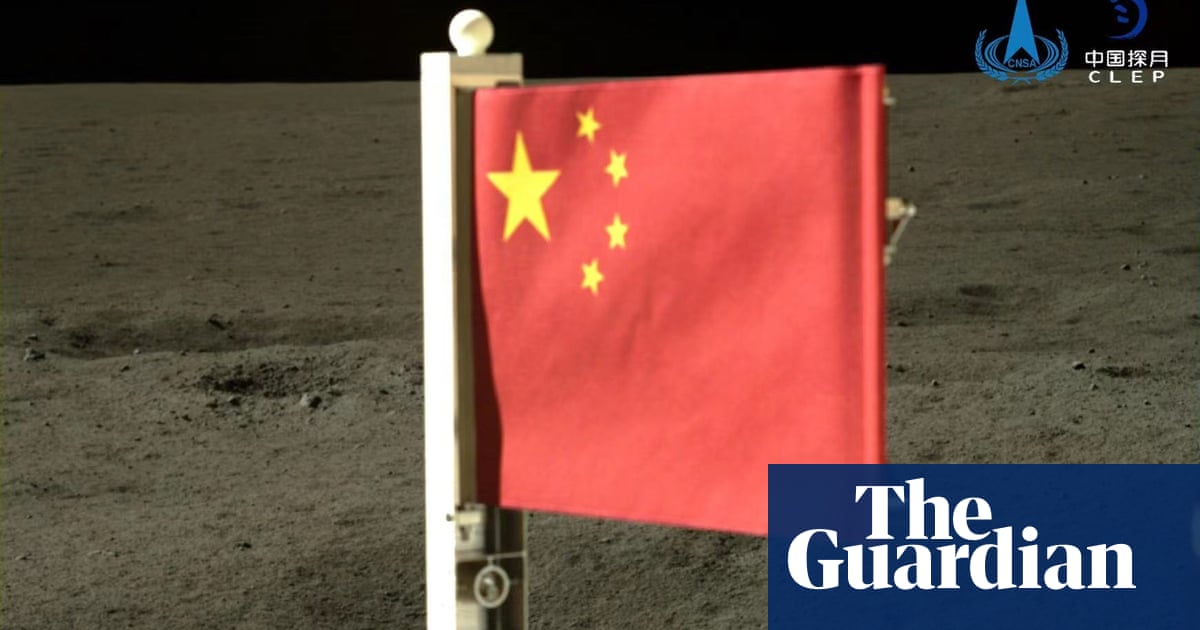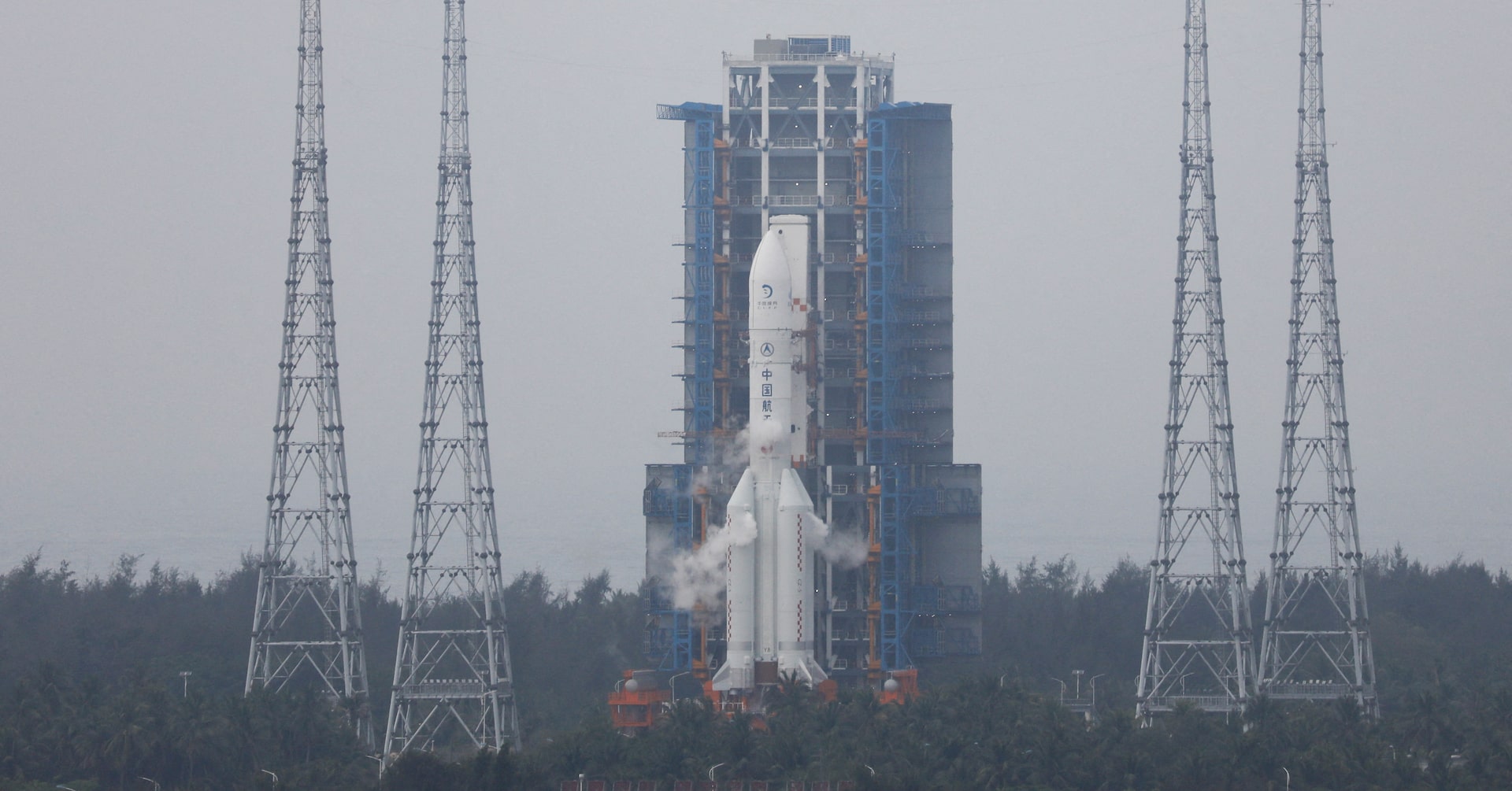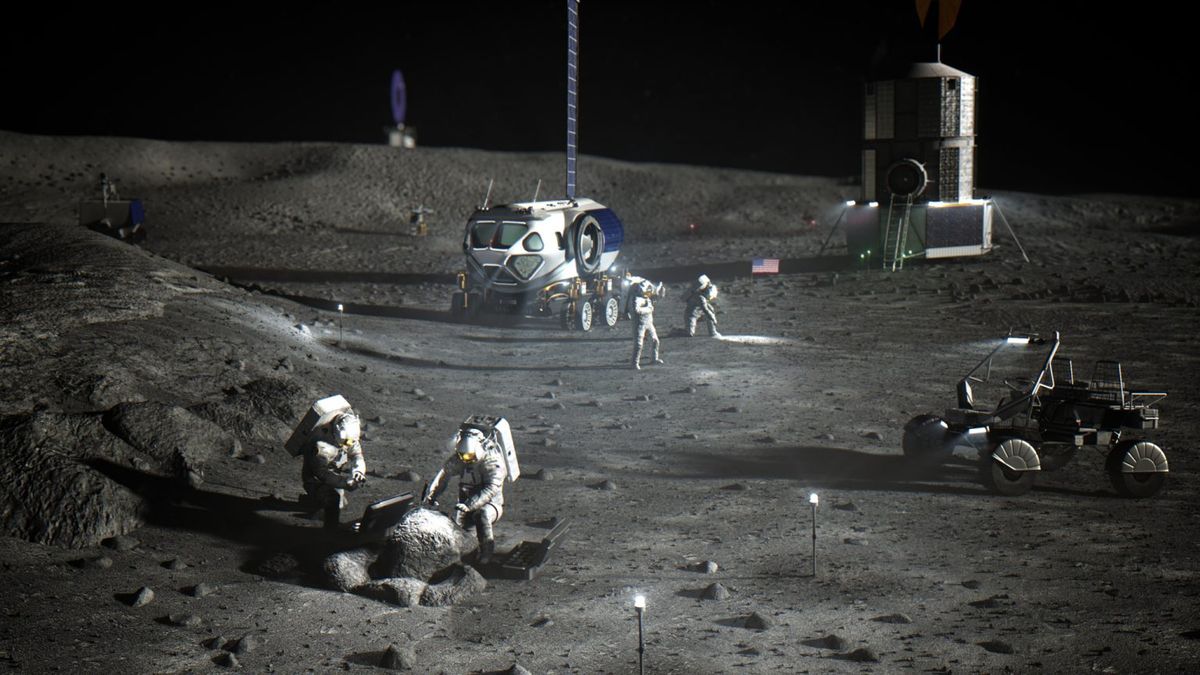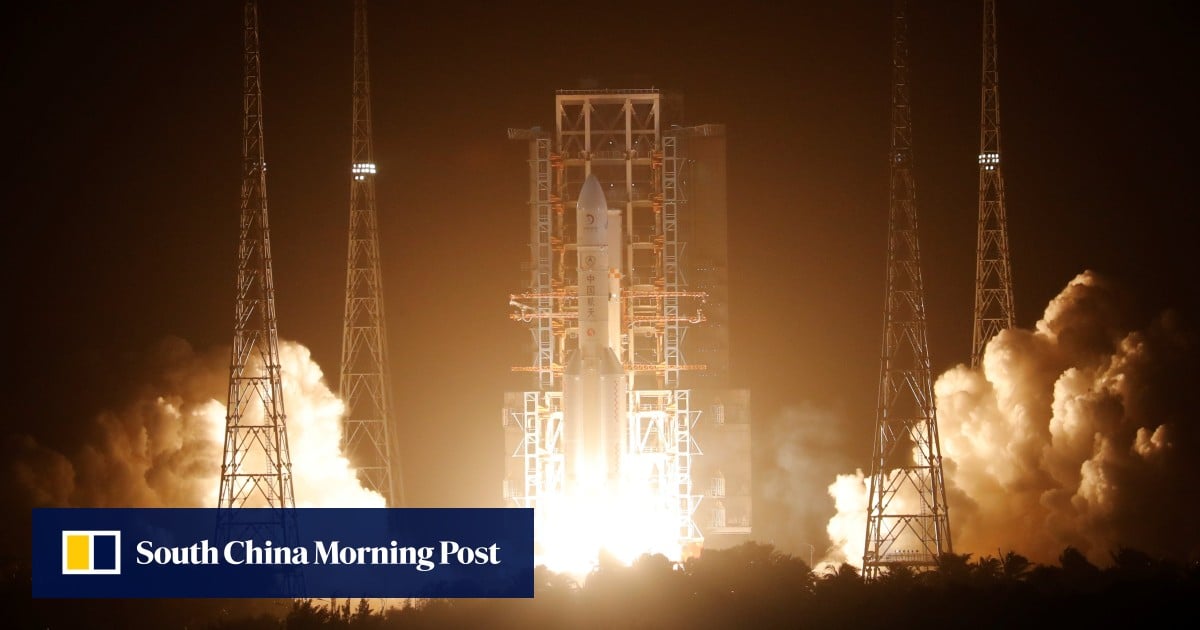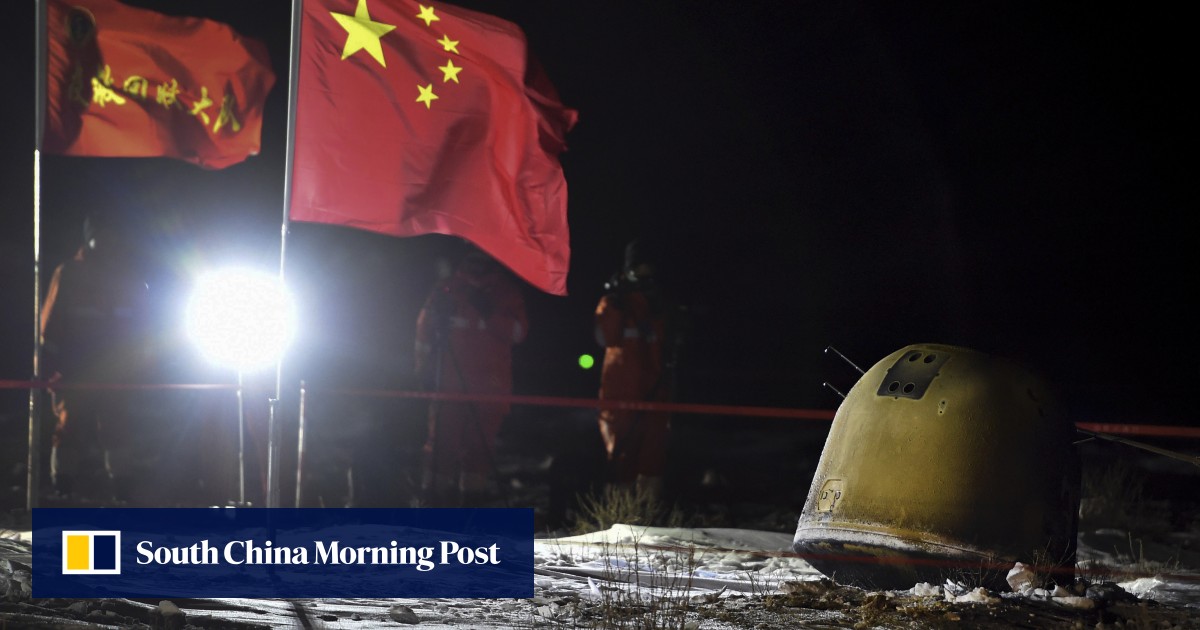
Negotiations between China and the US regarding the exchange of lunar samples are stalling, with China ready to share its Chang’e-5 samples but receiving no response from NASA about exchanging Apollo samples. This lack of reciprocity is causing frustration among Chinese scientists, and it remains uncertain how this will impact future cooperation. Sample exchanges are common among space-faring nations, as seen in past collaborations between the US, Japan, China, and Russia.
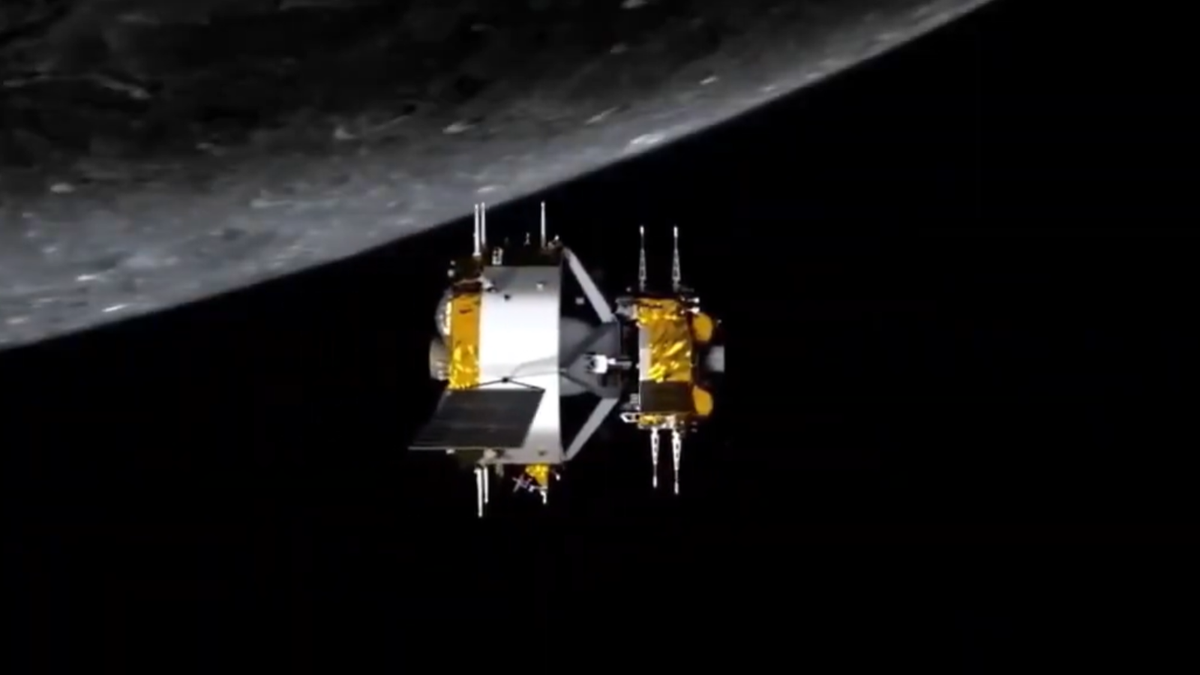
China's Chang'e 6 mission has successfully transferred the first-ever samples collected from the far side of the moon between its ascender and orbital module in lunar orbit. This marks a significant milestone as the samples are now set to return to Earth. The mission, which landed in the Apollo Basin crater on the moon's far side, continues China's pioneering efforts in lunar exploration. The sample return canister is expected to land on Earth on June 25.
China's uncrewed Chang’e-6 probe is returning to Earth with the first samples from the far side of the moon, marking a significant milestone for China's space program. The probe landed in the South Pole-Aitken basin, collected rock and soil samples, and successfully lifted off to begin its journey back. This mission could provide unprecedented insights into the moon's formation and evolution, and the scientific community is eager to study the samples. The mission still faces critical stages, including docking with the lunar orbiter and re-entry to Earth.
China's Chang'e-6 lunar probe, which landed on the moon's far side, is set to return to Earth with samples that could provide insights into the early evolution of the solar system. The mission, launched on May 3, aims to collect 2 kg of material from the South-Pole Aitken Basin, a previously unexplored area. The samples are expected to help resolve controversies about the history of heavy bombardment in the solar system. The probe's return is anticipated around June 25, with international collaboration in analyzing the findings.
NASA has issued a request for designs of a "lunar freezer" that can safely store materials collected from the moon during its Artemis missions. The freezer will primarily be used to transport scientific and geological samples back to Earth, but it may also store human biological samples for analysis. The lunar freezer should be ready by the end of 2027 and must be able to withstand the physical forces encountered during launch and landing. It should have a cold interior volume of at least 10x10x26 inches, weigh less than 121 pounds, and maintain a temperature of minus 121 Fahrenheit for at least 30 days. The freezer should also have monitoring and control capabilities, internet connectivity, and the ability to record data about its own temperature and usage. The planned debut mission for the lunar freezer is Artemis 5, projected to launch in 2029.
China's upcoming lunar mission, Chang'e 6, is set to launch next year with the goal of collecting samples from the far side of the moon and returning them to Earth. The mission will also carry payloads from the European Space Agency and Pakistan. The China National Space Administration (CNSA) plans to enhance international cooperation and expand the lunar research station project. Following Chang'e 6, the Chang'e 7 and Chang'e 8 missions will explore the moon's south pole region, investigate the lunar environment, and prospect for resources. China's previous mission, Chang'e 5, brought back 1.7kg of rocks and dust, providing evidence of water on the lunar surface.
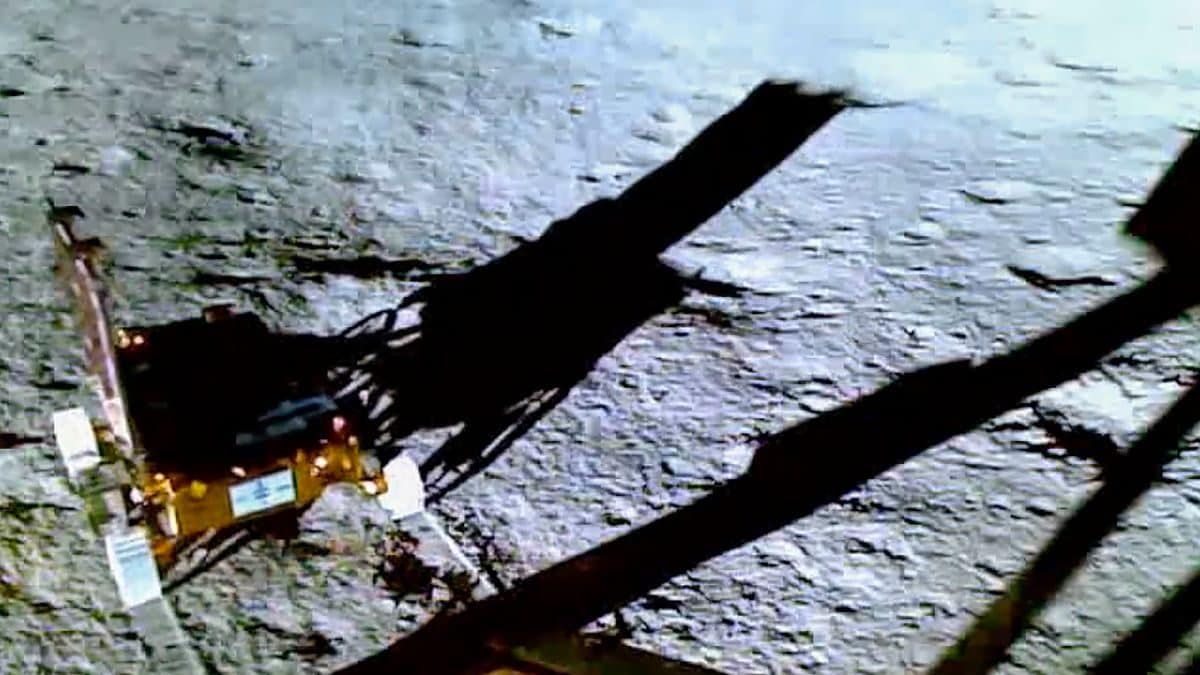
The Indian Space Research Organisation (ISRO) is planning future lunar missions capable of returning samples to Earth based on the findings from Chandrayaan-3, particularly the successful hop experiment carried out by the Vikram lander on the Moon's surface. The hop was a demonstration of the larger plan, and ISRO aims to develop systems that can undertake a return flight. This achievement enthuses future sample return and human missions, as only a few countries have demonstrated the ability to make the hop.