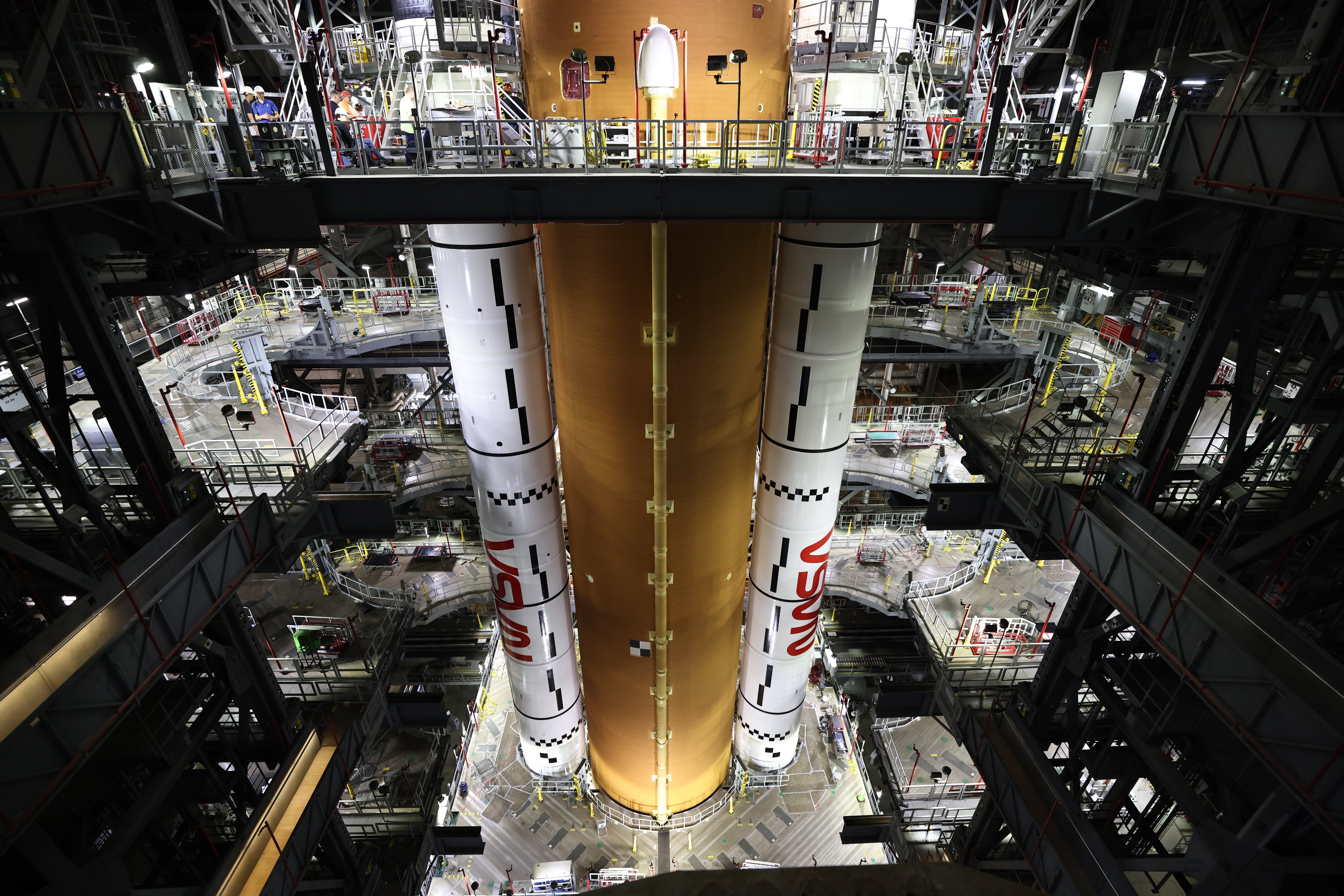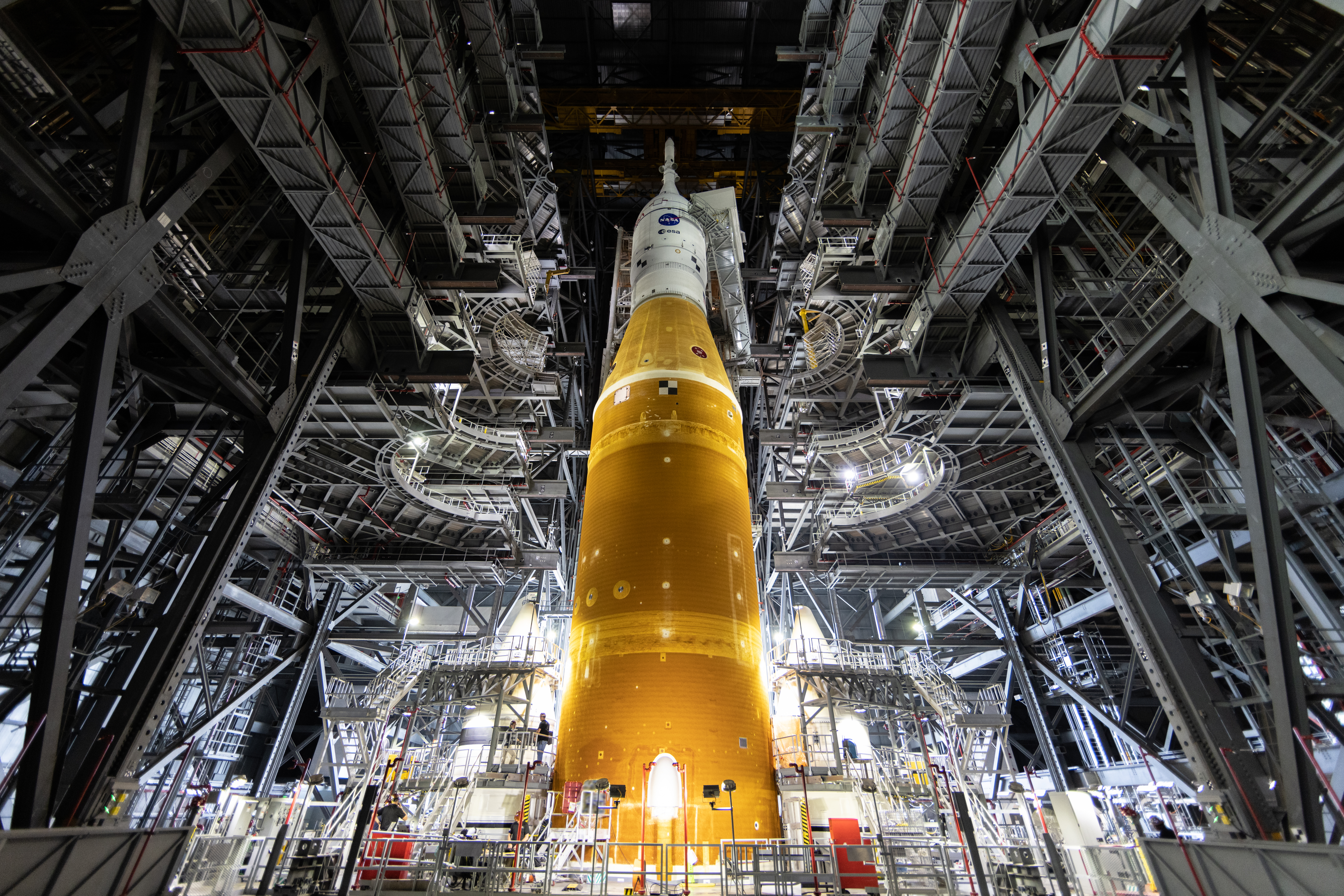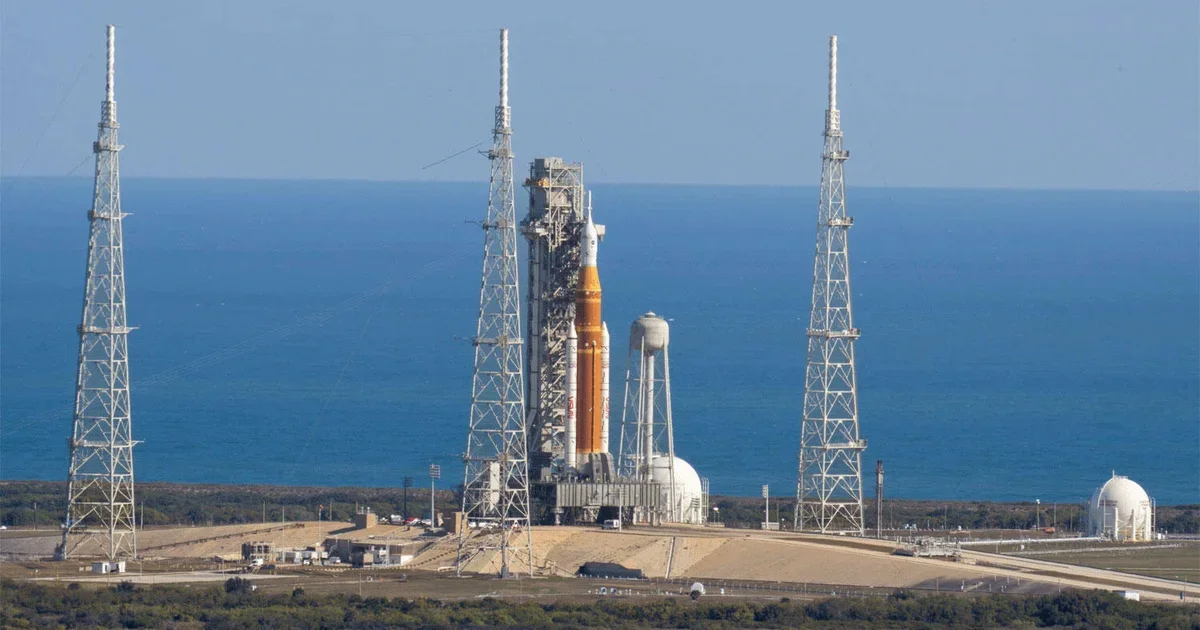
NASA's Artemis II SLS rocket, set to carry four astronauts around the Moon next year, has been upgraded with improvements in navigation, communication, safety systems, and vibration control based on lessons learned from Artemis I, enhancing performance, reliability, and safety for crewed lunar missions.
NASA is inviting media to view the fully assembled Artemis II SLS rocket and Orion spacecraft at Kennedy Space Center in mid-October, ahead of its crewed lunar mission scheduled for next year, which aims to test deep space exploration capabilities and pave the way for future missions to Mars.
The United States Mint has unveiled the design for Alabama's 2024 American Innovation dollar coin, which will feature NASA's historic Saturn V rocket. The Saturn V, which launched nine missions to the moon and the country's first space station, was chosen by Alabama to represent American innovation. The coin's design depicts the Saturn V rocket lifting off against a backdrop of a full moon. The American Innovation dollar coin series honors significant inventions and innovations from each state, and the Saturn V coin will be the 23rd coin in the series.
NASA is constructing the twin rocket boosters for Artemis 2, which will provide additional power to the Space Launch System rocket for a mission to the moon in 2024. Each booster weighs 1.6 million pounds and is being assembled at NASA's Kennedy Space Center. The boosters consist of five segments and are based on the design of the space shuttle program's boosters. The aft assembly work is currently underway, and once completed, the boosters will be moved to the Vehicle Assembly Building for further assembly. The Artemis 2 mission will test Orion's systems before a planned moon landing in 2025 or 2026.
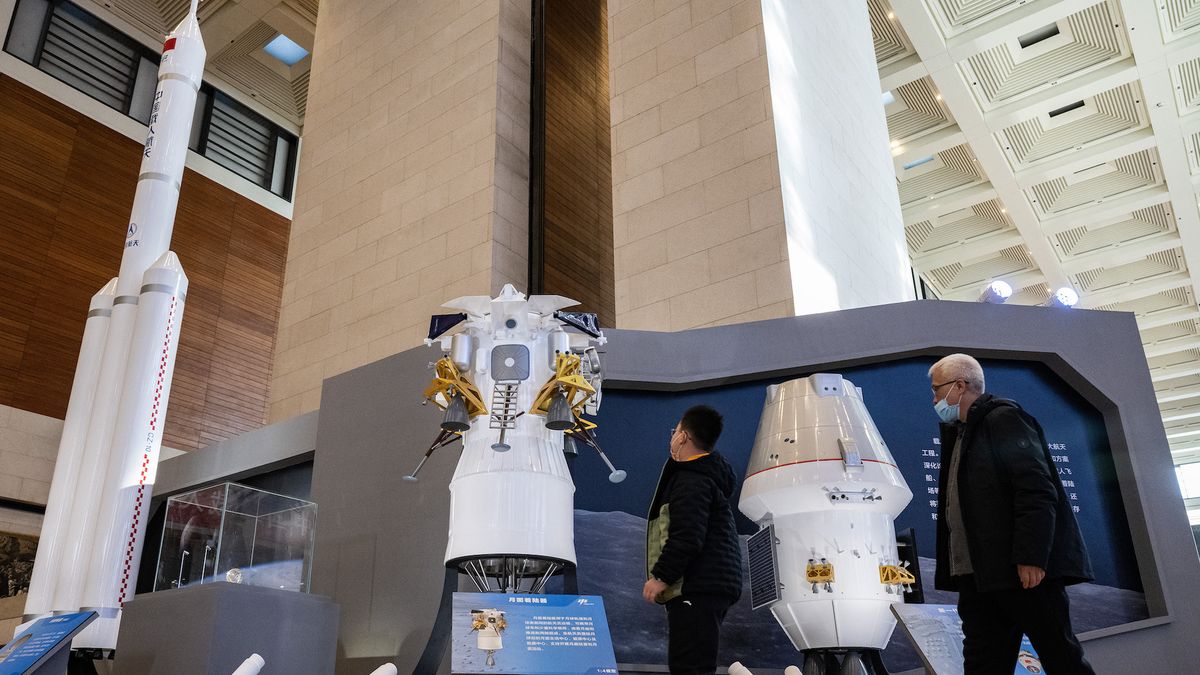
China is progressing in the development of a new rocket, the Long March 10, which is intended to launch astronauts to the moon as part of their plan to put boots on the lunar surface before 2030. The rocket is expected to have a test flight in 2027 and will consist of three first stage cores. It will be capable of launching a payload of 59,500 pounds into lunar transfer orbit. China's first astronaut, Yang Liwei, revealed that the new crew spacecraft will be ready by 2027. China's main space contractor, CASC, recently completed a new test stand for firing engines needed for its moon rockets.