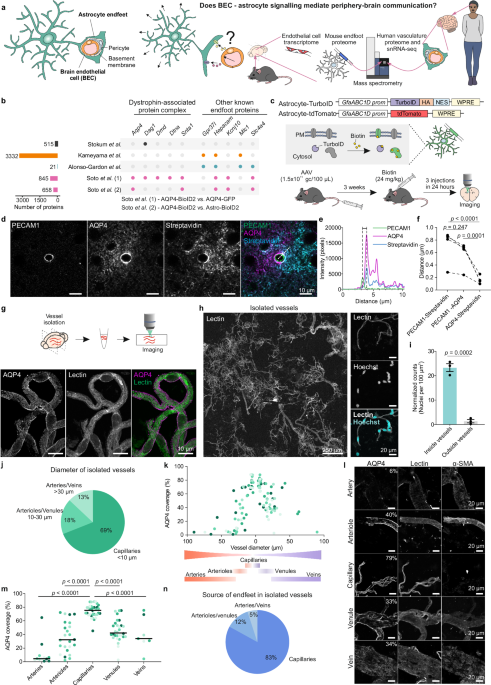
This study used molecular profiling and innovative proteomics techniques to explore how brain endothelial cells communicate with astrocyte endfeet in mice and humans, revealing dynamic ligand-receptor interactions that are modulated during peripheral inflammation and are conserved across species, with implications for understanding neuroinflammatory and neurodegenerative diseases.
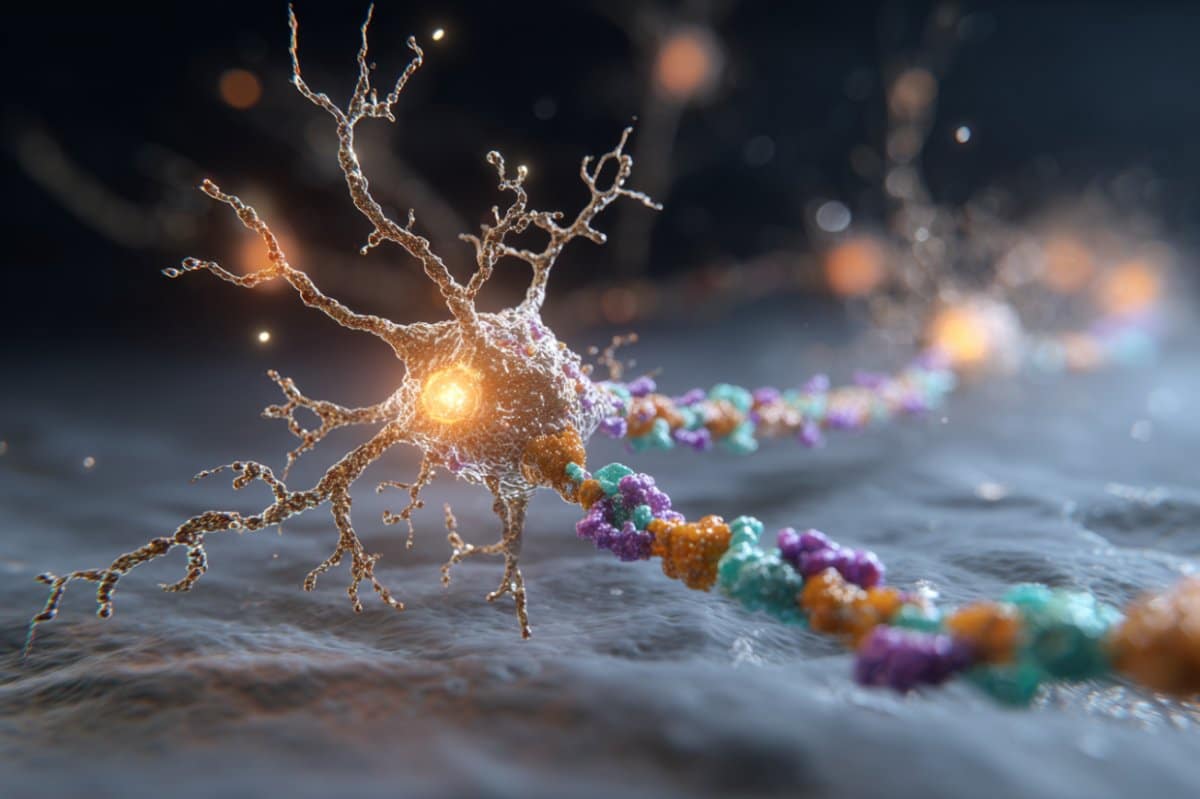
Scientists have uncovered how the brain's 5-HT1A serotonin receptor functions at the molecular level, revealing that a fat molecule in cell membranes influences its activity. This discovery could lead to more targeted and faster-acting treatments for mental health conditions like depression and anxiety by better understanding receptor signaling pathways and their modulation by drugs.
MIT researchers have developed a new method for cellular imaging that allows them to observe up to seven different molecules at a time, potentially enabling a deeper understanding of cellular behavior and signaling networks. By using fluorescent labels that switch on and off at different rates, the researchers can track the changes in each target protein over time. This breakthrough in molecular imaging could have significant implications for studying various biological phenomena, including aging, disease, and memory formation. The researchers are also working on expanding the number of labeled molecules that can be observed and adapting the system for use in mouse models.
MIT researchers have developed a new method for imaging living cells that allows them to observe up to seven different molecules at a time, potentially enabling a comprehensive study of cellular behavior. The technique involves using switchable fluorophores, fluorescent proteins that turn on and off at different rates, to label different types of molecules within a cell. By imaging the cell over time and using a computational algorithm to extract each fluorescent signal, researchers can track changes in the amount of each target protein. This approach could provide insights into various biological phenomena, including aging, disease, and cellular responses to different stimuli.