A study using Resonance Raman imaging confirms the presence and partial preservation of hemoglobin in dinosaur bones, revealing how heme degrades over millions of years and providing insights into fossilization processes.
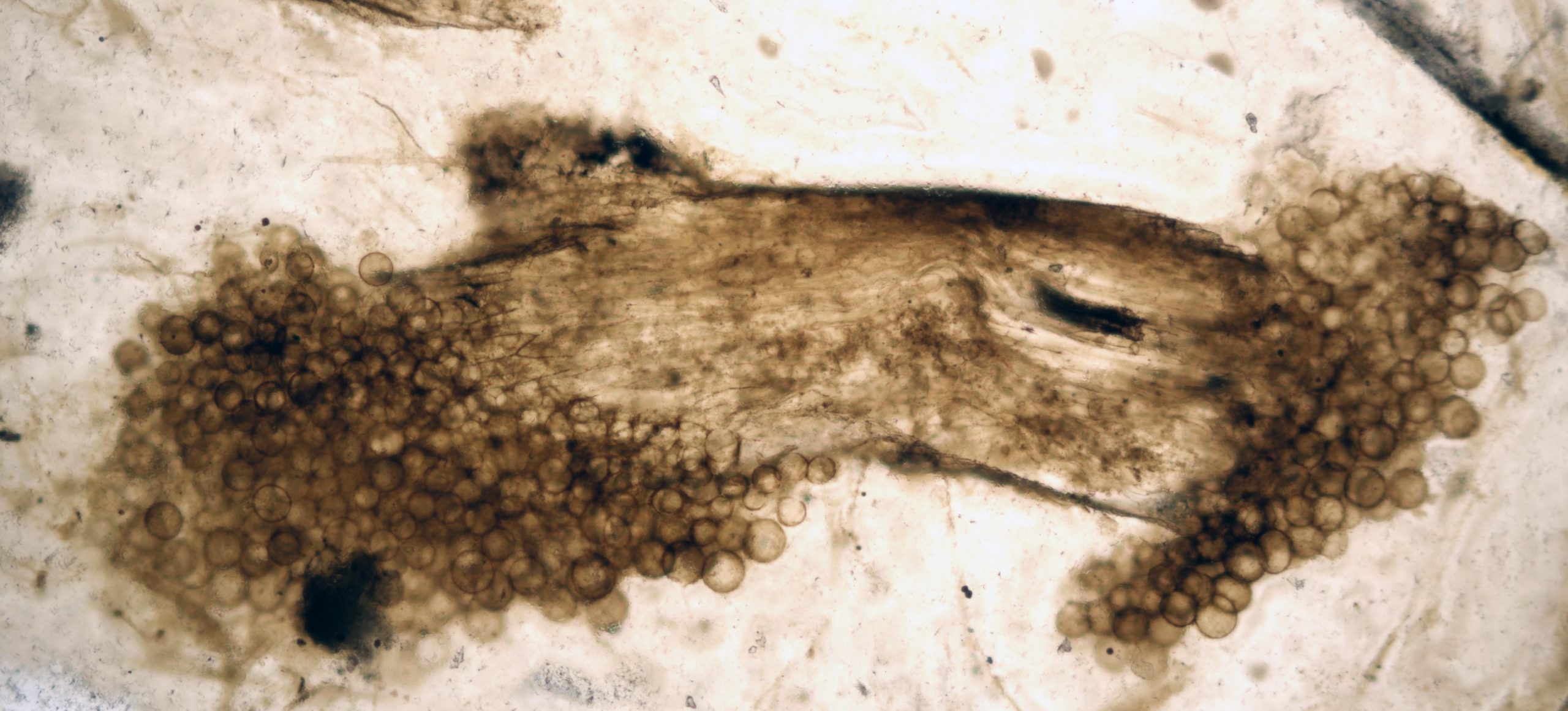
Scientists have used cutting-edge technology to analyze a 400 million-year-old fossil cache discovered in Scotland, revealing a higher level of molecular preservation than previously expected. The team used non-destructive imaging, data analysis, and machine learning to identify the chemical fingerprints of various organisms within the fossils. The molecular fingerprints were used to identify some of the more mysterious members of the Rhynie ecosystem, including two specimens of an enigmatic tubular “nematophyte”. The study highlights the unique scientific importance of Scotland's natural heritage and provides a tool for studying life in trickier, more ambiguous remnants.