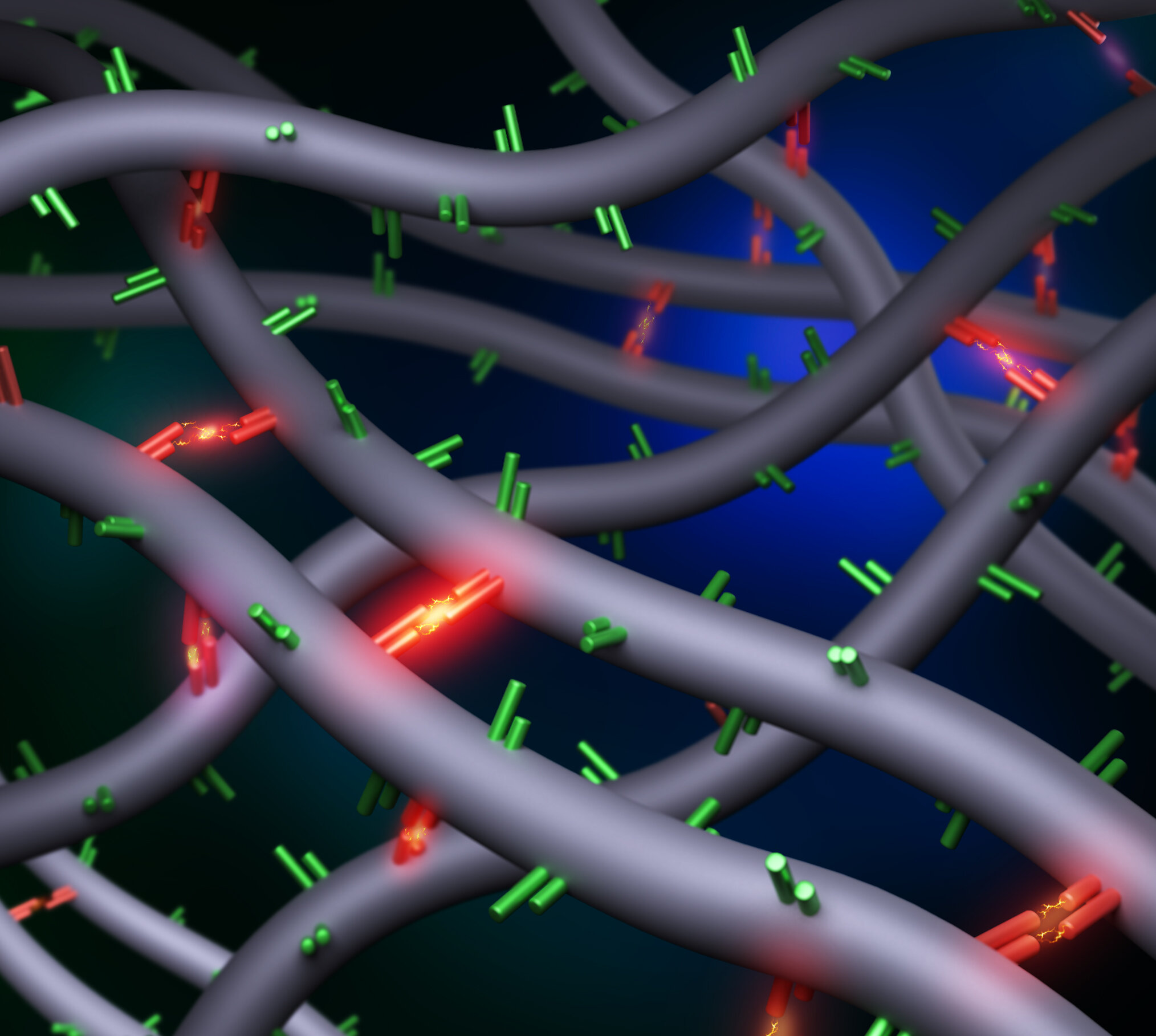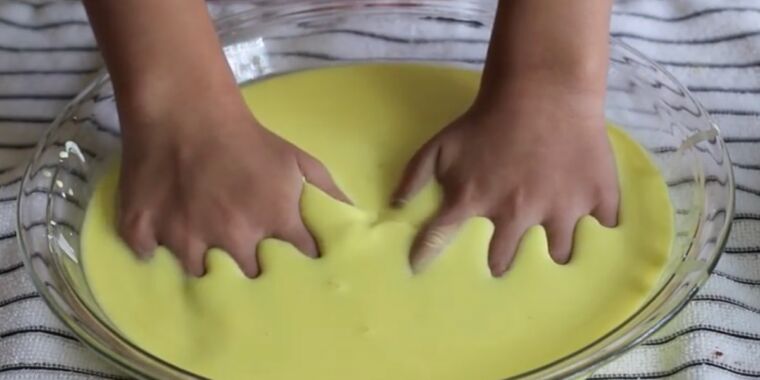
Scientists at the University of Chicago have used dense suspensions of piezoelectric nanoparticles to study the molecular behavior of oobleck, a non-Newtonian fluid that can behave as both a liquid and a solid. Oobleck's viscosity changes in response to applied strain or shearing force, making it a shear-thickening fluid. The researchers developed a mathematical model to predict the transition of oobleck from liquid to solid and back again, taking into account factors such as particle size and electrical charges. Computer simulations of previous experiments confirmed the accuracy of the model's predictions.

A new experiment has shown that photosynthesis can start with just one photon, confirming a long-held assumption. The experiment used a photon pair, with the first photon being absorbed by a detector to confirm that the second one would hit the sample, made of chlorophyll molecules from a photosynthetic bacterium. The experiment expands our understanding of photosynthesis and could lead to the creation of green fuels with high efficiency.
A University of Virginia-led study challenges the long-held understanding of how associative polymers function at the molecular level. The study was enabled by new associative polymers developed in the lab, which allowed the team to precisely study the effects of reversible interactions on the dynamics of associative polymers. The team found that the bonds can slow down polymer movement and dissipate energy without creating a rubbery network. The discovery has important implications for the countless ways these materials are used every day, from engineering recyclable plastics to human tissue engineering to controlling the consistency of paint so it doesn't drip.