
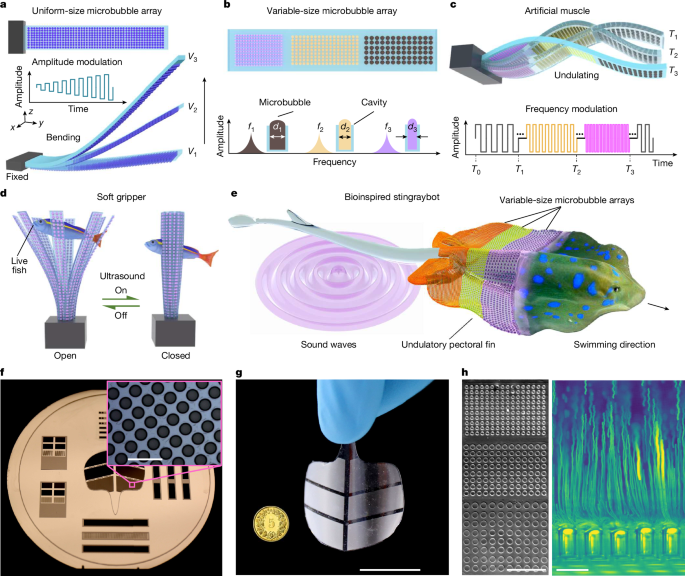
Researchers have developed programmable, wireless artificial muscles using ultrasound-activated microbubble arrays embedded in soft membranes, enabling diverse movements and applications in robotics, medical devices, and minimally invasive procedures, with high responsiveness and biocompatibility.
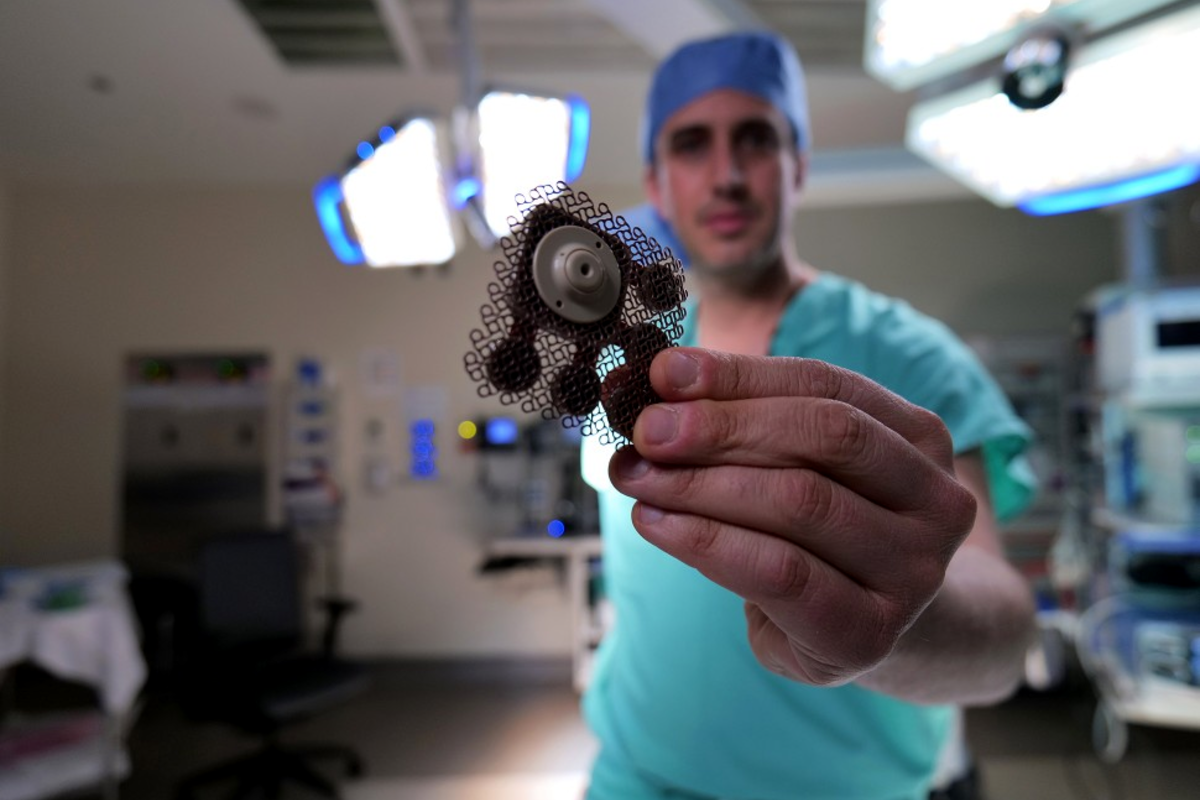
Researchers from Northwestern University have developed a technique that uses ultrasound to make the blood-brain barrier temporarily permeable, allowing chemotherapy drugs to reach the brain to treat glioblastoma. The technique involves fitting the patient with a skull-implantable ultrasound device that generates sound waves that interact with injected gas microbubbles. The procedure takes approximately four minutes and is performed with the patient awake and conscious. The technique could also open new avenues for treating neurological disorders such as Alzheimer's and Parkinson's.