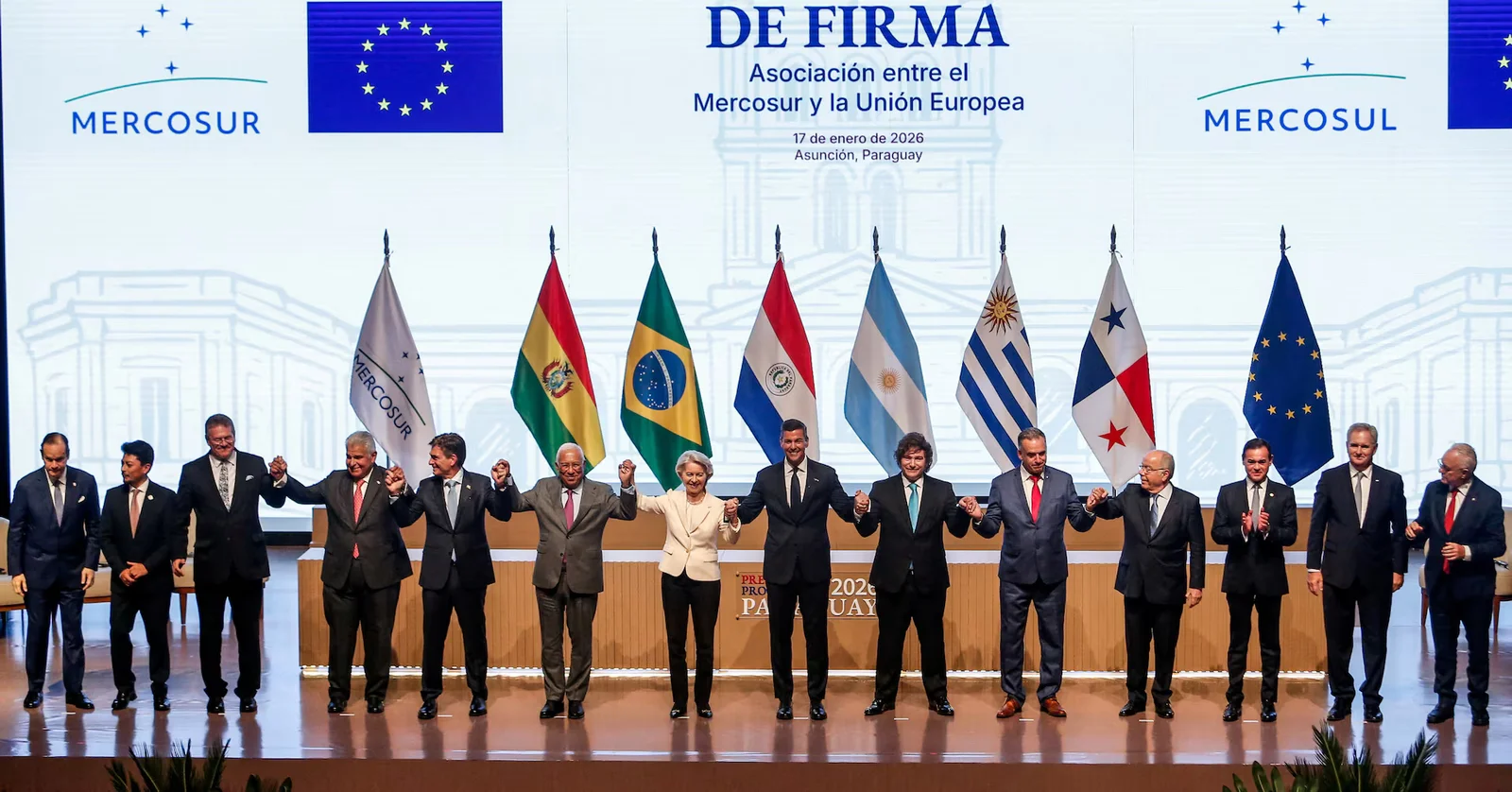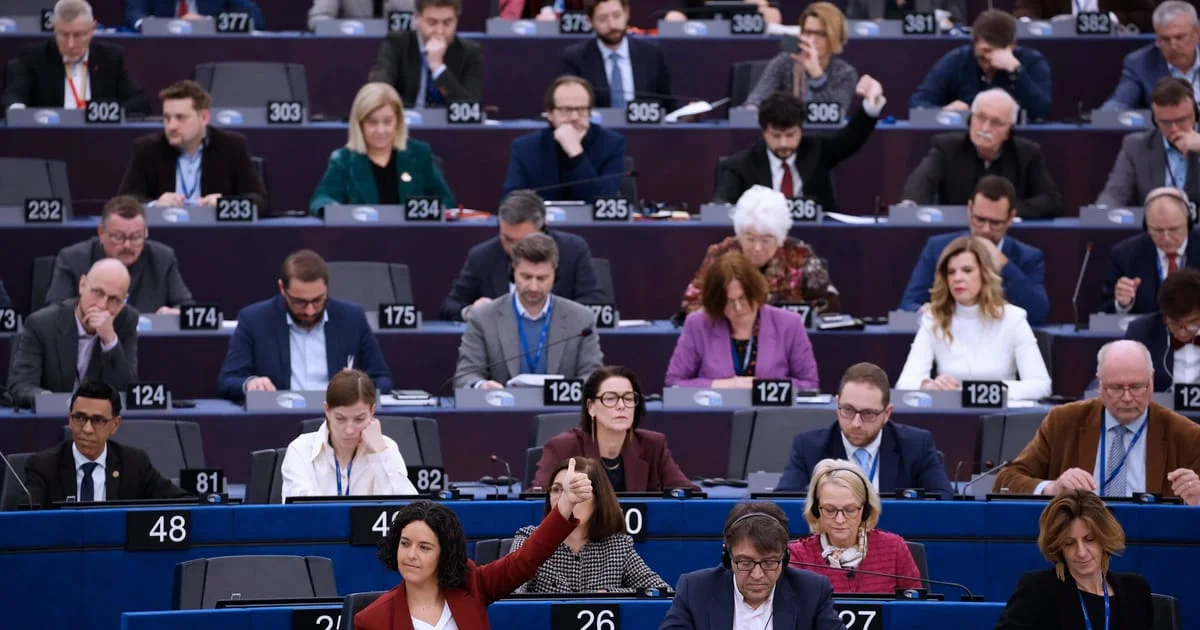
The EU and Mercosur reached a free-trade agreement after 25 years of talks, pending European Parliament approval, in what’s billed as the bloc’s largest FTA. It aims to boost trade and climate goals with safeguards for farmers, anti-deforestation commitments, and a phased tariff liberalization over 15 years, saving EU exporters about €4 billion a year in duties. While praised as a win for multilateralism, critics warn cheaper imports could hit European farmers; ratification and environmental enforcement will be key hurdles.
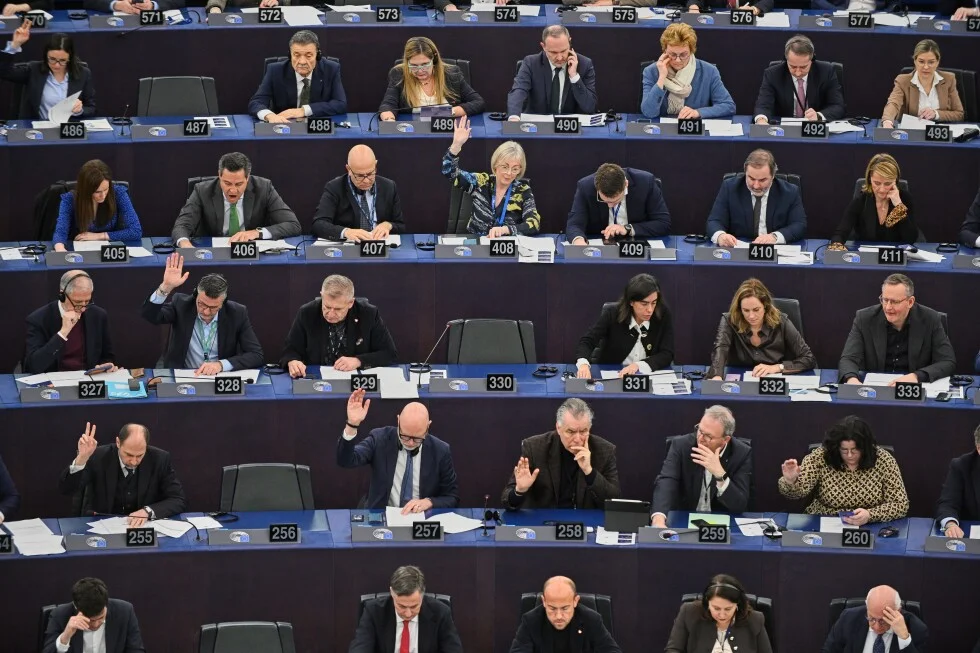
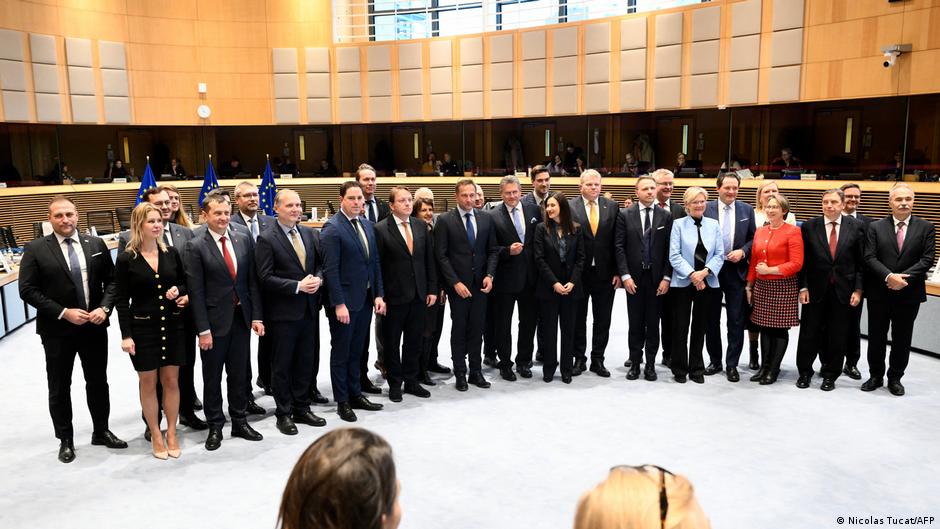
EU member states have broadly approved a historic free trade agreement with Mercosur, the South American trade bloc, pending European Parliament approval, marking the EU's largest trade deal to date.
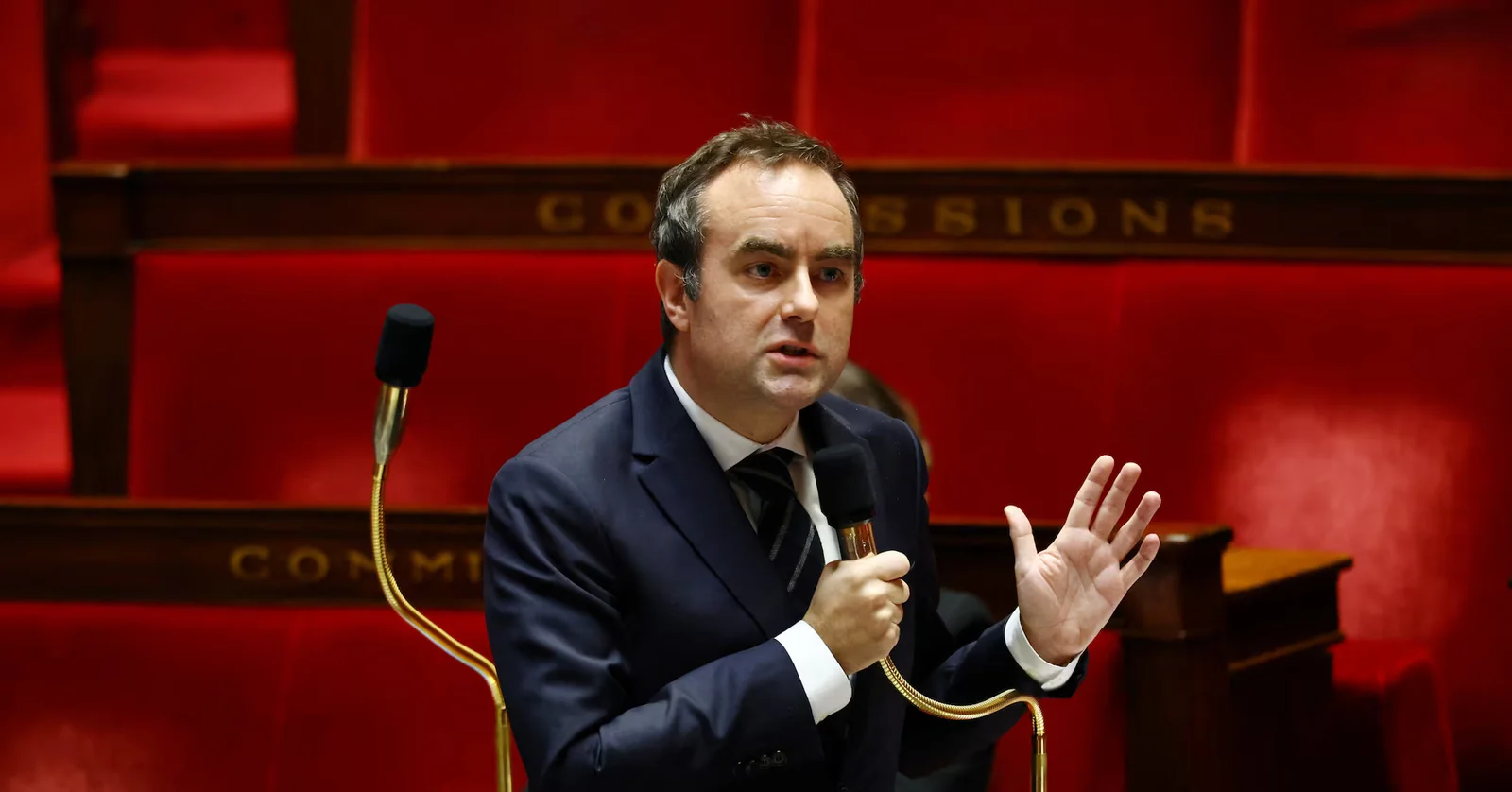
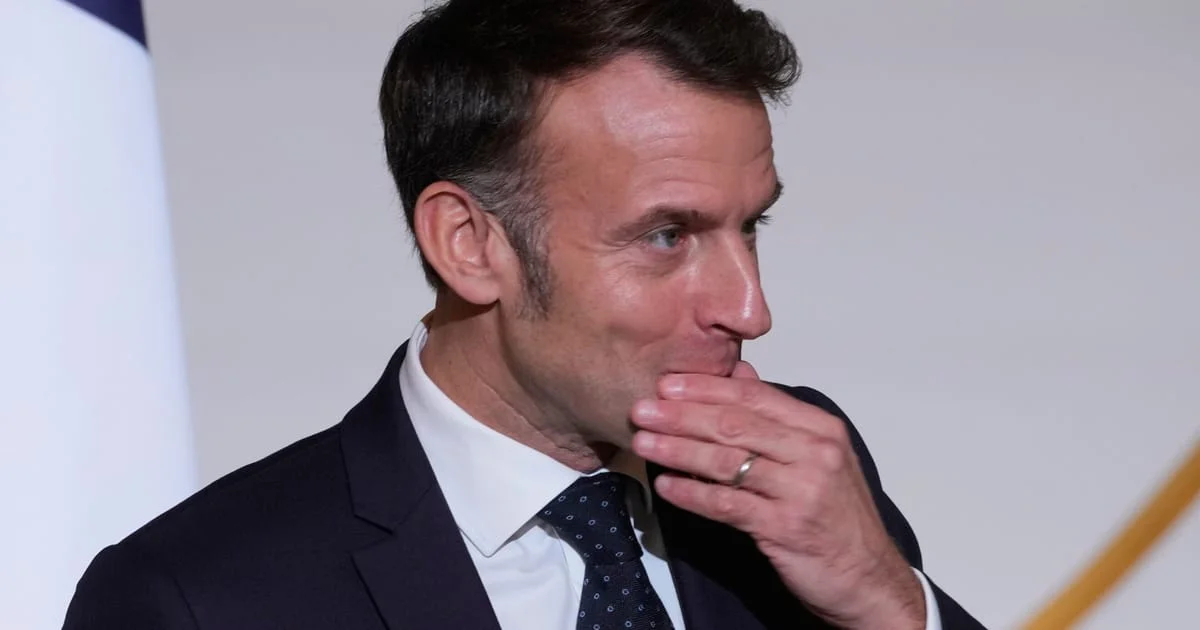
French President Macron criticizes the US for turning away from allies and reflects on France's failure to influence the Mercosur trade deal, highlighting broader concerns about global power dynamics and alliances.
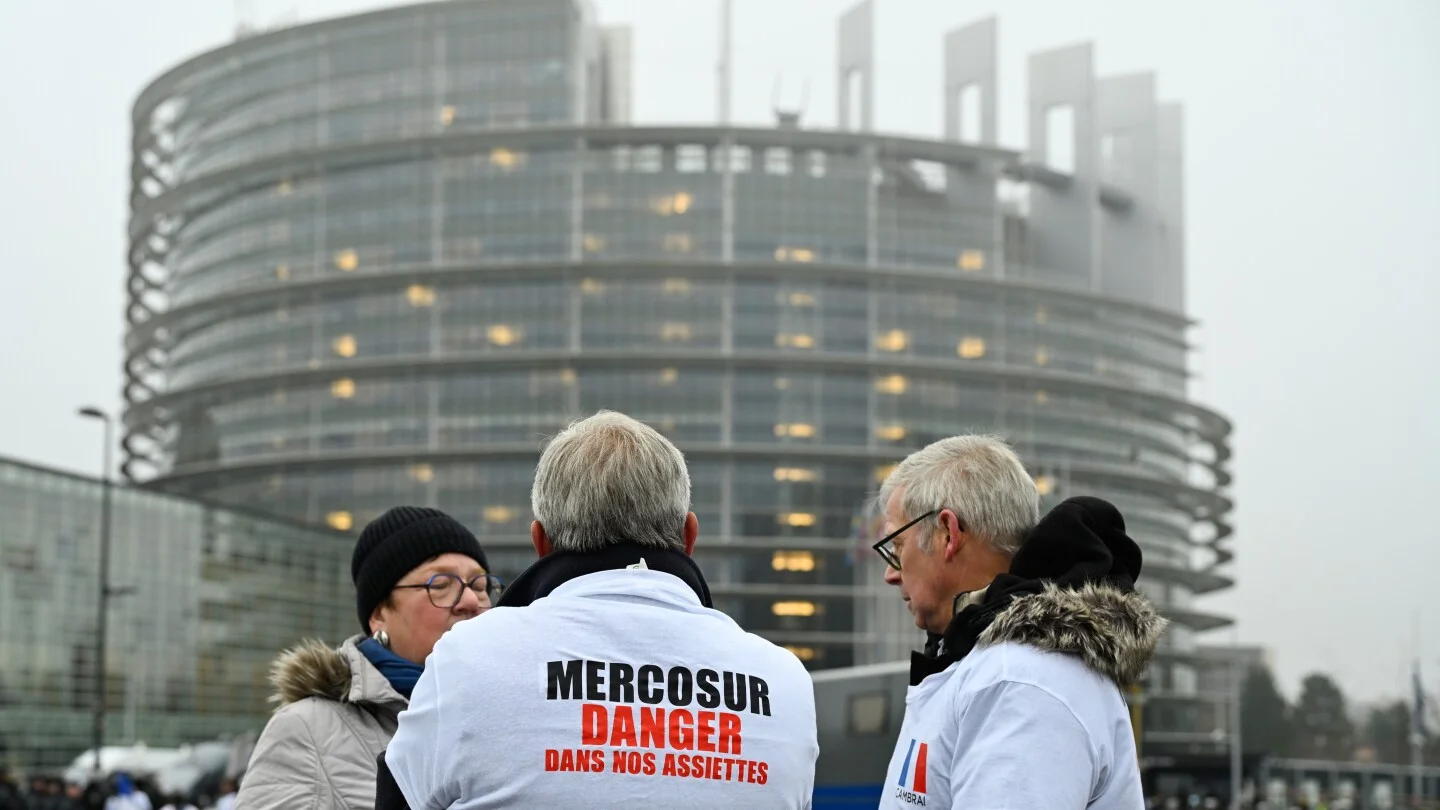
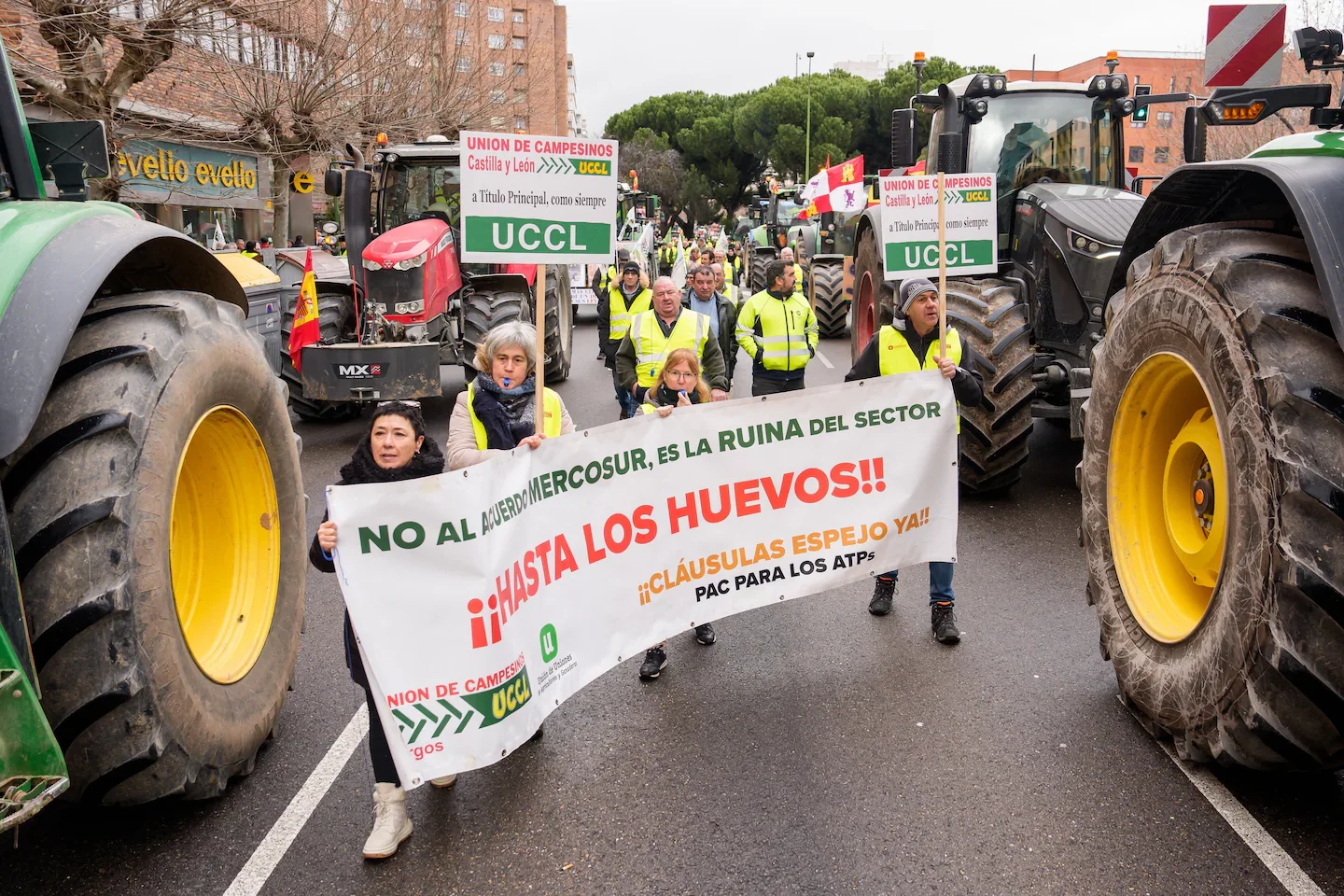
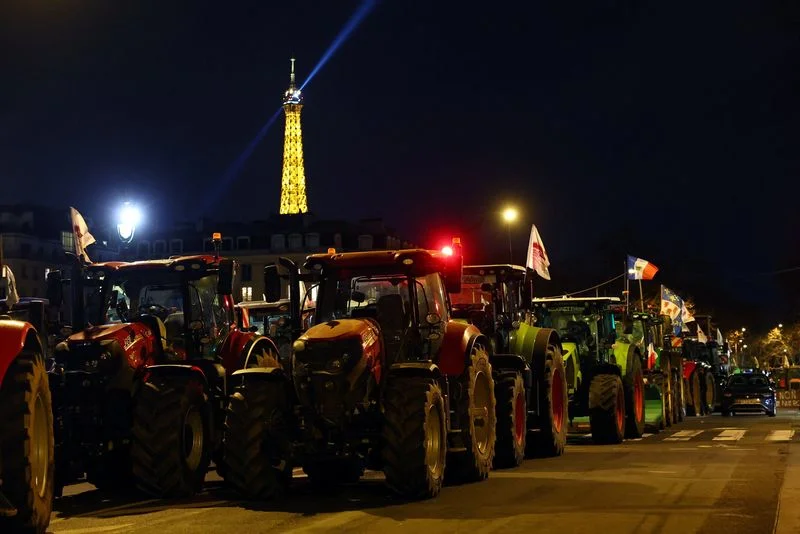
EU member states have approved the Mercosur free trade deal with South American countries, pending European Parliament approval, despite some countries like France opposing it. The agreement aims to reduce tariffs, boost exports, and strengthen trade relations, with support from Germany and other nations, while facing resistance from farmers and some political leaders.
EU Parliament is considering freezing a US trade deal in response to President Trump's threats over Greenland, amidst ongoing political tensions and discussions about EU policies and international relations.
EU countries have approved a long-awaited Mercosur trade deal after 25 years of negotiations, marking a significant development in international trade relations.
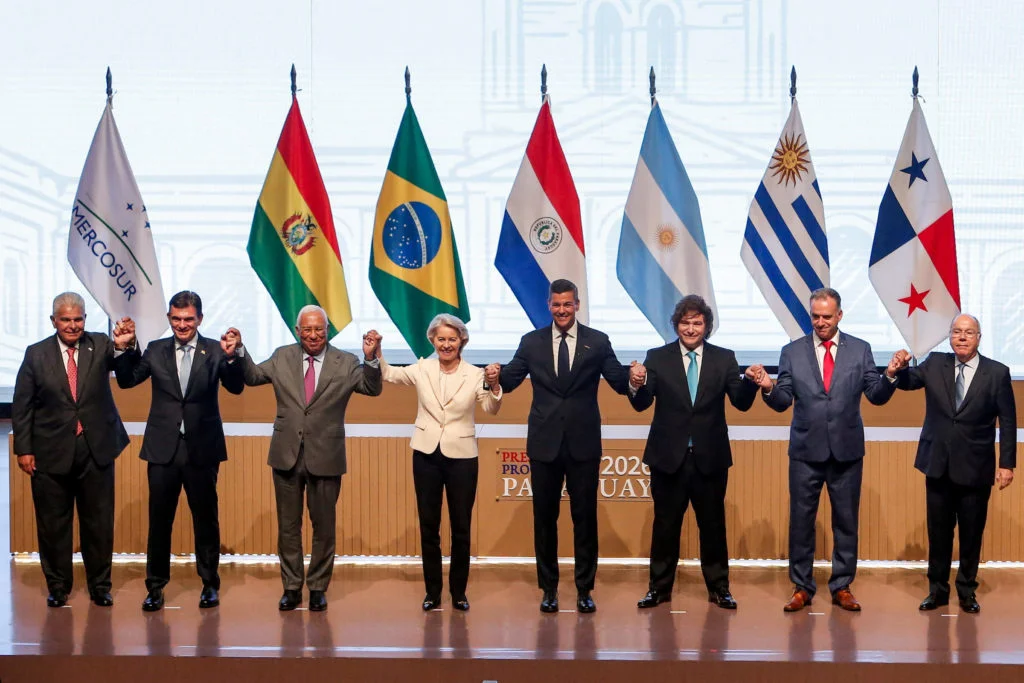
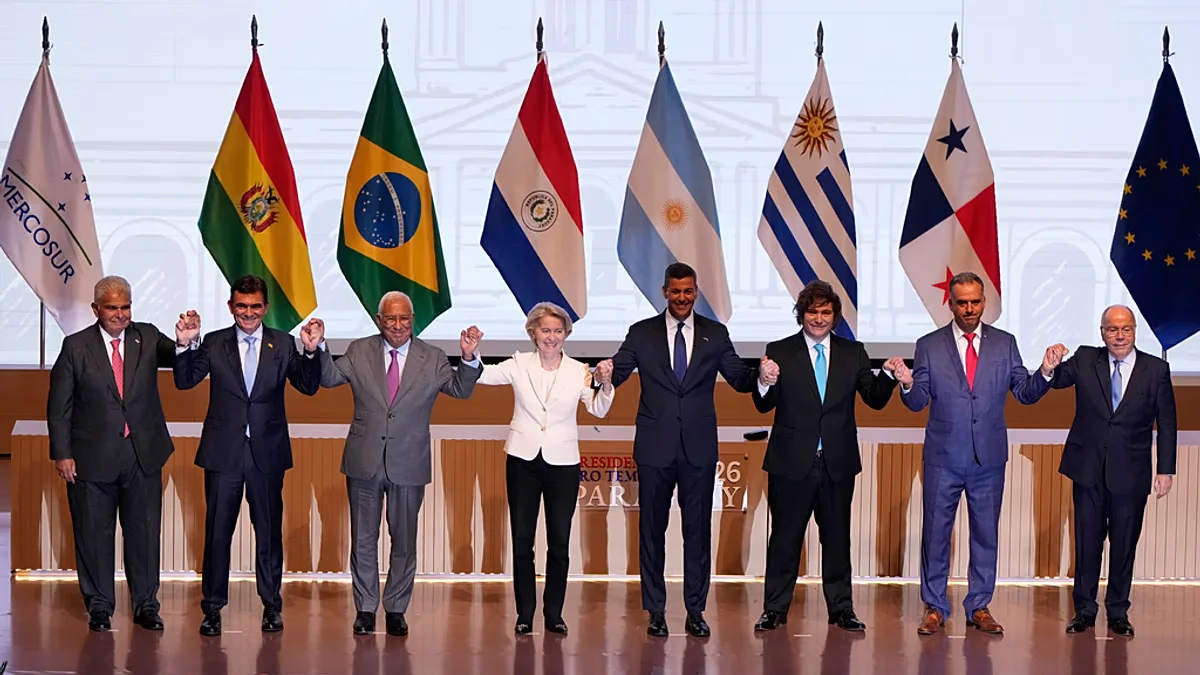
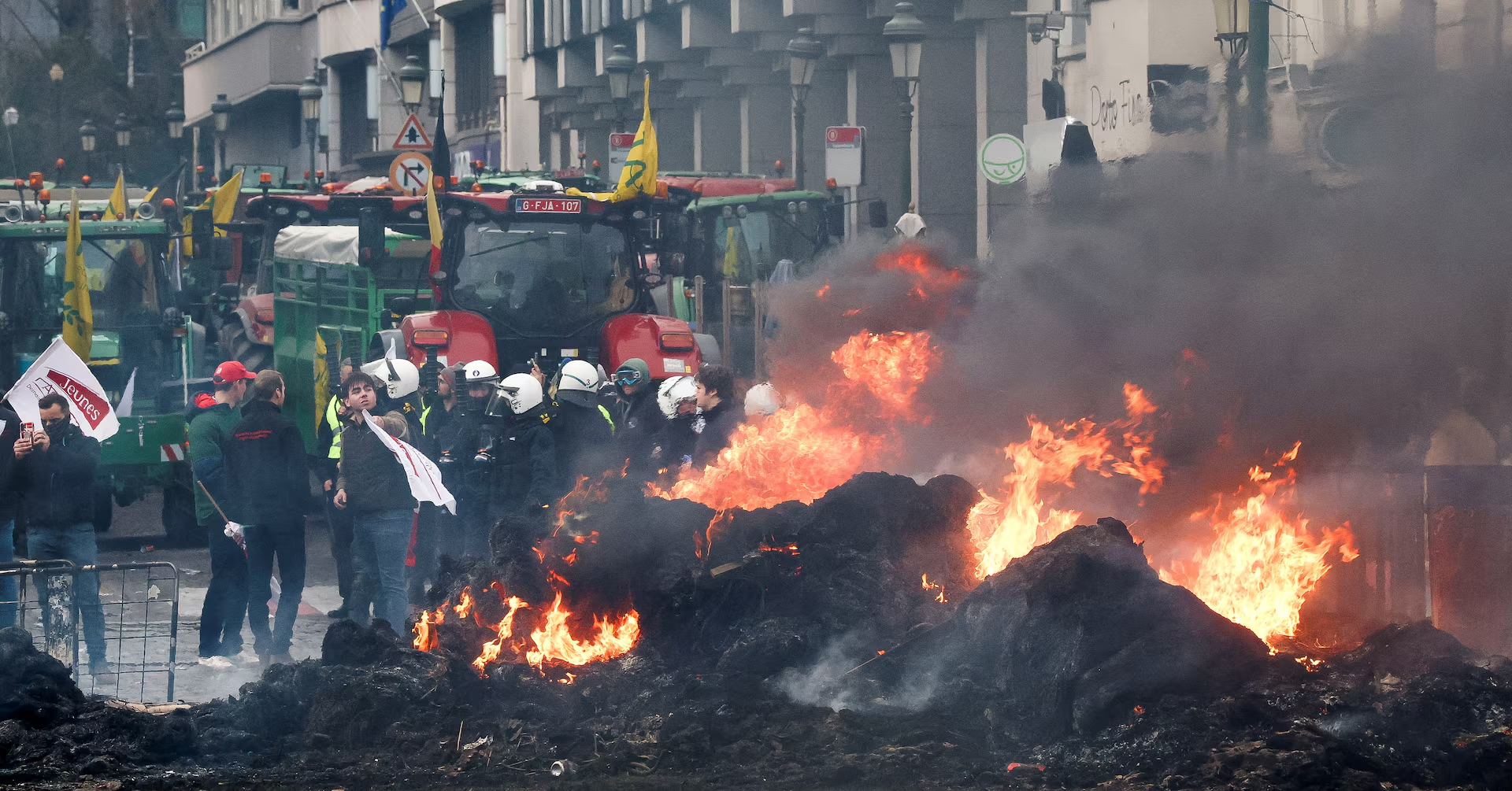
The EU has approved a historic trade deal with Mercosur, creating one of the world's largest free trade areas, despite opposition from some member states and protests from farmers. The deal aims to boost exports, reduce dependency on China, and strengthen geopolitical ties, with signing expected soon in Paraguay.
Brussels is preparing to make concessions on farm funding to facilitate the approval of the Mercosur trade agreement, aiming to overcome obstacles and secure the deal.
France is tightening import checks on certain food products to address farmers' concerns over unfair competition from Mercosur countries, banning products containing substances illegal in the EU and emphasizing strict standards to protect local agriculture and food safety.
Mercosur is expressing impatience with the European Union's delays in ratifying a long-standing trade deal, while simultaneously pursuing agreements with other partners like the UAE, Canada, and Japan, as competitors take advantage of the opportunity to access South America's markets and resources.
Brazilian President Lula warned against US military action in Venezuela, calling it a potential humanitarian catastrophe, while Argentine President Milei supported US pressure on Caracas; the summit also saw calls for the EU to sign a long-delayed trade deal with Mercosur.
Europe faces setbacks in its efforts to sign the Mercosur trade deal, highlighting its struggle to assert independence from US and China influence amid ongoing geopolitical and economic tensions.
EU delays signing a 25-year negotiations trade deal with Mercosur countries until January to address concerns from European farmers and ensure safeguards, with key leaders like Macron demanding more guarantees before proceeding.
The EU has agreed to provide Ukraine with a €90 billion loan to support its military and budget needs, signaling a decisive stance against Russia's invasion. Meanwhile, the EU-Mercosur trade deal has been postponed to January due to opposition from farmers and member states, and discussions continue on using frozen Russian assets to fund Ukraine, with tensions and legal concerns surrounding asset seizure. Ukrainian President Zelenskyy warns of a significant aid shortfall in 2026, emphasizing the urgency of resolving asset issues.