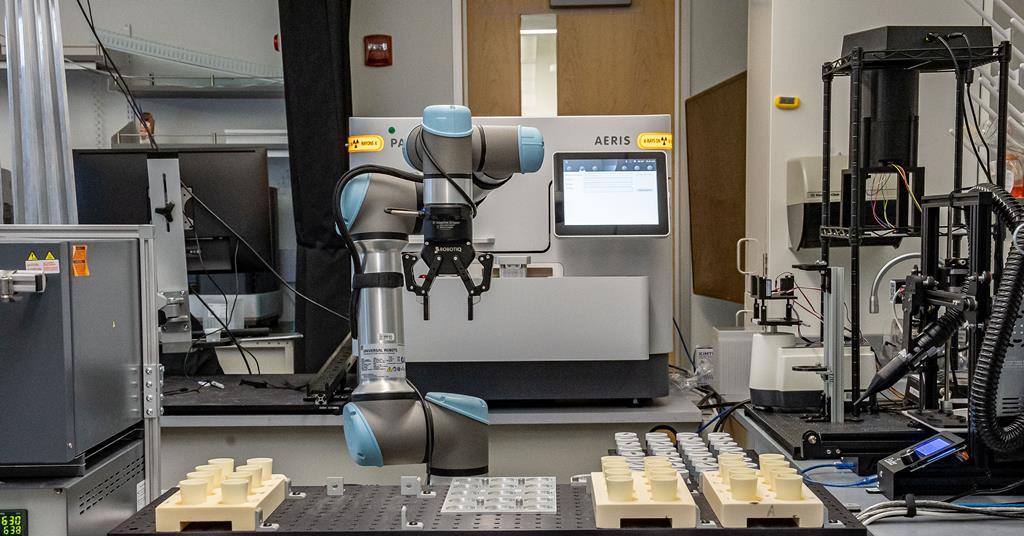
AI has generated millions of potential new materials, but many are unfeasible or unoriginal, leading to debates about its true potential in materials science. While AI accelerates discovery and offers promising tools like GNoME and A-Lab, limitations such as predicting disordered structures and overhyped claims highlight the need for collaboration with experimental chemists and cautious interpretation of results.
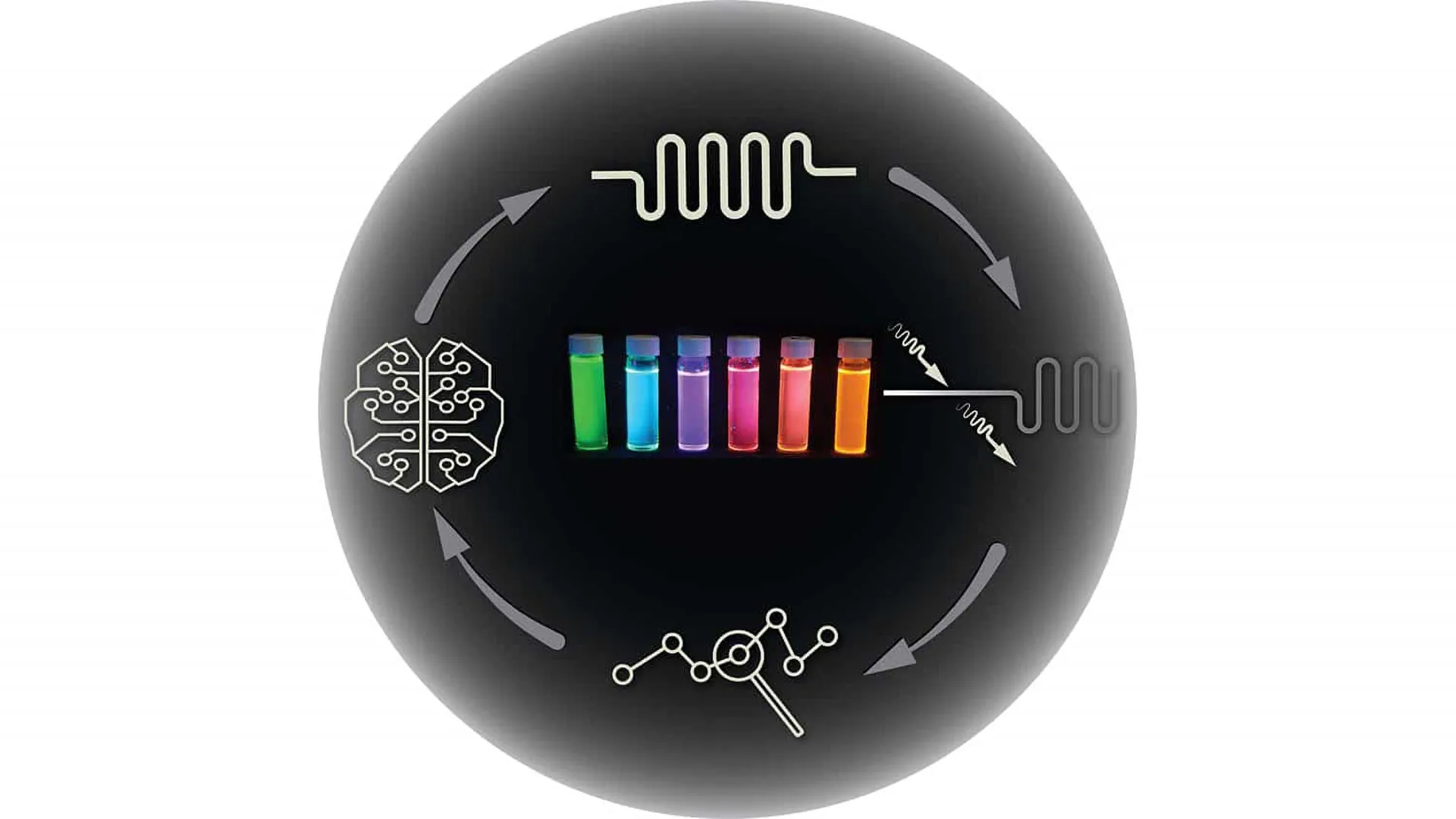
Researchers have developed a new self-driving laboratory that uses dynamic flow experiments to collect data ten times faster than traditional methods, enabling quicker and more sustainable materials discovery by continuously monitoring reactions in real time and improving machine learning predictions.
AI is significantly advancing scientific research by enabling breakthroughs in protein structure prediction, brain mapping, materials science, climate forecasting, and fundamental physics, while also paving the way for autonomous laboratories and AI-driven hypothesis generation, despite some challenges in interpretability and understanding.
A critique of a paper reporting the discovery of over 40 novel materials using an autonomous laboratory guided by AI has raised doubts, with a new analysis finding systematic errors in both computational and experimental work. The original report's use of AI to conduct Rietveld refinement and its failure to recognize substitution and site mixing in inorganic solids led to misidentifications and assumptions of new compounds. While the A-Lab team argues that they successfully synthesized the reported compounds, critics emphasize the need for AI systems to be trained to handle complexities in materials analysis and caution against expecting AI to revolutionize technical fields overnight.
Microsoft collaborates with PNNL to use Azure Quantum Elements, a combination of AI and traditional high-performance computing, to narrow down millions of potential new battery materials to a few promising candidates in just 18 months, a process that would typically take years. While no quantum computer was used in this project, the overall goal is to integrate AI, cloud, and high-performance computing to accelerate scientific discovery. Despite the current limitations of quantum computing, Microsoft remains optimistic about delivering a quantum supercomputer within the next decade.