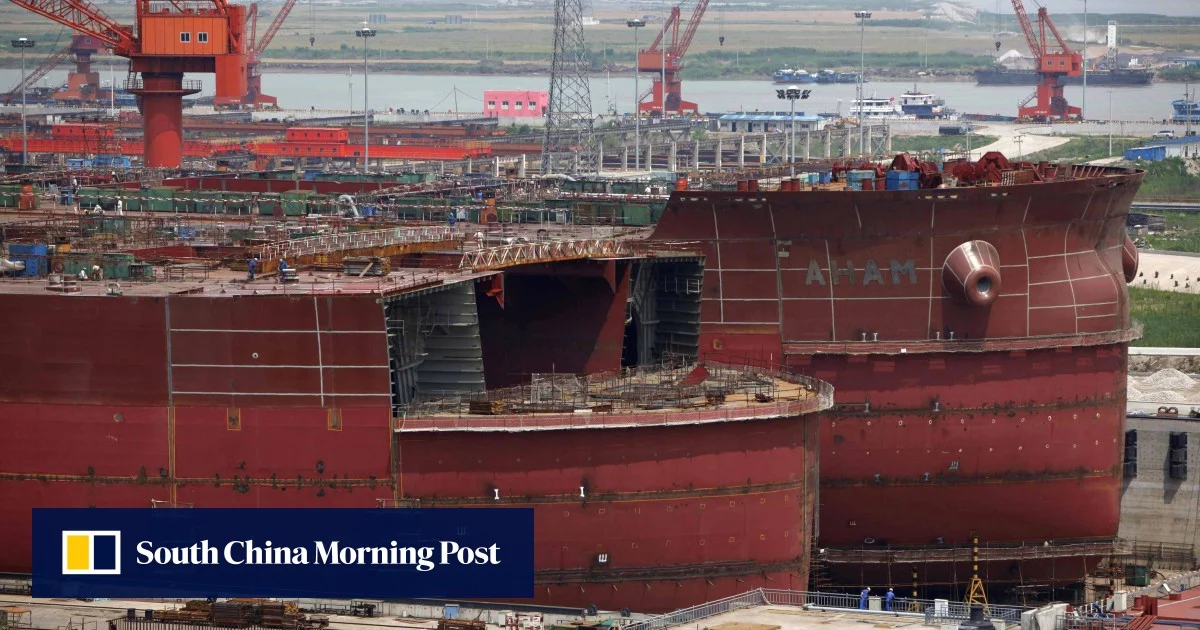
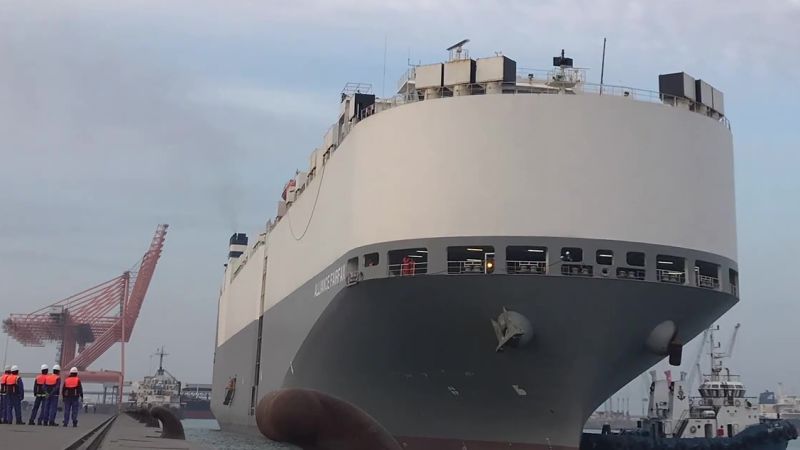
China has imposed sanctions on five US-based subsidiaries of South Korean shipbuilder Hanwha Ocean, accusing them of supporting US efforts to restrict China's maritime and shipbuilding sectors, escalating tensions amid ongoing US-China maritime disputes.
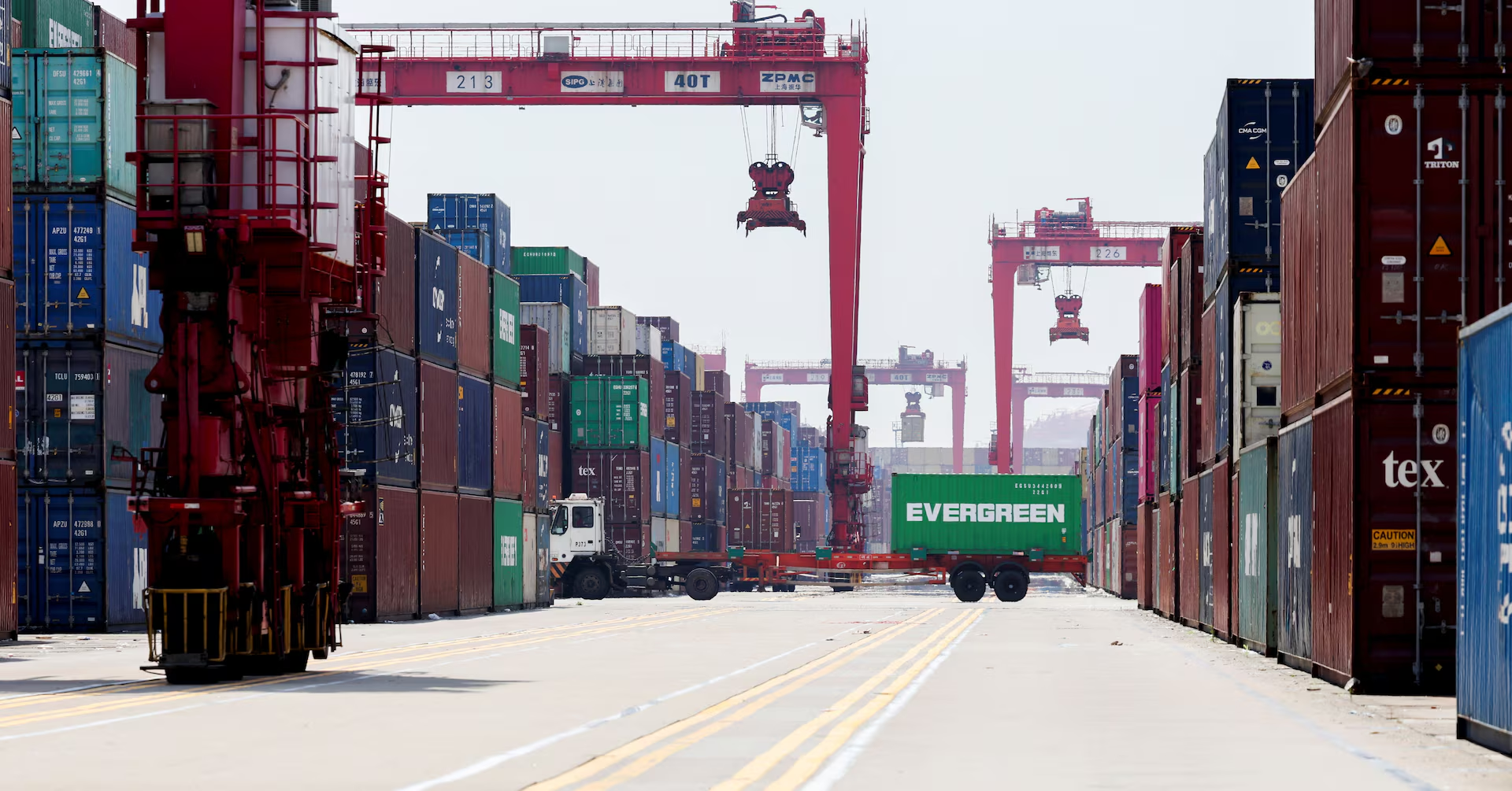
The US and China are implementing reciprocal port fees on each other's vessels, escalating tensions in the ongoing trade war and potentially disrupting global maritime logistics, with China exempting Chinese-built ships and both nations aiming to weaken each other's dominance in shipping and logistics sectors.
The US and China are set to impose new fees on maritime trade, stemming from a trade investigation into China's shipbuilding practices, aiming to boost US maritime dominance amid concerns over supply chain disruptions and economic security, though critics argue these measures may harm global trade and increase costs for US consumers and businesses.
U.S. Transportation Secretary Sean P. Duffy has withdrawn or terminated $679 million in federal funding for 12 offshore wind projects, redirecting resources towards strengthening America's maritime industry and infrastructure, reflecting a shift away from renewable energy projects favored by the previous administration.
Abdul Nasser Saleh's near-decade ordeal on an abandoned cargo ship highlights a growing global issue of shipowner abandonment, exacerbated by rising costs and logistical challenges. The United Nations reports a record number of such cases, with over 2,000 seafarers abandoned last year. Despite international regulations, many flag states fail to assist stranded crews, leaving sailors without pay or basic supplies for months or years. Saleh's case, resolved only after media intervention, underscores the systemic failures and human toll of this maritime crisis.
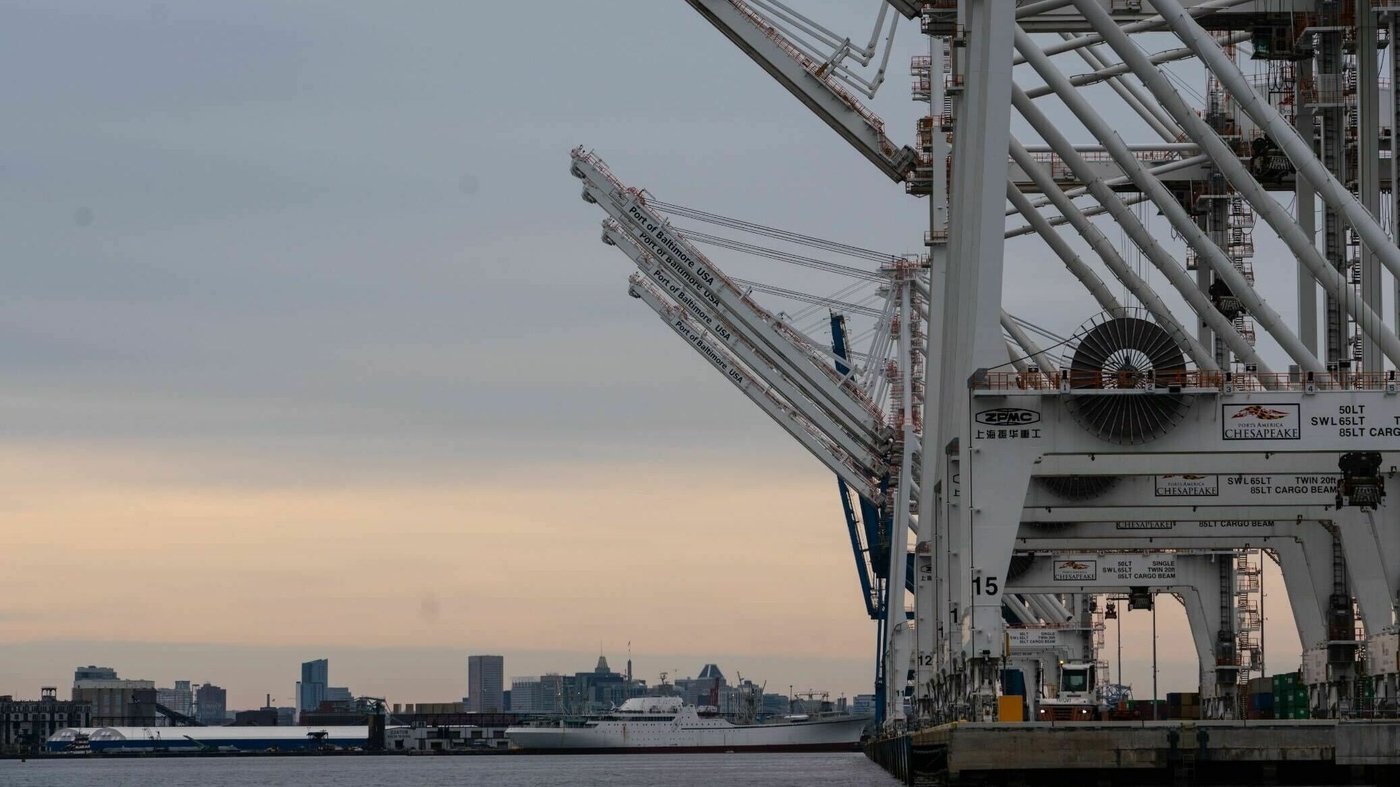
The collapse of the Francis Scott Key Bridge has led to a halt in work for many at the Port of Baltimore, affecting longshoremen, charter boat businesses, and the state's economy. The closure of the shipping channel is estimated to cost $191 million a day in lost economic activity, prompting the state to set up an unemployment line and consider emergency legislation for income replacement. While the impact is expected to be temporary, the rebuilding process, which could take years, will have lasting effects on the maritime industry and waterfront businesses.
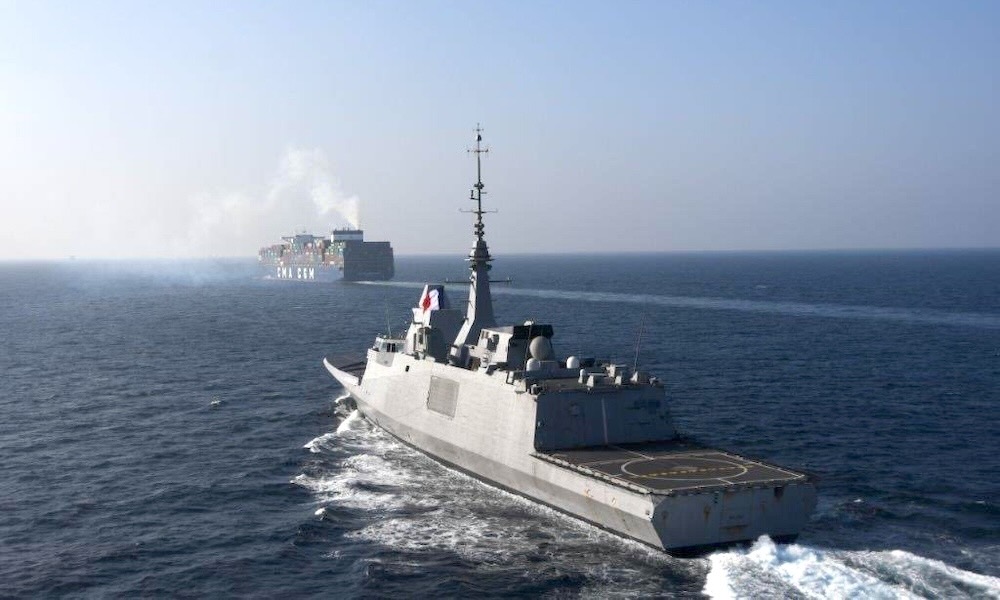
Crew members working for CMA CGM have expressed significant concerns about the company's safety policies and compensation practices regarding Red Sea transits, particularly in light of heightened security risks due to recent attacks by Houthi rebels. They are calling for a reassessment of routes, enhanced safety measures, improved compensation packages, and a transparent communication channel for employees to voice their concerns. Meanwhile, industry commentators and surveys highlight the growing impact of security threats on seafarer welfare, and the European Union plans to launch a naval mission in the Red Sea within three weeks.
The Houthi rebel attacks in the Red Sea are causing significant disruptions to global shipping, surpassing the early Covid-19 pandemic impact on the supply chain, according to maritime advisory firm Sea-Intelligence. Vessel capacity has dropped significantly as ships divert from the Red Sea, leading to delays in container pickups at ports. The disruptions are also affecting energy markets and product tanker operators, with companies like Shell and BP suspending shipments through the Red Sea. The situation is expected to persist for several months, prompting concerns about extended disruptions and supply shortages.
The re-routing of ships around Africa to avoid potential attacks in the Red Sea is increasing demand for bunker fuel at ports in Africa and the Mediterranean, with prices rising significantly. Attacks by Yemen's Houthi militia on merchant ships in the Red Sea have led to tensions in the Middle East, prompting ships to divert around the southern tip of Africa. This has caused congestion in bunkering ports around Africa and put pressure on port infrastructure. Bunker fuel demand has risen at ports in Mauritius, Gibraltar, the Canary Islands, and South Africa, with prices jumping in Cape Town. Singapore and Rotterdam are expected to see increased demand for bunker fuel as ships seek competitive prices and hedge against route uncertainties.
Shipowners are closely monitoring the risk of indiscriminate firing on commercial shipping in the Red Sea by Yemen’s Houthi faction, with factors such as charterers, crews, and ship type influencing decisions. Some owners believe that the tipping point for avoiding the region may be only a few more attacks away, potentially leading to more ships treating the area as a no-go zone. Charterers and crews are also influencing decisions, with sentiment among charterers changing after recent attacks. The situation poses significant risks for the maritime industry, potentially leading to re-routing vessels and increased insurance costs, while crews may demand additional danger money in certain situations.
Shipowners are closely monitoring the risk of indiscriminate firing on commercial shipping in the Red Sea by Yemen’s Houthi faction, with factors such as charterers, crews, and ship type influencing decisions. Some owners believe that the tipping point for avoiding the region is near, while others are still navigating through. Charterers are also adjusting their stance, with sentiment shifting after recent attacks. The situation may lead to re-routing vessels around the Cape of Good Hope, potential additional danger money for crews, and premium rates for transit. The turmoil poses significant risks for the maritime industry, particularly impacting the container sector and certain eastbound dry bulk cargoes.
The U.S. Treasury Department's Office of Foreign Assets Control has sanctioned three vessels and shipping companies for violating Russian oil sanctions, as part of its intensified efforts to cut off the Kremlin's access to oil profits. However, the hunt for violators is revealing complexities in the maritime industry and the Treasury's own guidelines. The location of shipping companies may differ from the location of the beneficial owner, and there are grey areas in the guidelines that can be exploited to circumvent sanctions. The Treasury's probe of approximately 30 ship management companies suspected of violating a price cap on Russian oil further highlights the challenges in identifying and proving violations. The murkiness within the Russian oil trade, including the use of dark and grey fleet vessels, makes tracking and enforcing sanctions difficult.
Edgar Sison, a mariner accused of sexually assaulting a student from the US Merchant Marine Academy, has surrendered his credential to work on ships but will not face criminal charges. The case, which prompted reforms in the shipping industry, involved allegations of forced alcohol consumption and assault. The US Coast Guard amended an administrative complaint against Sison, who voluntarily surrendered his credential. The Department of Justice declined to comment on the decision not to prosecute. The case highlighted long-standing issues of sexual assault in the maritime industry and the limitations of the Coast Guard's investigations.
The Panama Canal Authority has extended transit restrictions through September 2, limiting the number of vessels authorized to pass through the waterway to a maximum of 32 per day. These restrictions, implemented due to a delayed rainy season, could lead to increased shipping costs and consumer goods prices. The Canal is an important route for moving goods between Asia and the United States, particularly during peak selling seasons. The bottleneck is gradually easing as more slots are opened for non-booked vessels, but the prolonged drought has necessitated the use of navigation channels and locks, resulting in reduced capacity.