Luca Guadagnino's film 'After the Hunt' attempts to explore cancel culture and complex moral gray areas within academia, but it ultimately fails to provide meaningful insight, instead presenting a muddled and heavy-handed critique that leaves viewers questioning its purpose and message.
The season 2 finale of The Walking Dead: Dead City features Negan and Maggie confronting their pasts and forming a tentative alliance, with significant character development and a hint at future conflicts, emphasizing themes of change and reconciliation.
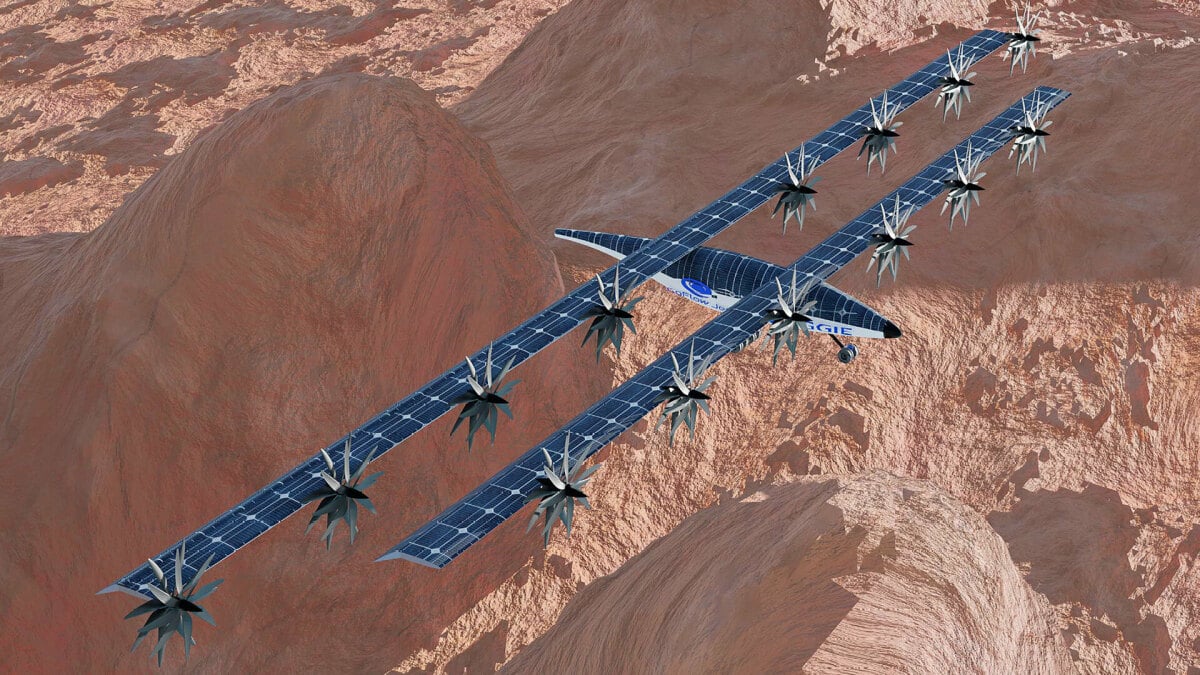
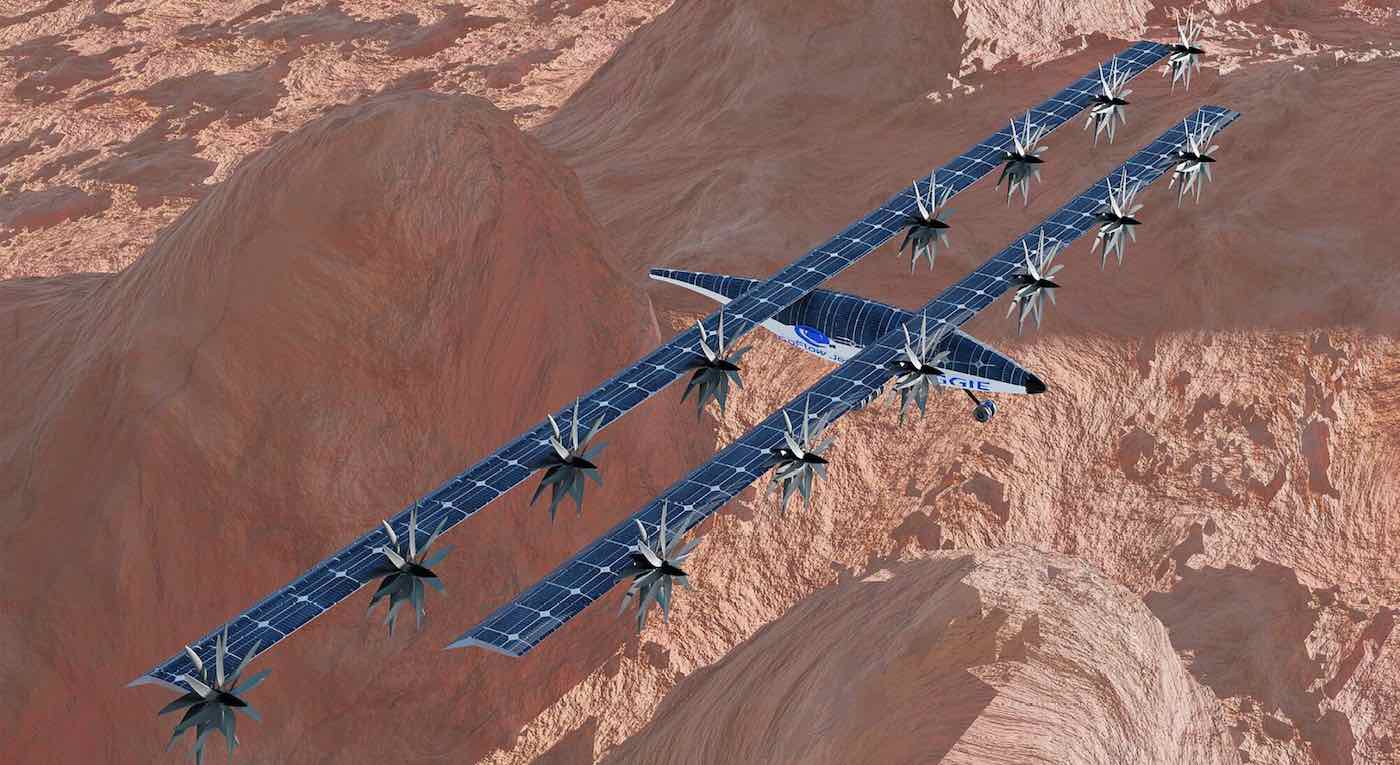
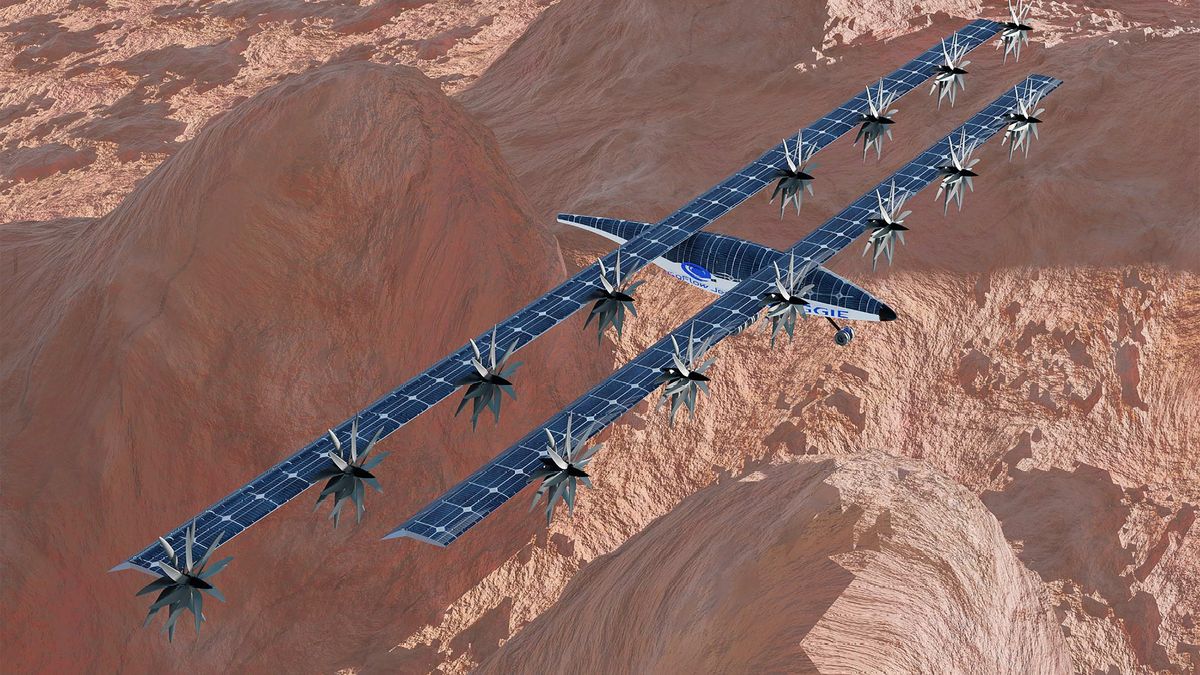
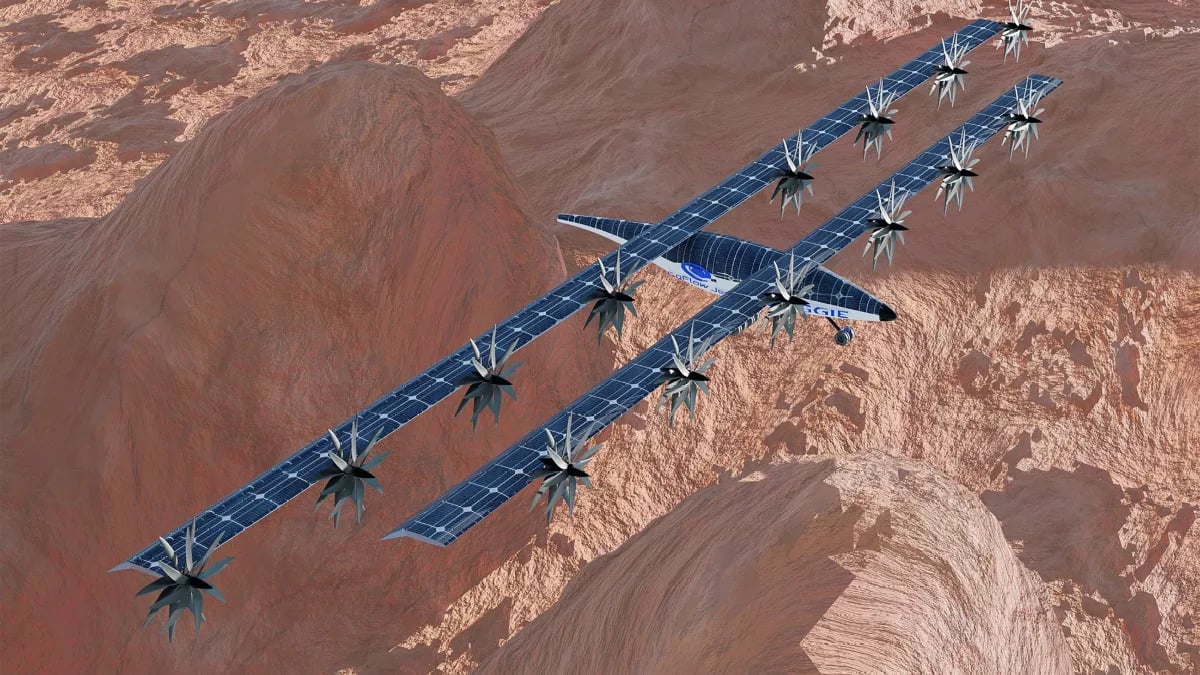
NASA is funding a study to explore the feasibility of a Mars airplane concept called MAGGIE, designed to operate for nearly two Earth years and fly 3,300 feet above the Martian surface to search for methane, a potential sign of life. The aircraft could use high-resolution instruments to detect trace amounts of methane and other transient phenomena, and its patented technology would allow it to navigate the thin atmosphere of Mars. If successful, MAGGIE could be included in a two-year phase 2 study to deepen engineering and science work, potentially leading to future aerial exploration missions on Mars.
A new concept for a robotic flying vehicle called MAGGIE has been selected for phase 1 development by NASA's NIAC program, with the potential to explore Mars from the sky. The vehicle would be launched to Mars on a rocket, descend through the thin atmosphere using a heat shield and parachute, and then use solar-powered propellers for exploration. MAGGIE's capabilities include reaching speeds of Mach 0.25 and covering a range of 16,048 km on Mars. The project aims to investigate how MAGGIE could operate in the thin atmosphere and could potentially study Mars' magnetism, methane plumes, and more. This concept is one of several projects funded by NIAC, including a sample-return mission to Venus and a mission to explore the nearest star system.
NASA's Innovative Advanced Concepts program is funding the theoretical development of a Martian plane called MAGGIE, designed to explore Mars' surface and stay aloft in its thin atmosphere. The aircraft, which would be powered by solar panels, aims to overcome the challenges of flying on Mars, such as generating lift and taking off and landing without runways. The concept draws inspiration from NASA's Ingenuity helicopter and could potentially revolutionize exploration and travel on the Red Planet.
NASA has granted advanced funding for the development of MAGGIE, a solar-powered vertical take-off aircraft designed to fly on Mars within the next 6 years. The compact fixed-wing electric aircraft will utilize solar energy and have vertical take-off/landing capability, aiming to revolutionize exploration of the Martian surface. The project will benefit from data gathered by the Ingenuity Mars Helicopter, and is part of NASA's NIAC program, which supports innovative concepts for space exploration.
Nasa is considering sending a giant fixed-wing plane named Maggie to Mars, which will be a solar-powered aircraft designed to explore the planet's surface and conduct scientific investigations. The proposed aircraft, still in early development, aims to focus on finding signs of water, understanding the weak Mars magnetic field, and searching for methane signals. Meanwhile, Nasa's Ingenuity helicopter, the first aircraft to achieve powered, controlled flight on another planet, has exceeded expectations by completing 71 flights and covering 17km on Mars.
NASA has funded the Mars Aerial and Ground Global Intelligent Explorer (MAGGIE), a solar-powered aircraft designed to search for water on Mars from the planet's atmosphere. MAGGIE, still in early stages, could revolutionize Mars exploration by flying 3,300 feet above the surface and conducting scientific investigations. The concept, while feasible, requires further study under Martian atmospheric conditions. Meanwhile, the Ingenuity helicopter on Mars, originally built for five flights, has surpassed 70 liftoffs and is aiding the Perseverance rover in the search for ancient water and life on the planet.
NASA has funded the development of a new concept vehicle called MAGGIE, designed to search for water on Mars from the planet's atmosphere. The solar-powered aircraft, which can fly up to 111 miles on a single charge, aims to investigate water, the weak Mars magnetic field, and elusive methane signals. While still in the early stages, the concept has potential to revolutionize Mars exploration and engage the public due to its audacity. Additionally, the Ingenuity helicopter on Mars, originally designed for five flights, has surpassed 70 liftoffs and is aiding the Perseverance rover in the search for ancient water and life on the planet.
NASA is developing a solar electric plane called MAGGIE (Mars Aerial and Ground Intelligent Explorer) for future Mars missions, following the success of the Ingenuity helicopter. This fixed-wing aircraft is designed to perform global-scale atmospheric measurements on Mars and represents a significant advancement in space technology. The project is part of the NASA Innovative Advanced Concepts (NIAC) Program.
In the Season 1 finale of The Walking Dead: Dead City, Negan's attempt to reunite Maggie with her kidnapped son backfires as she betrays him. Negan reveals to Ginny that he doesn't care about her and is only using her to settle a debt. Maggie and Negan engage in a brutal fight, leading Maggie to realize her fixation on Negan and decide to seek closure by saving him from the Croat. However, Negan's loyalty is tested when he is confronted by boss lady La Dama, who wants him to be as dreadful as ever to protect Manhattan.
The Walking Dead: Dead City attempts to refresh the franchise by taking Maggie and Negan to a more claustrophobic Manhattan, but its best moments come when it leaves their former world behind. The dynamic between Maggie and Negan demands that you still be passionate about Glenn’s murder, an event that happened back in 2016. The show might even work best if you haven’t kept up with it for this long. The Walking Dead: Dead City works best when it forgets that it’s part of The Walking Dead.
In the premiere of AMC's third Walking Dead spinoff, Dead City, Maggie seeks out Negan to help rescue her kidnapped son from a villain called The Croat. Negan agrees to help, and they travel to Manhattan, where they encounter dangerous situations and face off against the marshals. Meanwhile, The Croat terrorizes Hershel, Maggie's son, and another prisoner before the episode ends on a cliffhanger.
Lauren Cohan, star and executive producer of The Walking Dead: Dead City, reveals that the series was originally intended to open with a bar scene instead of the panoramic shot of a ravaged New York City. Cohan also discusses Maggie's big move at the end of the episode, explaining that it speaks to the fact that no person in this world is simply good or bad. With five more episodes on deck, there's plenty more to come in the next phase of The Walking Dead franchise.
"The Walking Dead: Dead City" is a spinoff featuring only Maggie and Negan navigating new challenges several years after the events of "The Walking Dead" series' finale. The first season is a well-told, self-contained story that retains many of its predecessor's best qualities while deepening two of its most beloved characters. The show maximizes its practical effects and sets by sandwiching indoor scenes between cinematic establishing shots, which gives certain pivotal moments the feel of grandiose set pieces without having to actually stage them as such. The chemistry between the two actors drives the plot and raises stakes at every turn. The series premieres on AMC on June 18.