China's LandSpace, inspired by SpaceX, has conducted its first reusable rocket test and plans to go public to fund its ambitions of competing in reusable rocket technology, signaling a shift in China's space industry towards risk-taking and private sector involvement.
China has eased IPO regulations for private companies developing reusable rockets, allowing them to list on the STAR market without meeting traditional profitability requirements, provided they meet key technological milestones like orbital launches with reusable technology, as part of China's effort to compete with U.S. dominance in space technology, particularly against SpaceX.
China has introduced new IPO guidelines for companies developing reusable rockets, easing financial requirements and emphasizing technological milestones, as part of its strategy to close the space capabilities gap with the US and reduce reliance on SpaceX's monopoly in reusable rocket technology.
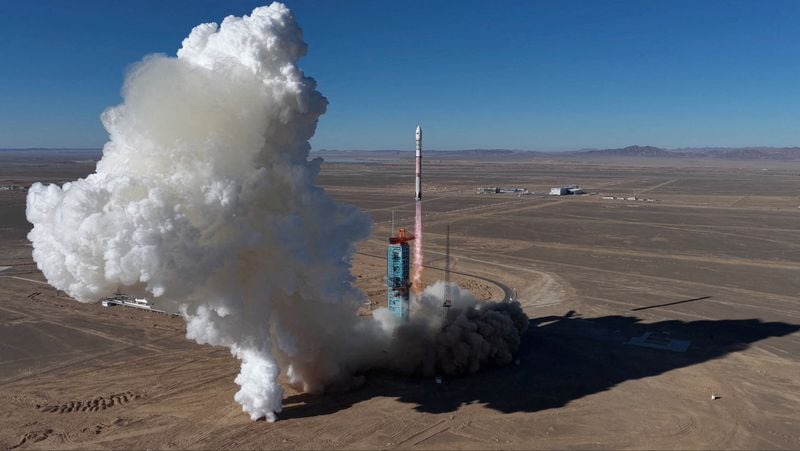
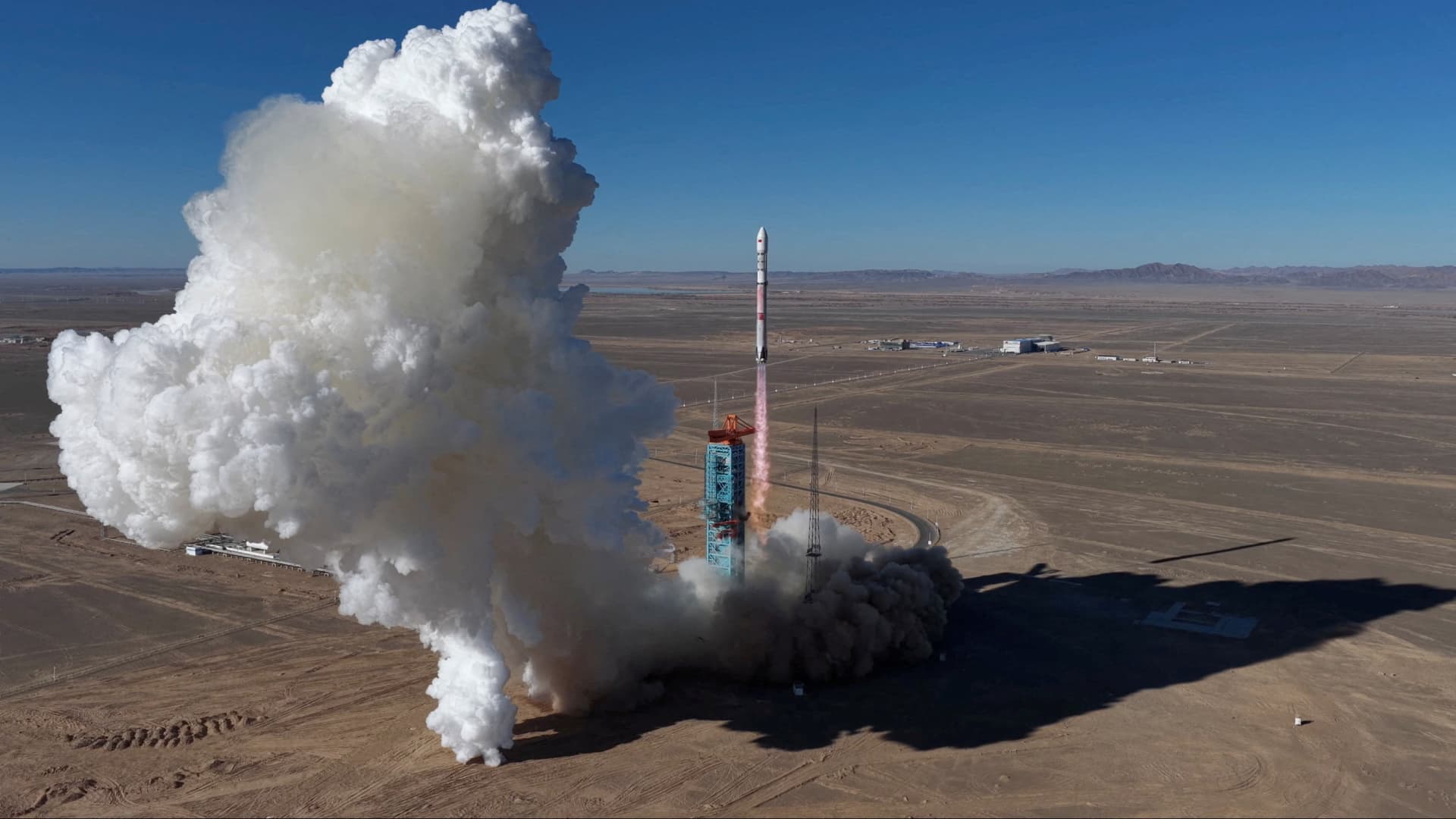
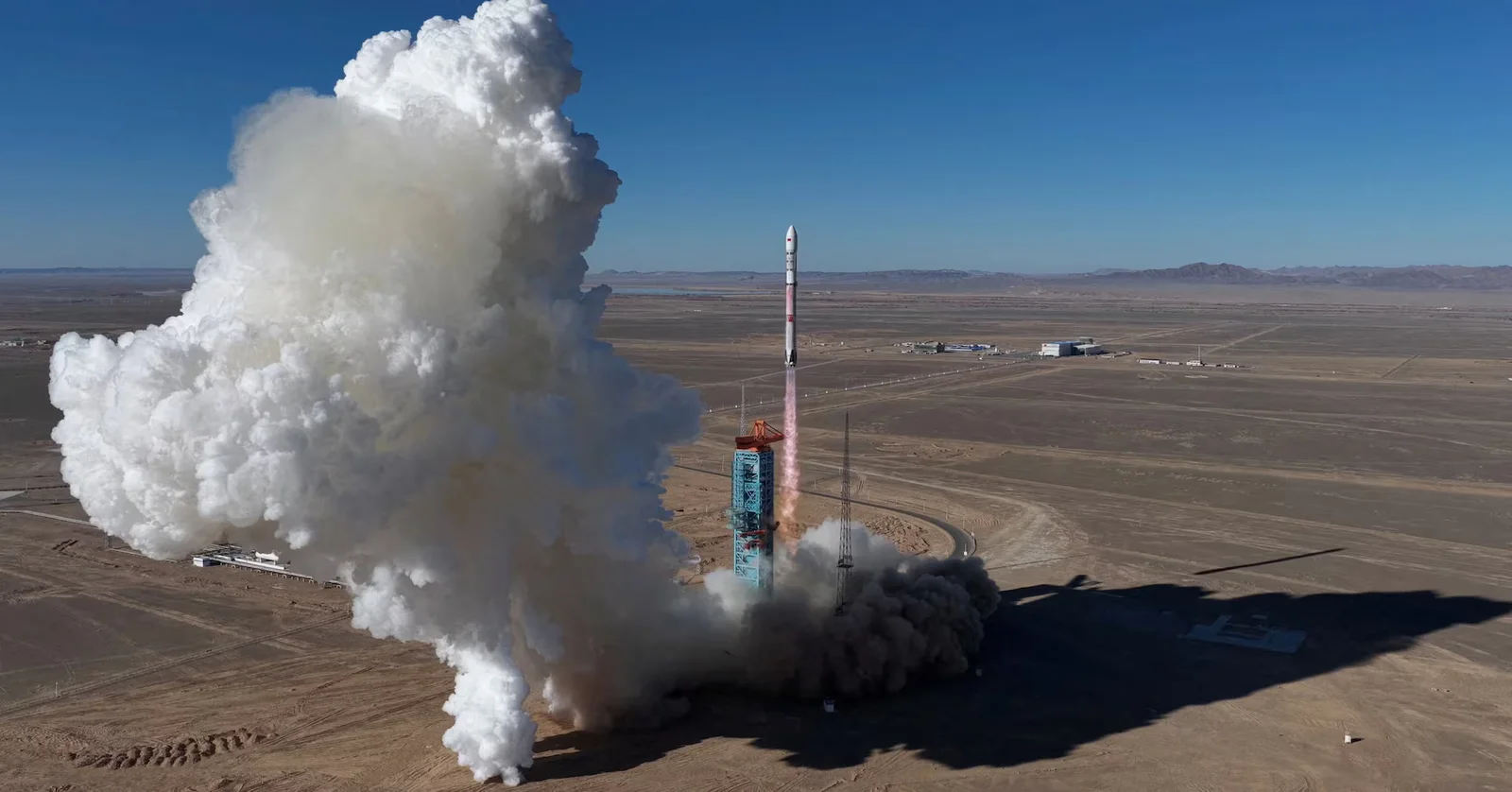
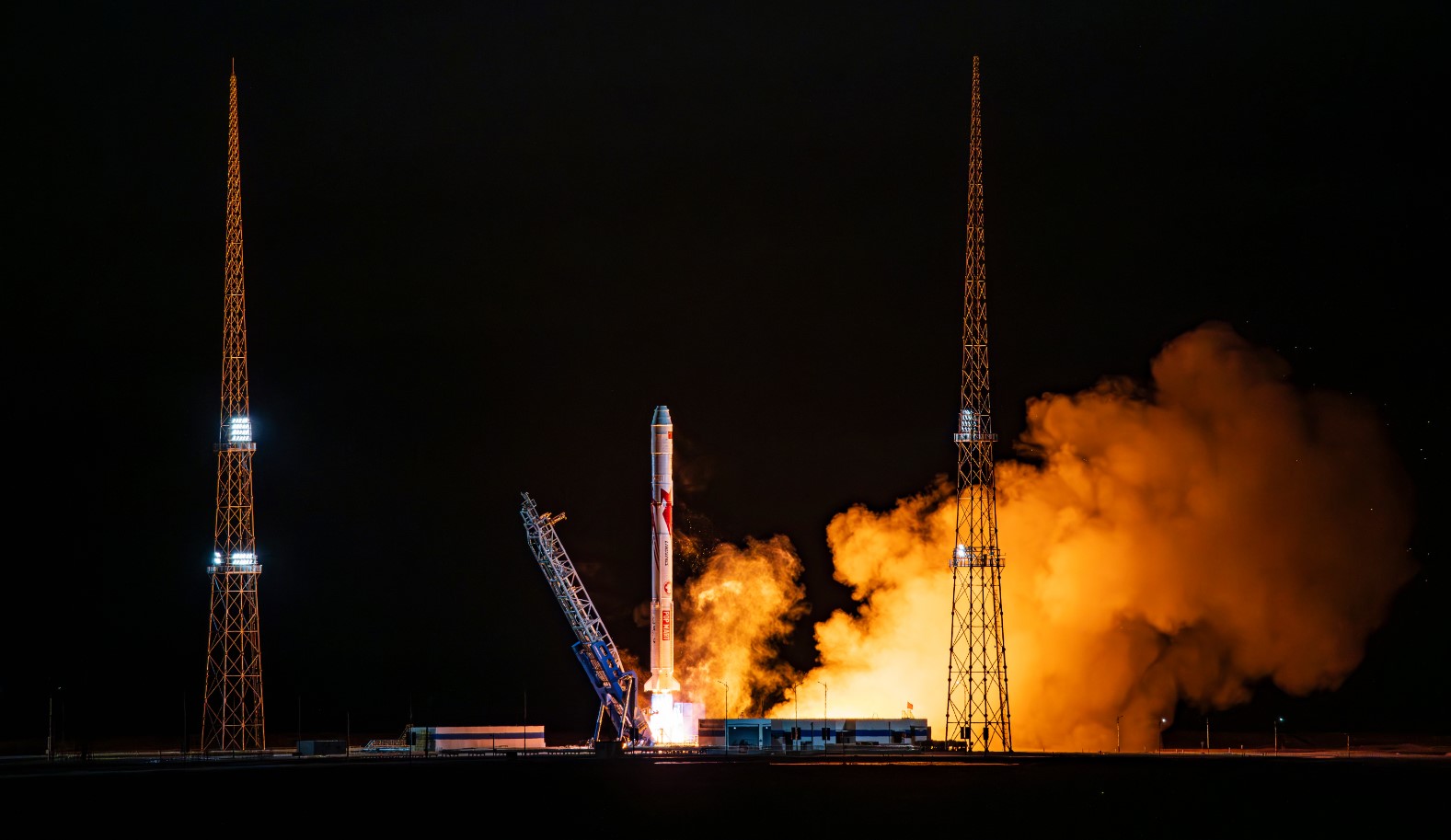
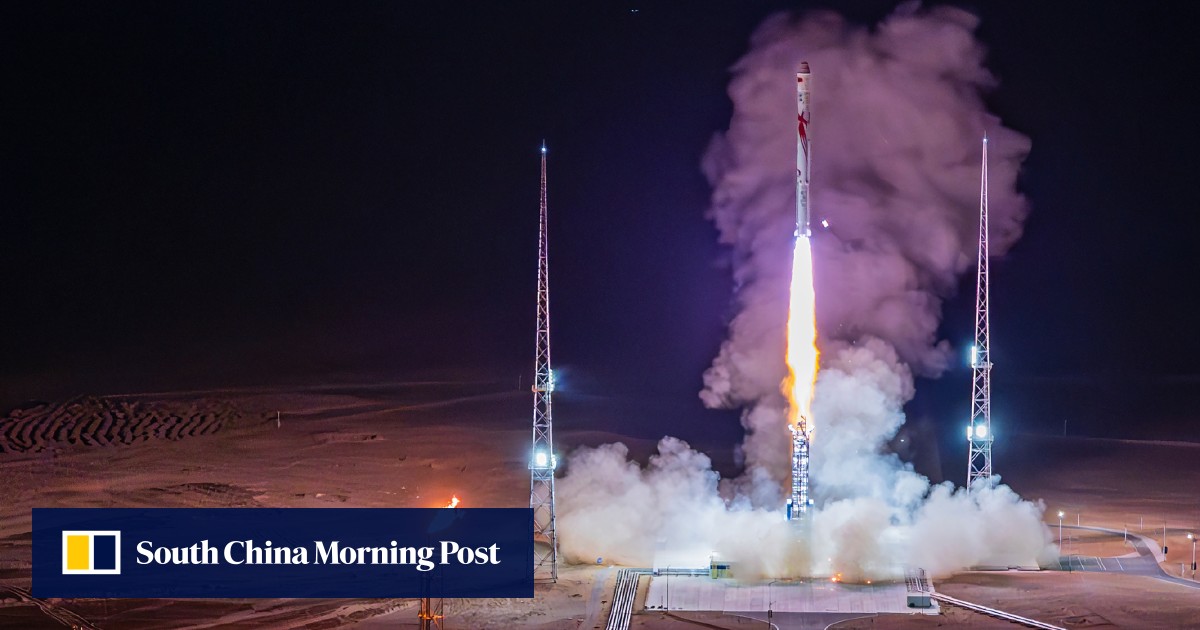
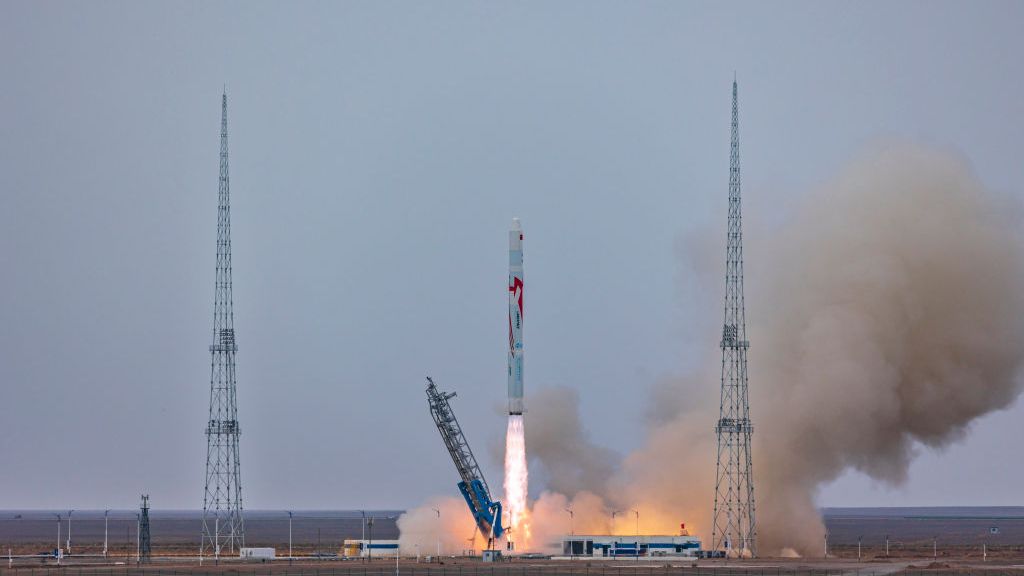
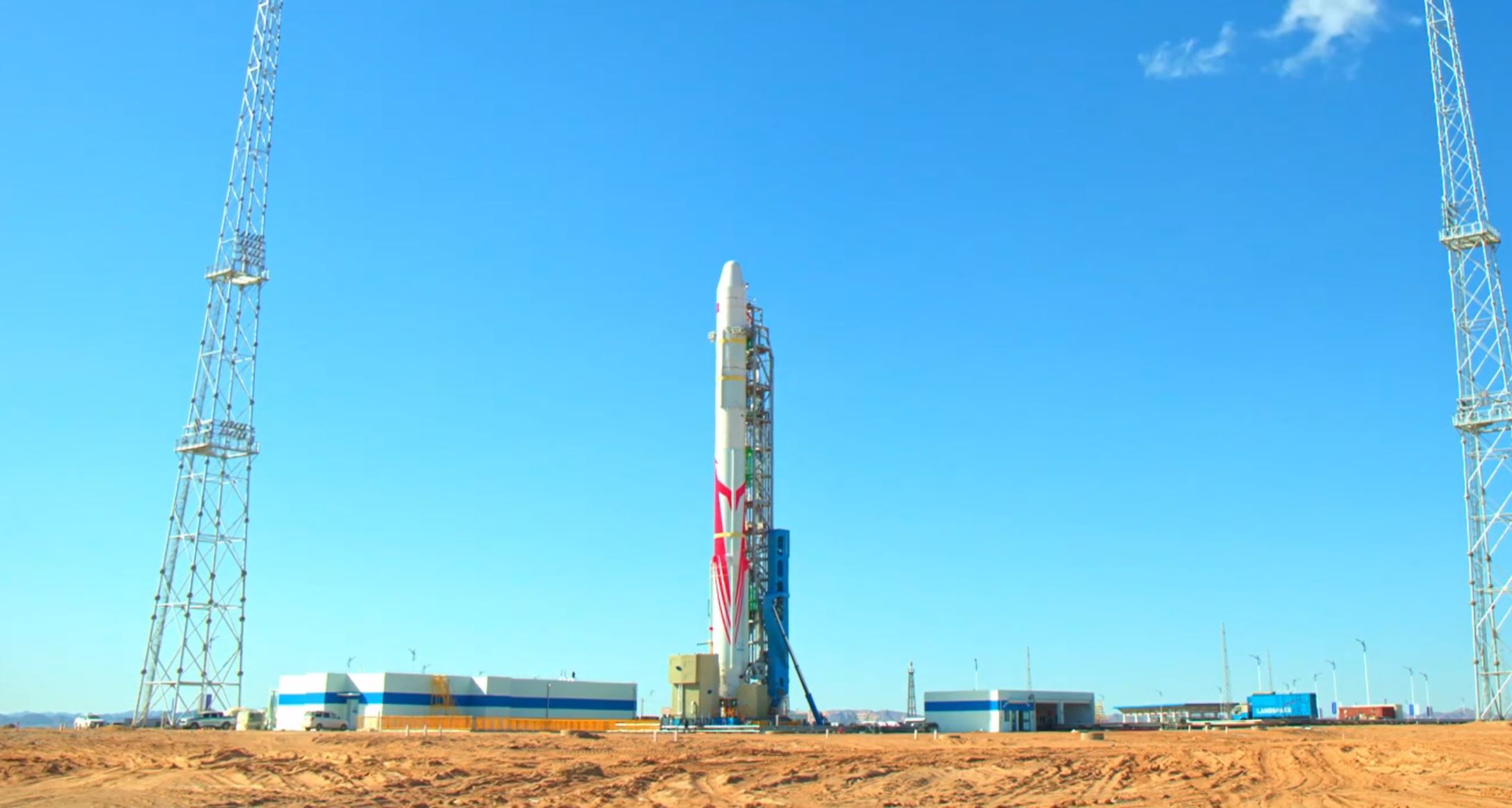
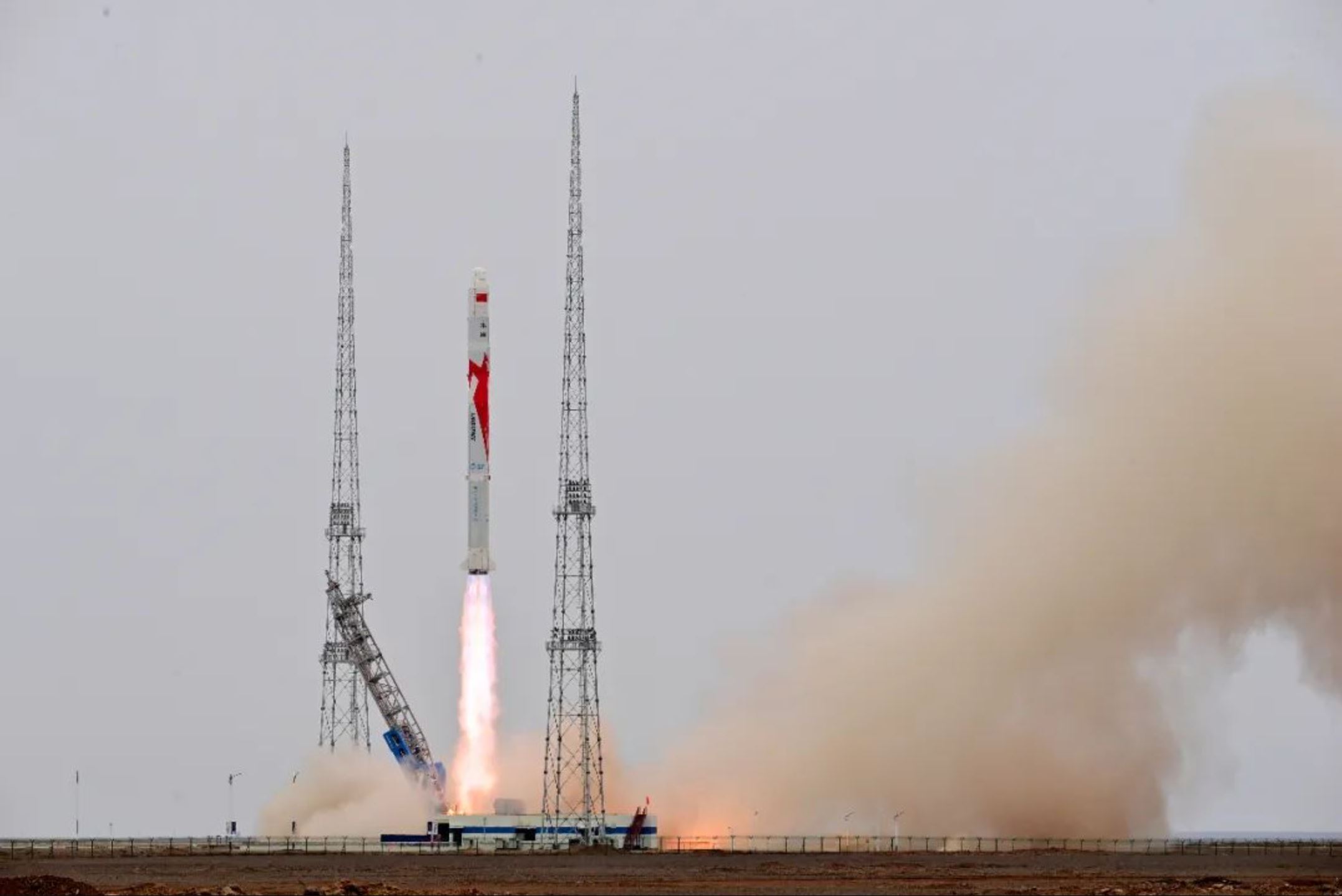
China's first reusable rocket, Zhuque-3, successfully reached orbit but failed to recover its first stage after crashing near the recovery site, leaving the US as the only country with successful orbital booster recovery.
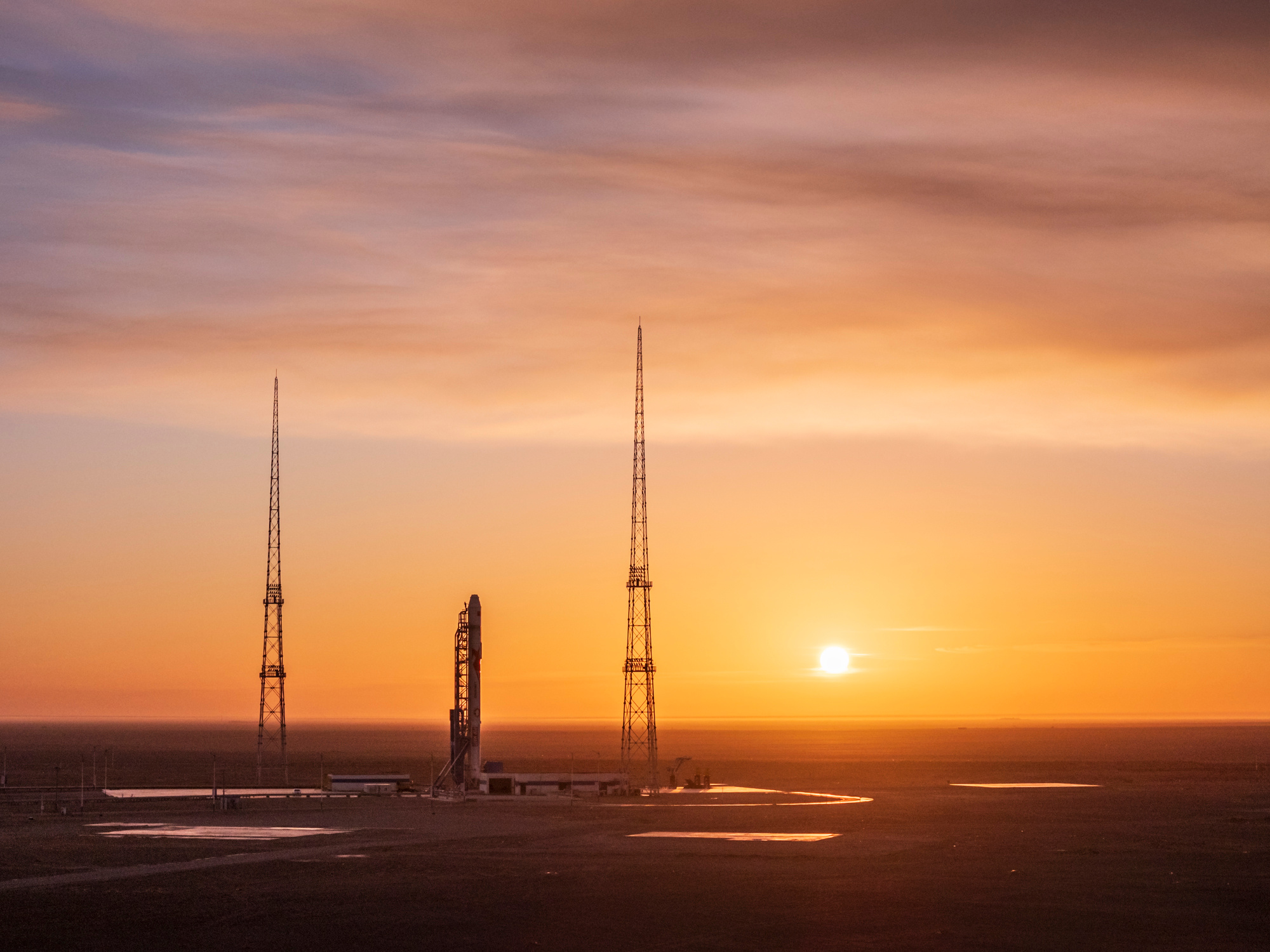
China's LandSpace has achieved a key milestone with its Zhuque-3 reusable rocket, including static fire tests and preparations for an orbital launch expected in late 2025, as part of China's broader ambitions to rival major space powers and develop advanced space transportation systems.
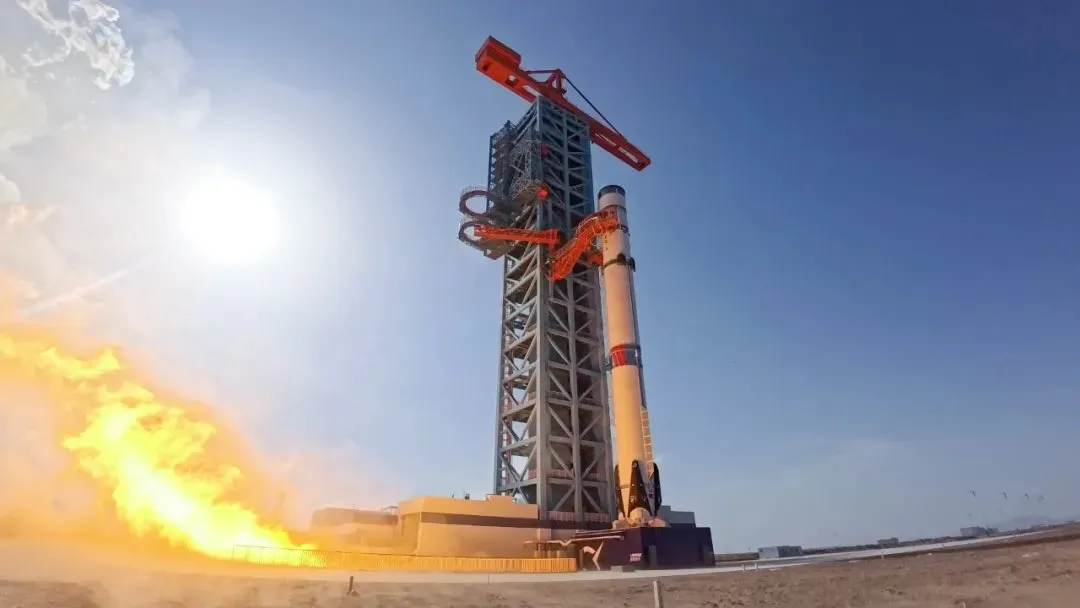
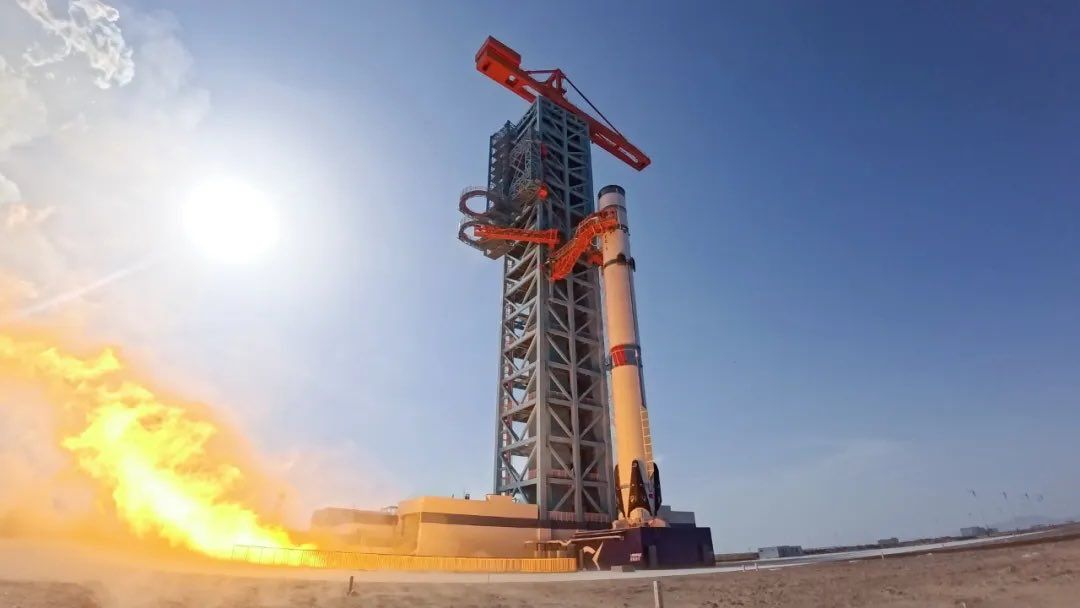
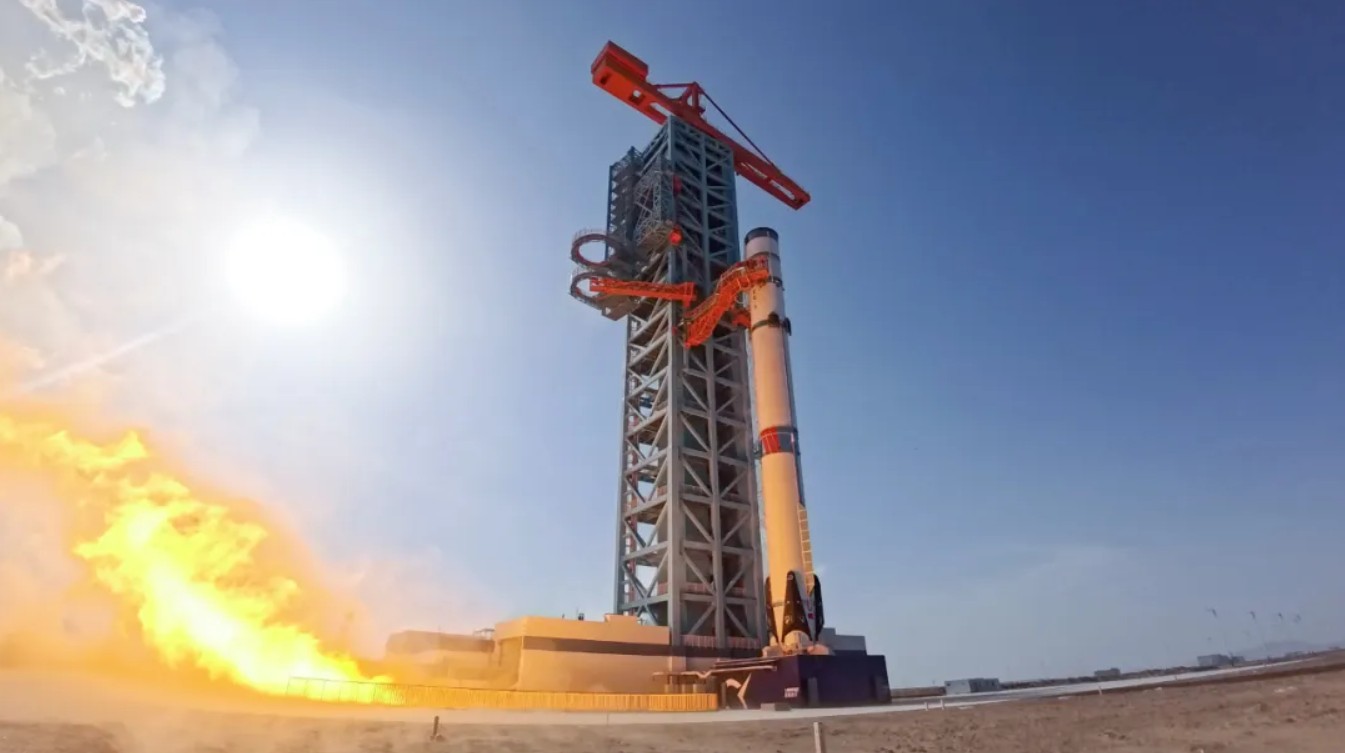
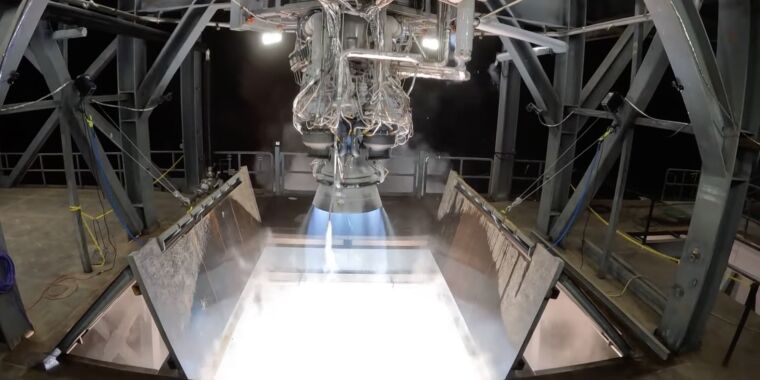
China's LandSpace successfully conducted a static-fire test of its reusable Zhuque-3 rocket, moving closer to its first orbital launch planned before year's end. The rocket, similar to SpaceX's Falcon 9, features a reusable first stage powered by nine Tianque-12A engines using liquid methane and oxygen, and can carry approximately 18,300 kg to low Earth orbit.
Landspace is preparing for China's first orbital launch and potential first-stage recovery of its Zhuque-3 rocket, which aims to deliver cargo to the Tiangong space station. The launch, possibly in November, marks a significant step for China's private space sector and reusable rocket technology, following a series of test preparations and previous rocket failures.
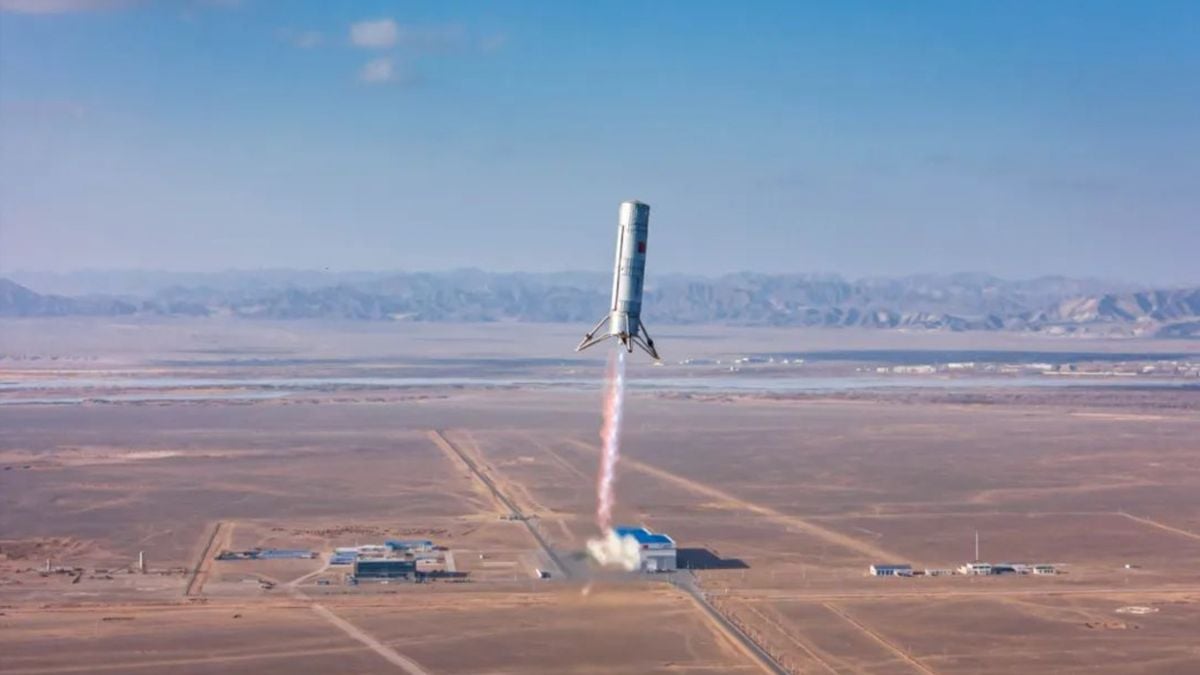
Chinese startup Landspace successfully launched and landed a test version of its reusable rocket prototype, Zhuque-3, at the Jiuquan Satellite Launch Center in Inner Mongolia. The rocket reached an altitude of 1,150 feet and landed within 7.9 feet of its target, marking a significant milestone for the company's goal of developing a reusable launch vehicle. Landspace aims to start flying the Zhuque-3 in 2025, with the rocket capable of carrying up to 40,350 pounds to low Earth orbit in reusable mode. Other Chinese companies, including iSpace, Galactic Energy, and Orienspace, are also working on developing reusable launch vehicles.
United Launch Alliance's Vulcan and Blue Origin's New Glenn are set to make their rocket debuts in 2024, while Avio's lost tanks will delay the final launch of Europe's Vega rocket. Chinese launch startup Landspace successfully placed working satellites into orbit with its methane-fueled Zhuque 2 rocket. Northrop Grumman test-fired a new solid rocket motor, demonstrating innovative technologies and materials for future rockets.
Chinese launch startup Landspace successfully launched its third Zhuque-2 rocket, carrying satellites into orbit for the first time. The rocket, powered by methane-liquid oxygen engines, lifted off from Jiuquan Satellite Launch Center. Landspace also revealed plans for a new stainless steel rocket, Zhuque-3, with a larger payload capacity and potential for reuse. The company aims to ramp up production and launch cadence, with plans to launch three Zhuque-2 rockets in 2024, six in 2025, and 12 in 2026. Landspace is part of China's growing commercial space industry, which has seen several successful launches by various companies this year.
China's private aerospace company, LandSpace, successfully launched its methane-powered rocket, Zhuque 2 Y-3, from the Jiuquan Satellite Launch Centre, becoming the first in the world to do so. The rocket deployed three satellites into orbit, marking a milestone in the commercialization of liquid-powered rockets in China. LandSpace aims to achieve low-cost, large-scale manufacturing and delivery of rockets to ensure continuous and stable launch success. With further improvements, the rocket's payload capacity is expected to reach 4 tonnes, meeting the needs of spacecraft and near-Earth orbit satellites. China aims to become a world-leading space power and is inspired by companies like SpaceX to drive innovation in space technology.
Chinese private company LandSpace successfully launched its third ZhuQue-2 rocket, marking the company's third attempt to reach orbit. The medium-sized rocket, powered by four TQ-12 liquid methane engines, has the capacity to carry up to 1.5 tons to a Sun-synchronous orbit. LandSpace plans to transition to mass production and aims to launch up to four ZhuQue-2 rockets in 2024 and up to 15 per year in the future. The company is also developing a reusable stainless steel rocket called ZhuQue-3, which could lift up to 20 tons of payload in an expendable configuration.
Chinese launch startup Landspace is preparing for the third launch of its methane-powered rocket, Zhuque 2, which aims to demonstrate its operational launch capabilities by carrying satellites. The previous launch of Zhuque 2 ended in failure, but the second launch in July successfully reached orbit with a mass simulator. The rocket, which uses methane and liquid oxygen as propellant, became the first of its kind to reach orbit. The upcoming launch is scheduled for December 5th, and preparations have been spotted at Jiuquan Satellite Launch Center.
Chinese launch startup Landspace has announced plans to develop a reusable stainless steel rocket called Zhuque-3. The rocket will feature stainless propellant tanks and Tianque methane-liquid oxygen propellant rocket engines. It will have a payload capacity of 20 metric tons to low Earth orbit (LEO) when expendable, with recovery of the first stage allowing for 16.5 tons to LEO. Landspace's announcement comes shortly after SpaceX's second Starship/Super Heavy launch test. The development of the stainless steel rocket will present challenges related to weight and manufacturing complexities. Landspace faces competition from other Chinese startups also working on reusable liquid propellant rockets.
Chinese private rocket firm Landspace successfully reached orbit with its methane-fueled Zhuque-2 rocket, becoming the first globally to do so. The rocket carried no payload and its first stage was not recovered. This achievement demonstrates the maturity and breakthrough in Chinese commercial space launch efforts. Landspace is now working on mass-producing the Zhuque-2 and has already begun assembling its third rocket. The company's success follows the previous achievement of Space Pioneer with its Tianlong-2 rocket. Landspace's Zhuque-2 outperforms other methalox rockets in terms of reaching orbit, and its methane-liquid oxygen propellant mix offers advantages in performance and reusability.