Judah Levine, head of the Network Synchronization Project at NIST, explains that Leap Day was introduced by Julius Caesar to align the calendar with the natural world, ensuring that the spring equinox coincided with the spring season for harvest festivals like Passover and Easter. This adjustment helps synchronize the world's clocks with each other and with the astronomical cycle, demonstrating that Leap Day is more than just a calendrical adjustment—it's about keeping major holidays from colliding.
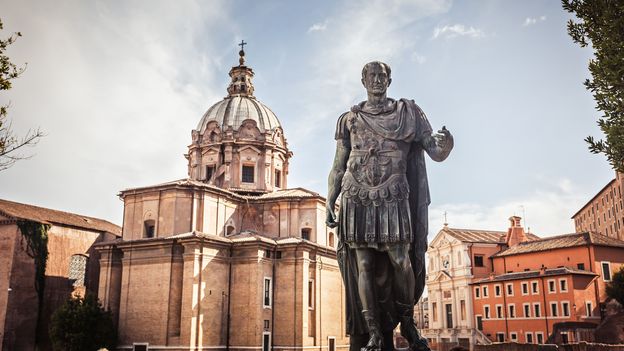
Julius Caesar's reform of the Roman calendar in 46BC, which aimed to align it with the seasons, resulted in the longest year in history at 445 days. The early Roman calendar, based on lunar and agricultural cycles, had become unruly, leading to confusion and mismatches with the seasons. Caesar's advisor, Sosigenes, added two new months to the year and introduced leap years to align the calendar with the solar year. Later, Pope Gregory made further adjustments to create the Gregorian calendar, which is still in use today but not without its own discrepancies.
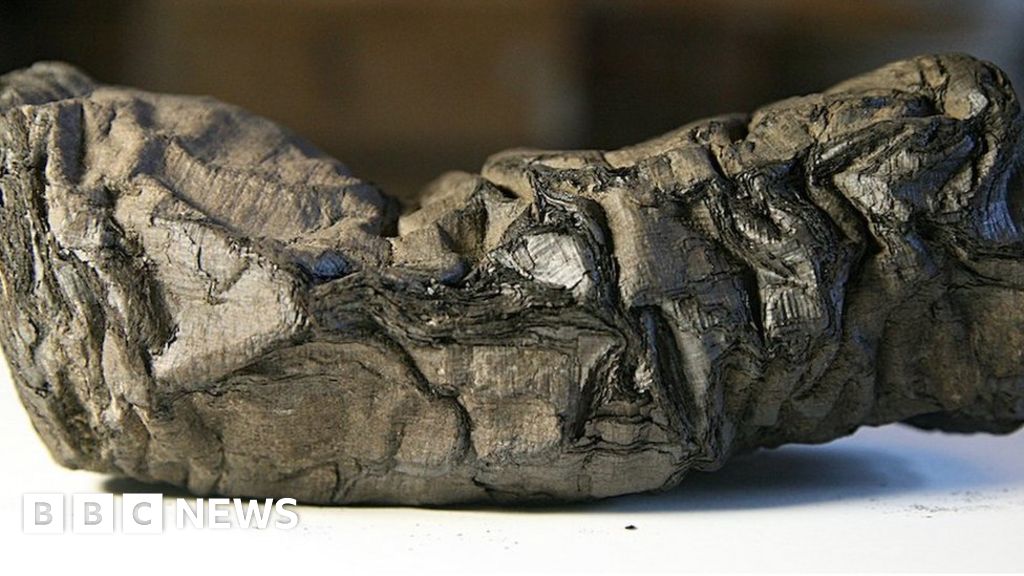
Three students have won a $700,000 prize for using AI to decipher a 2,000-year-old scroll charred during the Mount Vesuvius eruption in 79AD, believed to have belonged to Julius Caesar's father-in-law and discussing music and food. The breakthrough is considered a "revolution" in Greek philosophy, as the AI model has deciphered 5% of the text, revealing discussions on the sources of pleasure in life. The team behind the Vesuvius Challenge aims to use this technology to eventually read all 800 scrolls discovered in the Roman town of Herculaneum.
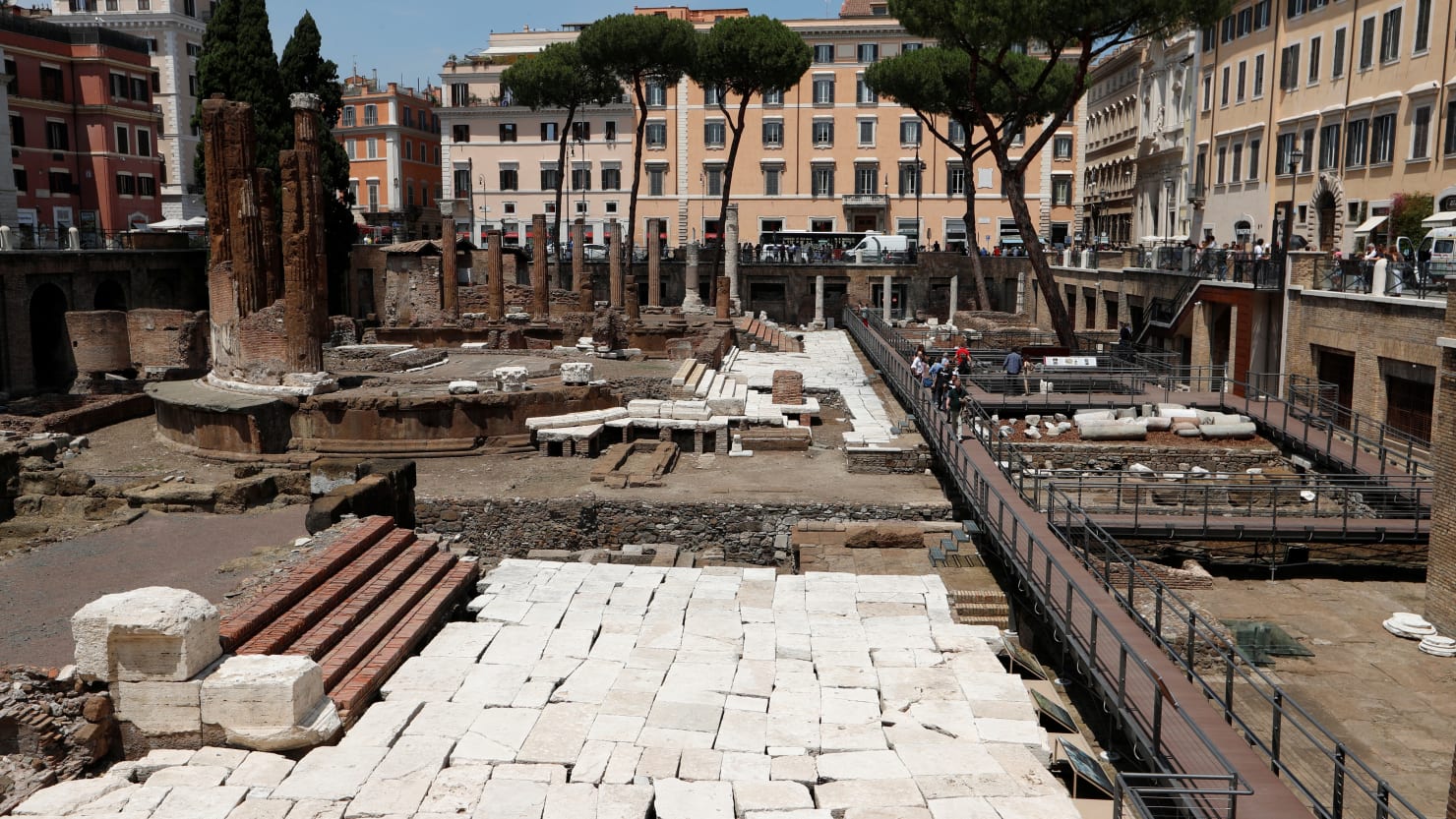
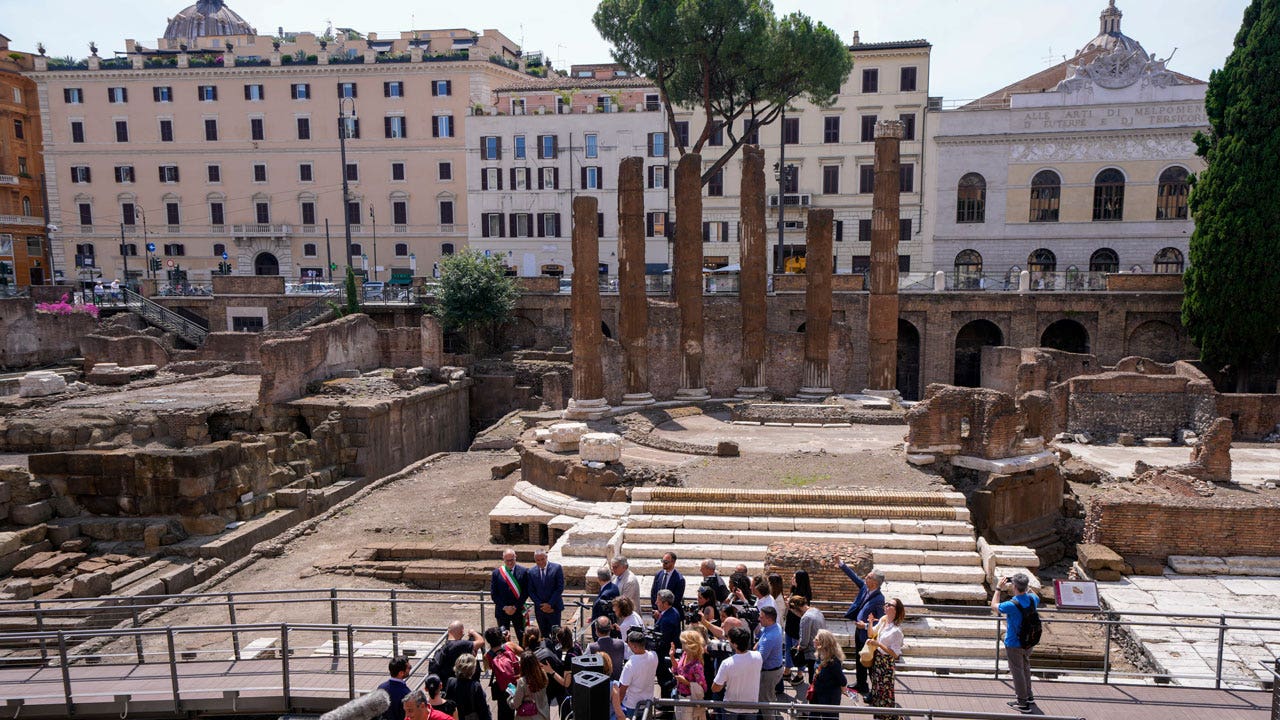
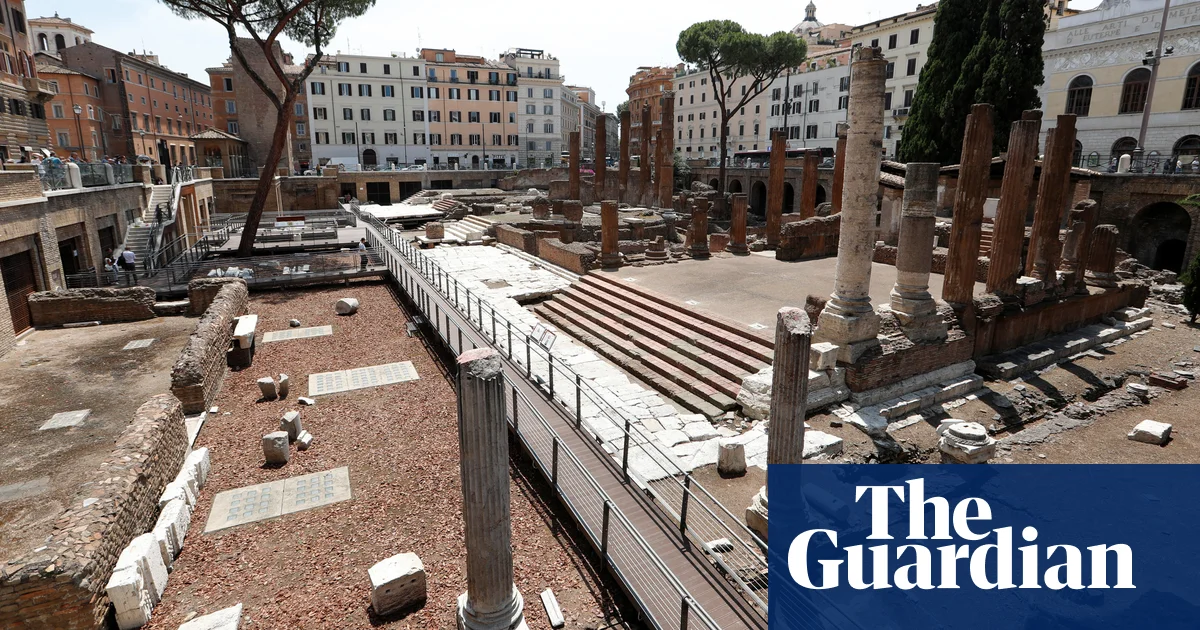
Rome has opened the site of Julius Caesar's assassination as a tourist attraction. Visitors can now walk through the ancient plaza for a fee of five euros, which was previously closed off to the public. Luxury jeweler Bulgari helped fund the project, including the installation of a new walkway. The assassination site is one of Rome's historical landmarks and was famously dramatized by Shakespeare in The Tragedy of Julius Caesar.
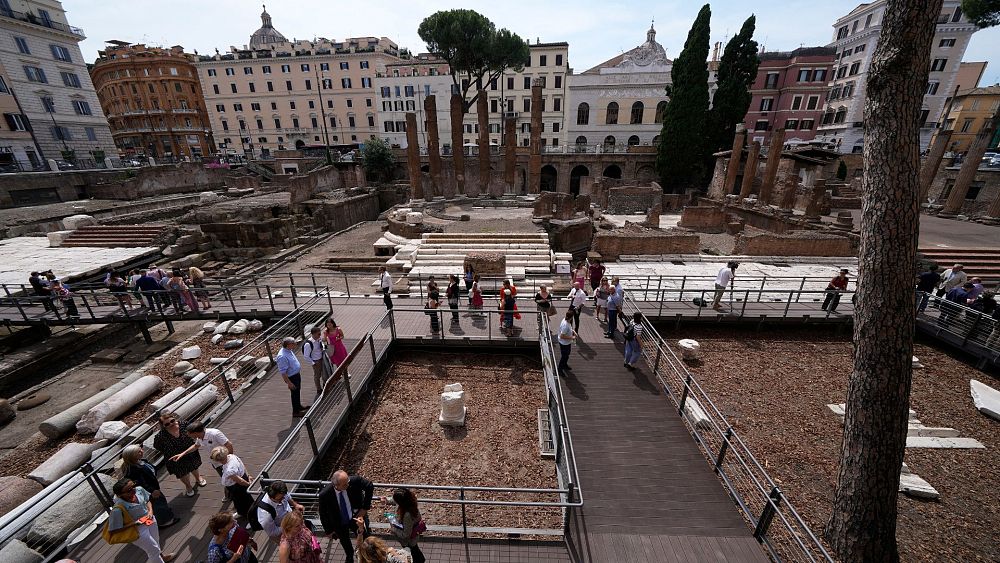
Tourists and locals can now visit the Sacred Area in Rome where Julius Caesar was assassinated, thanks to a new walkway funded by Bulgari. The area features four ancient temples dating back to the 3rd century B.C. and is located in the middle of a busy crossroads. The walkways are wheelchair- and stroller-friendly, and an elevator platform is available for those who can't handle the stairs. General admission tickets are priced at 5 euros.
The site in Rome's Largo Argentina square where Julius Caesar was assassinated in 44 BC has been opened to the public with a new walkway. Visitors can now view the remains of four temples up close at ground level. The site was excavated in the 1920s and funded by Italian fashion house Bulgari. Non-residents will pay 5 euros ($5.50) to visit it.
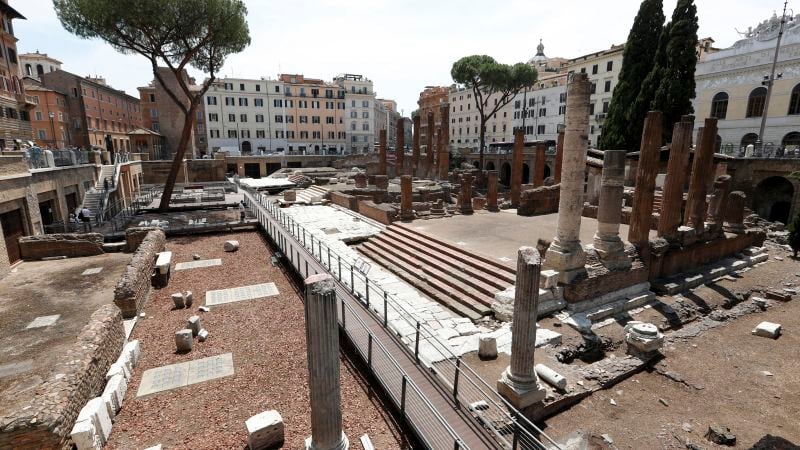
Largo Argentina, a temple complex in Rome that includes the "Sacred Area" where Julius Caesar was assassinated, has been opened to the public with the help of funding from Bulgari. The complex includes four temples dating back to the 3rd century B.C. and is considered "one of the best-preserved remains of the Roman Republic." The temples were uncovered during the demolition of medieval-era buildings in the late 1920s, part of Mussolini's campaign to remake the urban landscape. The attraction is open every day except for Mondays and some major holidays, with general admission tickets priced at 5 euros ($5.50).
Four ancient Roman temples, including the site where Julius Caesar was assassinated, have opened to the public in Rome with the help of funding from Bulgari. The temples, dating back to the 3rd century BC, were previously only visible from the sidewalks of Largo Argentina. The site includes ruins of Pompey's Curia, where the Roman Senate was temporarily hosted when Caesar was murdered. The temples are believed to have been dedicated to female deities and are "one of the best-preserved remains of the Roman Republic," according to Rome's top official for cultural heritage.
Four ancient Roman temples, including the ruins of the building where Julius Caesar was assassinated, have opened to the public in Rome with the help of funding from Bulgari. The temples, dating back to the 3rd century B.C., were previously only visible from the sidewalks of Largo Argentina. The temples are believed to have been dedicated to female deities and are some of the best-preserved remains of the Roman Republic. The attraction is open every day except for Mondays and some major holidays, with general admission tickets priced at 5 euros ($5.50).
A new walkway will open on Tuesday in Rome's Largo Argentina square, where Julius Caesar was assassinated in 44BC. Visitors will be able to view the ruins of four temples up close, which were previously only visible from behind barriers. The project was funded by Bulgari and the site is also home to a sanctuary for stray cats. Non-residents will be charged €5 to visit.
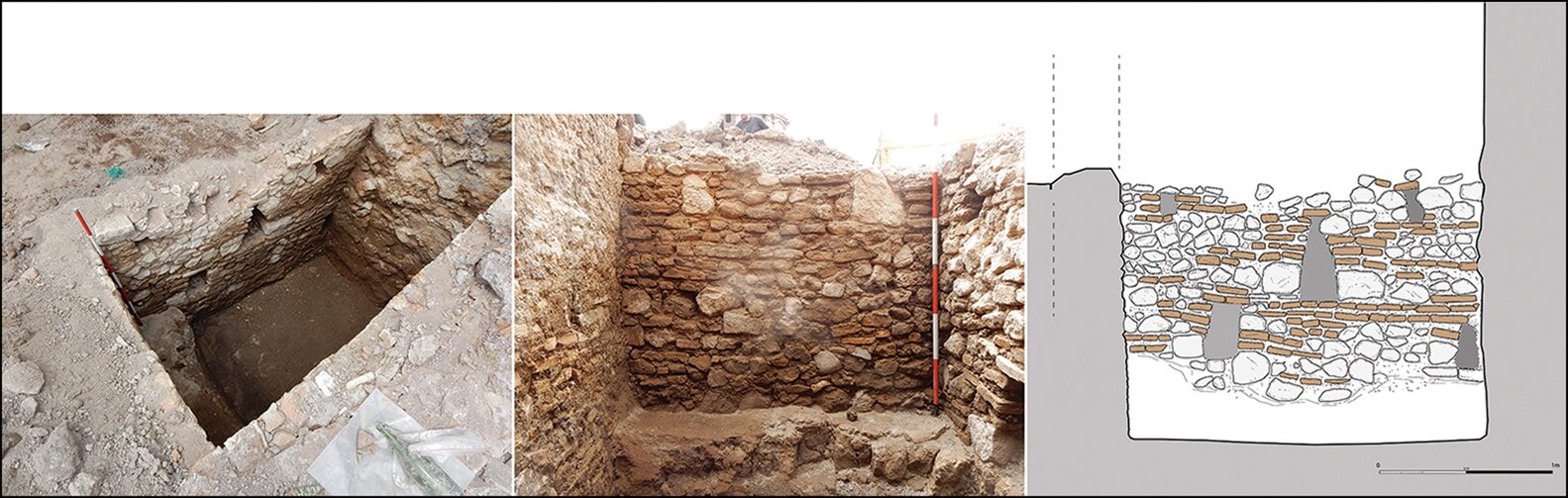
Archaeologists have found buried medical waste in a Renaissance-era landfill that was once the site of Caesar's Forum in Rome. The landfill was used to bury or discard materials associated with caring for sick people. The researchers found evidence of Renaissance-era medical practices, including disposal of instruments after a single use and disposing of potentially contaminated belongings by burning or burying them. The landfill contained a large array of beads, jars, figurines, coins, and matula—glass urine flasks. Doctors used such flasks to examine urine samples to spot symptoms of diseases such as diabetes or jaundice.