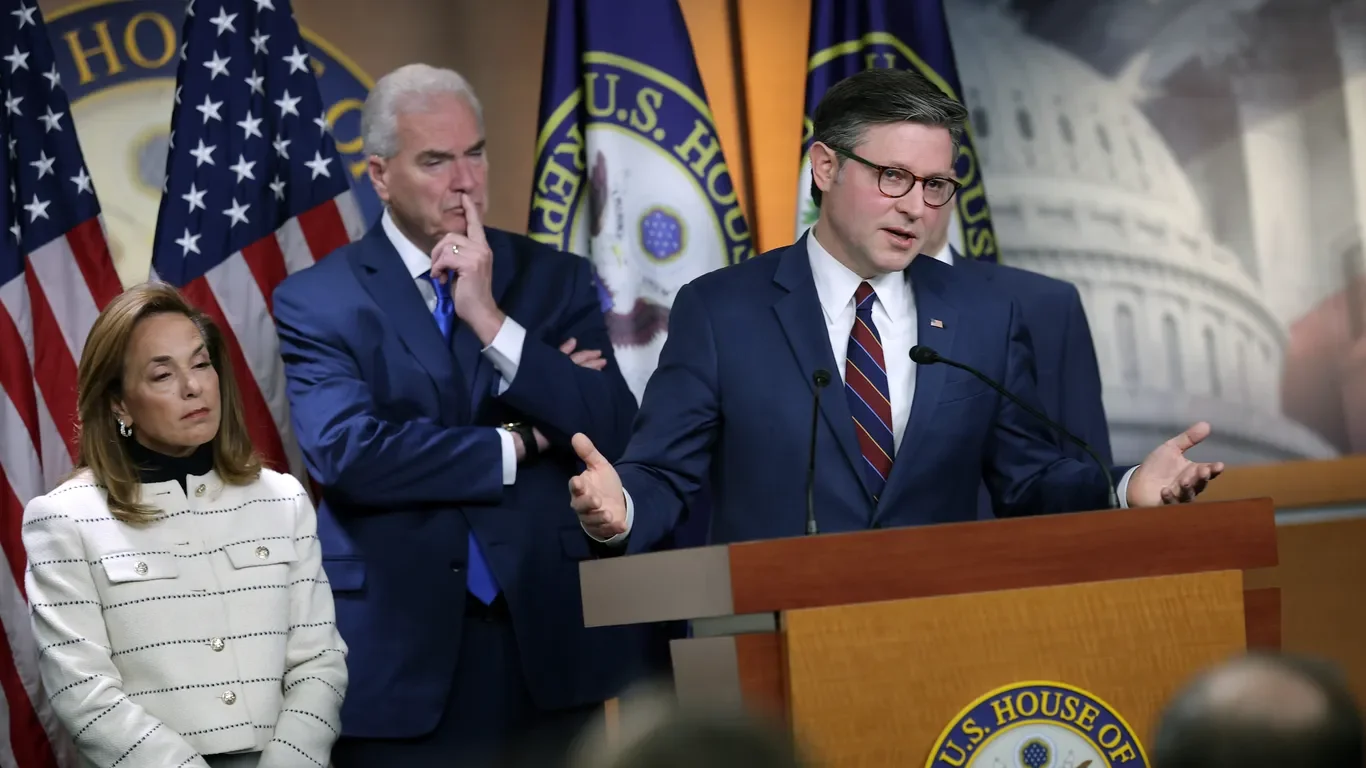
House Republicans are experiencing internal conflicts as Speaker Mike Johnson faces challenges from centrist members over the Affordable Care Act's premium tax credits, with some GOP members defecting to support a discharge petition for extending subsidies, highlighting tensions within the party amid broader legislative struggles.
Brian Fitzpatrick, a GOP moderate, publicly expressed frustration with his party's leadership over their handling of a health bill and the inability to include certain amendments, ultimately voting to pass the bill after initially opposing it, highlighting the political tensions within the Republican Party and the challenges Fitzpatrick faces in his swing district.
House Republicans are divided over extending expiring Obamacare subsidies, with some moderates refusing to withdraw discharge petitions for a floor vote, while GOP leadership attempts to negotiate amendments and pass a health care bill amid internal disagreements and upcoming votes.
House GOP moderates are frustrated with Speaker Johnson's refusal to allow a vote on extending ACA subsidies, leading to threats of bipartisan action through discharge petitions, highlighting leadership struggles and potential shifts in health care policy.
House GOP moderates, led by Fitzpatrick, are pushing to extend health subsidies and are considering proposing amendments to the GOP health care bill, despite leadership skepticism, as they seek bipartisan solutions.
House Speaker Mike Johnson faces internal and electoral challenges, including a narrow Tennessee victory, a revolt over the NDAA, and disagreements on healthcare policy, amid broader GOP struggles ahead of 2026 elections and legislative negotiations on issues like China restrictions and healthcare subsidies.
House Speaker Mike Johnson narrowly won a Tennessee special election amid internal GOP conflicts, notably over a provision Elise Stefanik fought to reinstate in the NDAA, highlighting ongoing legislative and party unity challenges.
House Speaker Mike Johnson plans to hold a vote next week on a measure to fully disclose Justice Department files related to Jeffrey Epstein, amid bipartisan efforts and political controversy, including a discharge petition led by Rep. Adelita Grijalva. The move is part of broader legislative activities including ending the government shutdown and addressing other investigations and policy issues.
Representative-elect Adelita Grijalva was finally scheduled to be sworn into Congress 50 days after her election, after a prolonged dispute initiated by Speaker Mike Johnson who initially refused to seat her, citing authority issues. The delay prevented her from accessing resources and participating fully in Congress, but she is now set to be sworn in as the House returns from recess.
House Speaker Mike Johnson has agreed to swear in Adelita Grijalva after a seven-week delay, following enough Senate Democrats signing onto a spending bill to end the government shutdown. Grijalva, elected in September to Arizona’s 7th District, was delayed from being sworn in despite her and others' legal challenges, which argued the delay was an abuse of power. Johnson's decision comes as the House prepares to vote on the spending bill, with Grijalva expressing disappointment over the delay and its impact on her constituents.
House Speaker Mike Johnson urges members to return to Washington immediately to vote on a government funding package, as widespread air travel delays and cancellations threaten to delay the vote and potentially prolong the government shutdown.
Divisions among House Republicans over Speaker Mike Johnson's shutdown strategy have emerged, with some members questioning the decision to stay on recess and refusing to negotiate with Democrats, although the majority still support Johnson's approach.
House Speaker Mike Johnson stated he discussed with Donald Trump the possibility of a third presidential term, but sees no constitutional path for it, emphasizing the constitutional constraints and the unlikelihood of such a move.
GOP Speaker Mike Johnson indicates support for a bipartisan bill to release Jeffrey Epstein files, contingent on a House vote, amidst ongoing investigations and political maneuvering, with efforts to ensure transparency and justice while facing political opposition.
House Speaker Mike Johnson indicated he would allow a bipartisan floor vote on releasing Jeffrey Epstein files once the government shutdown ends, emphasizing that if the discharge petition reaches 218 signatures, the vote will proceed, despite internal and external pressures to block it. Johnson also highlighted ongoing investigations into Epstein by the House Oversight Committee and criticized political interference, while noting the Justice Department's cooperation is pending the shutdown's resolution.