Physicists at Jefferson Lab have made the first measurement of J/psi particle production below the energy threshold in nuclei, providing new insights into the behavior of gluons that bind protons and neutrons inside atomic nuclei, which could advance understanding of the strong force and nuclear structure.
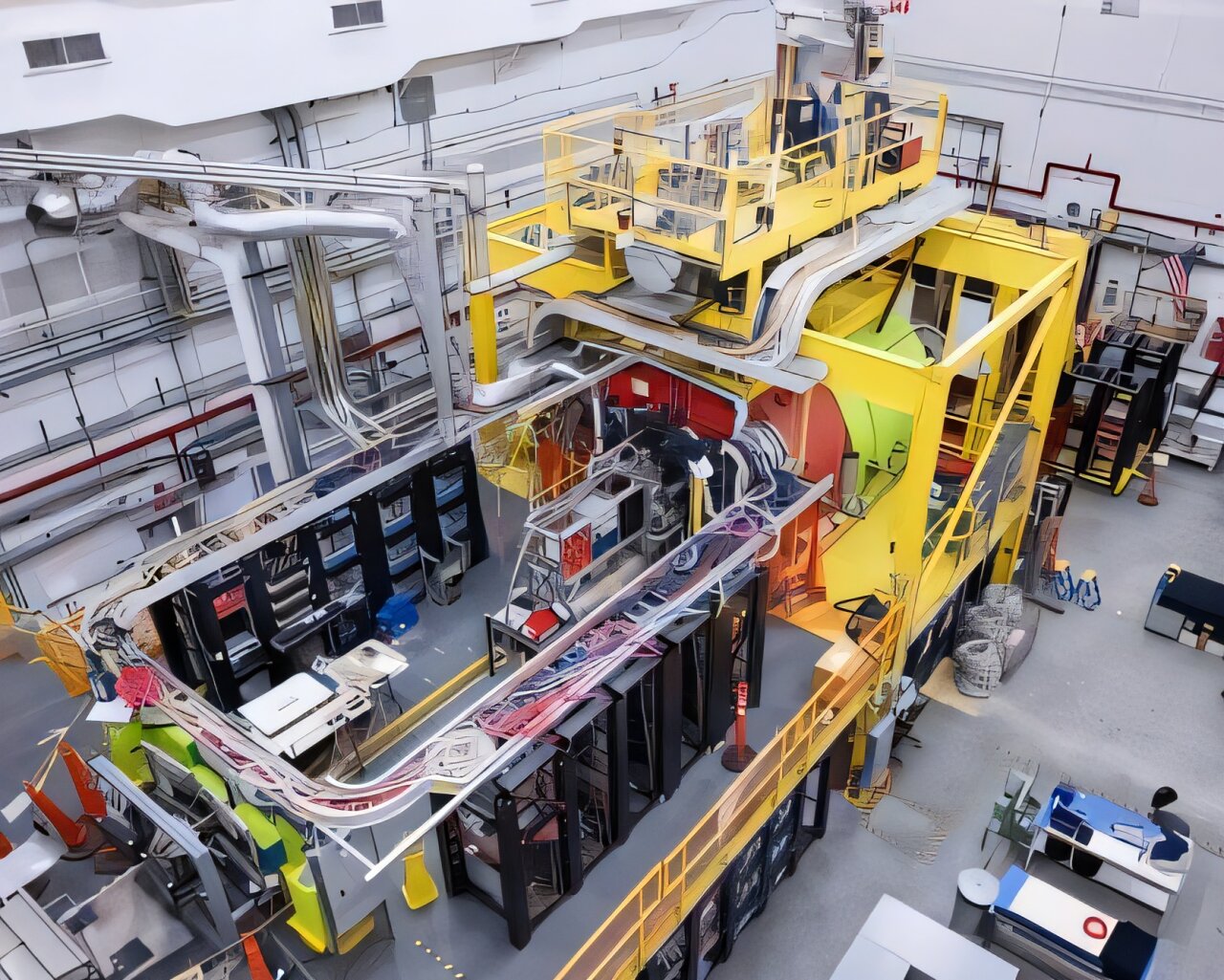
A new study published in Physical Review Accelerators and Beams re-benchmarks the Continuous Electron Beam Accelerator Facility (CEBAF) at Jefferson Lab, detailing its original and upgraded capabilities. Led by Geoffrey Krafft, the paper captures CEBAF's evolution from its initial 4 GeV design to its current 12 GeV capacity, following a $338 million upgrade. The facility, crucial for nuclear physics research, now serves over 1,650 physicists worldwide and highlights future enhancements like machine learning and new photon sources.
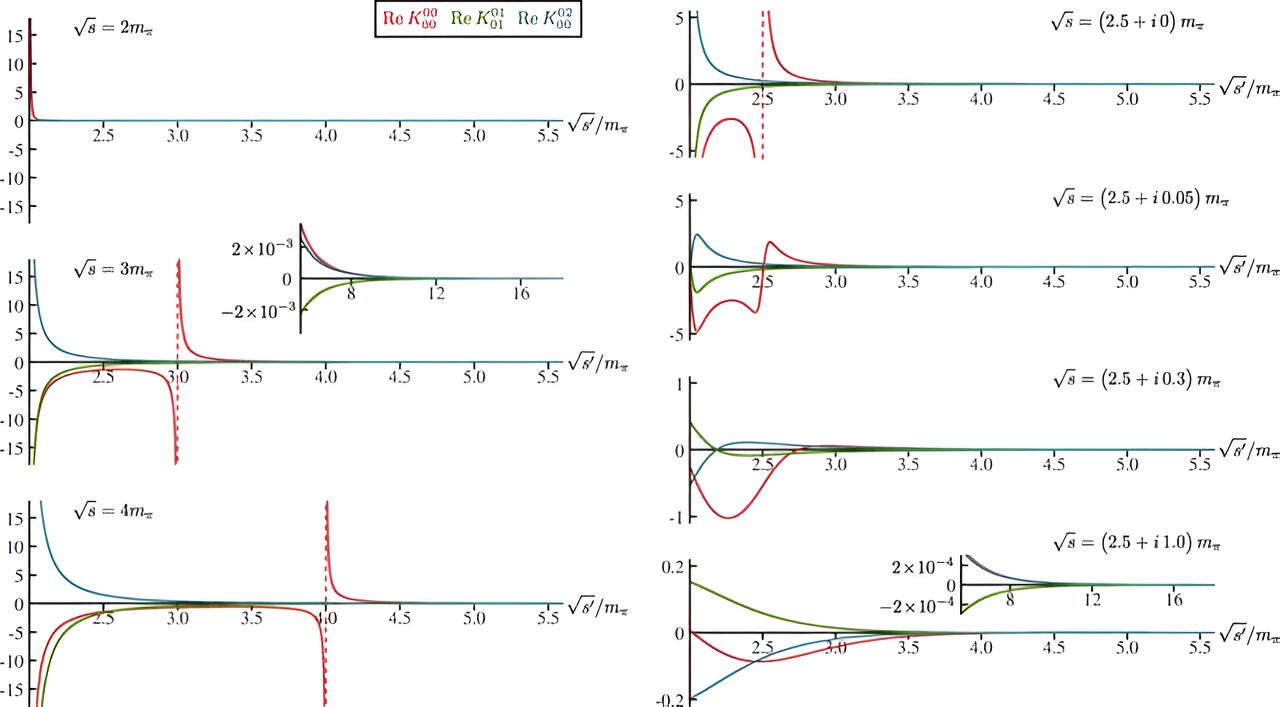
Researchers at the U.S. Department of Energy's Thomas Jefferson National Accelerator Facility have used supercomputers to better understand the unstable sigma meson particle, which plays a crucial role in nuclear physics. By simulating pion-pion reactions based on quantum chromodynamics, they have made significant progress in describing the sigma meson, despite its brief existence and complex nature. This collaborative effort, involving advanced computational techniques, paves the way for further studies of similar particles and deeper insights into the strong interaction.
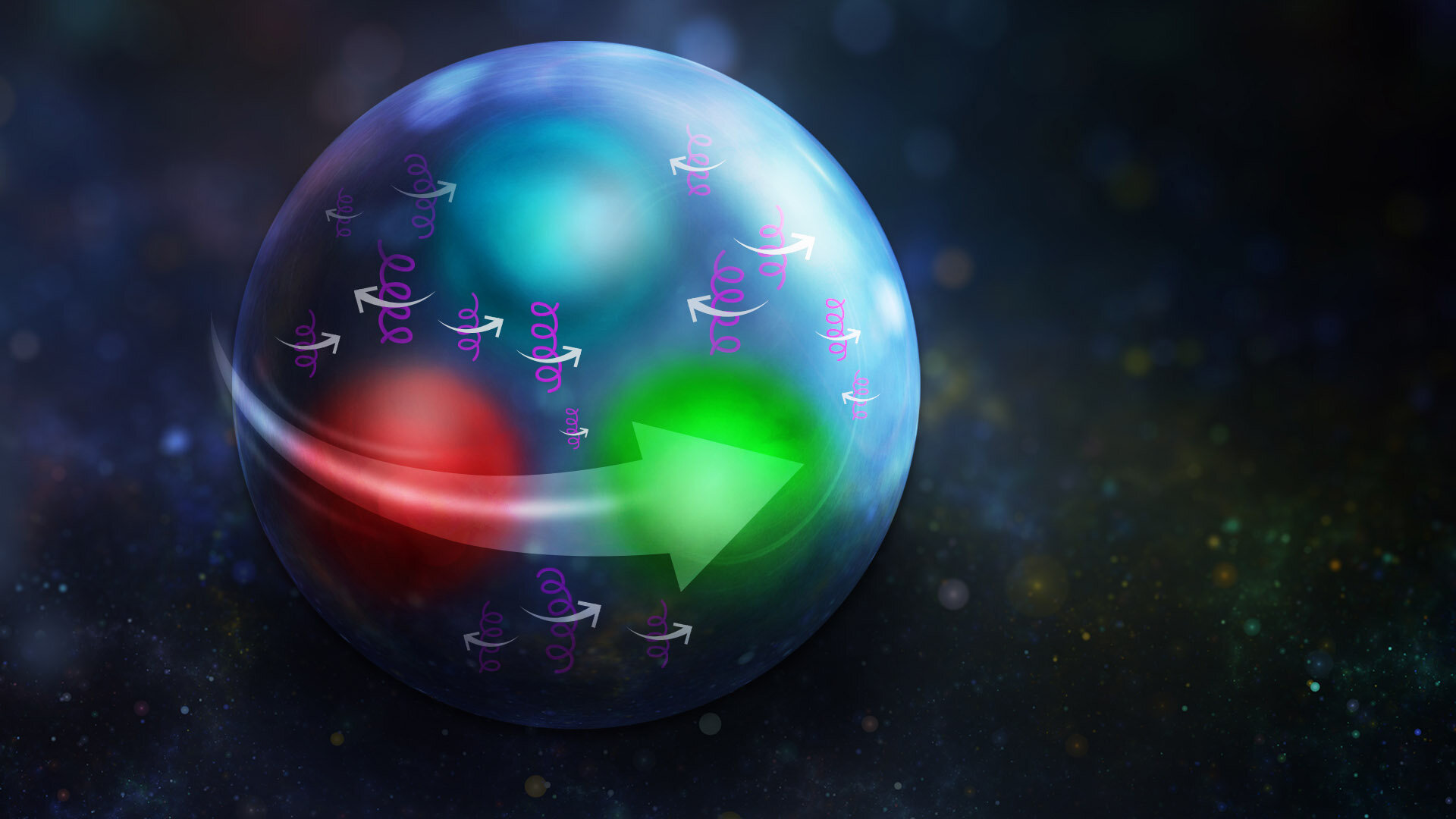
A new study combining experimental data and lattice Quantum Chromodynamics (QCD) calculations has provided deeper insights into the contributions of gluons to the proton's spin. This collaborative effort, led by Joseph Karpie at Jefferson Lab, aims to resolve the decades-old mystery of proton spin and paves the way for a three-dimensional understanding of the proton's structure.
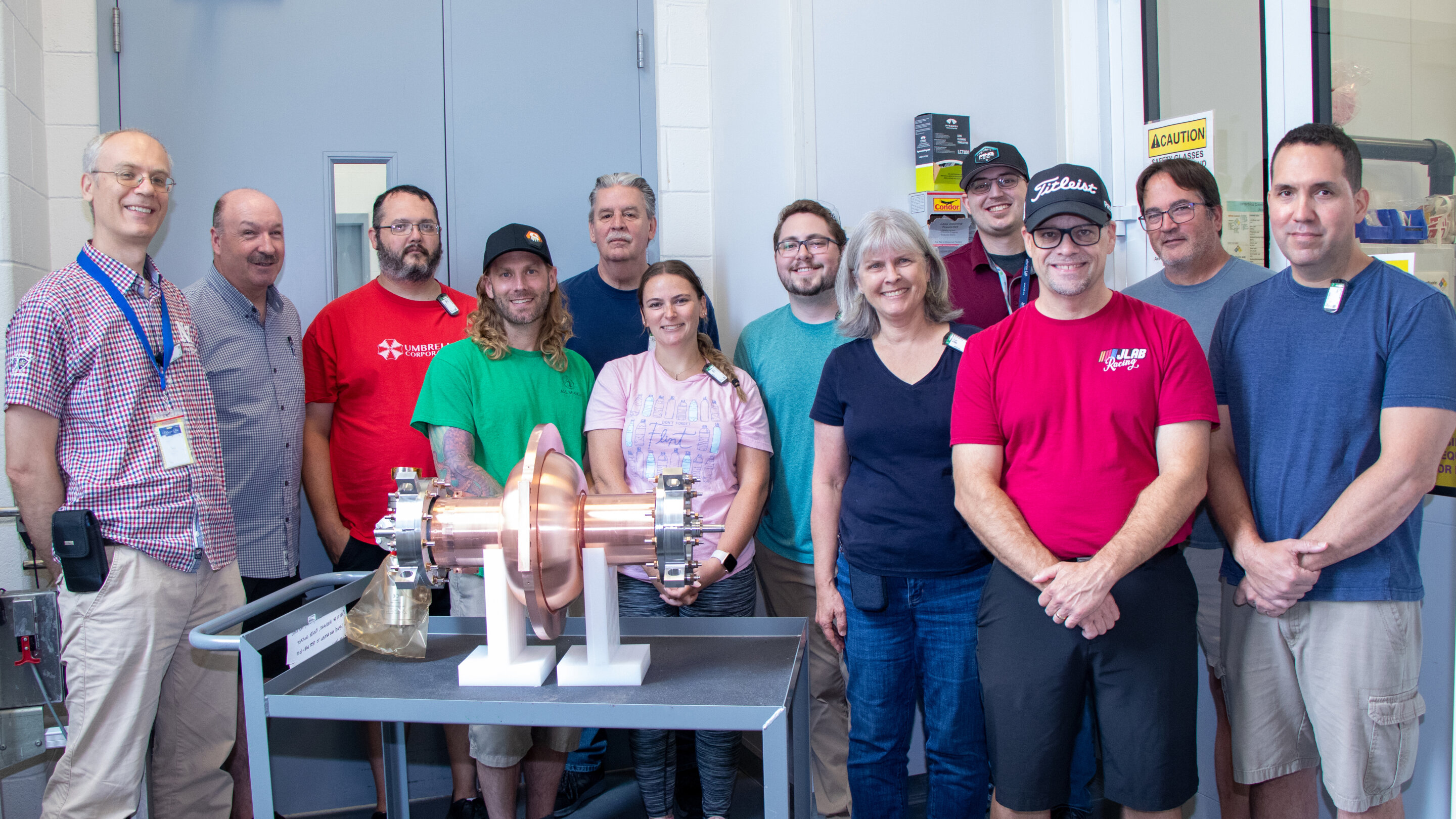
Researchers at the U.S. Department of Energy's Thomas Jefferson National Accelerator Facility, in collaboration with General Atomics and other partners, have successfully designed, prototyped, and tested a conduction-cooled particle accelerator cavity, demonstrating its feasibility for commercial applications. The prototype features advanced commercial off-the-shelf cooling components and novel superconducting materials, and it achieved the same specifications as traditional liquid helium-cooled cavities. This breakthrough design paves the way for more efficient, compact, and reliable superconducting radiofrequency accelerators with potential applications in environmental remediation and industrial processes.
Recent experiments at the Jefferson Lab have provided new insights into the 3D structure of nucleon resonances, shedding light on the early universe and fundamental particles. The research explores the properties and behaviors of nucleons, which are the protons and neutrons that make up the nuclei of atoms. By studying the resonating proton and the excitation process, scientists hope to understand how matter formed in the universe and why it exists in its present form.