Tag

Investment Portfolio

All articles tagged with #investment portfolio

Billionaires' AI Stock Investments Signal Dominance Ahead of 2026

Originally Published 15 days ago — by The Motley Fool

Featured image for Billionaires' AI Stock Investments Signal Dominance Ahead of 2026
Source: The Motley Fool

Billionaire hedge fund manager Philippe Laffont has invested about a third of his portfolio in six major AI stocks—Meta, Microsoft, Taiwan Semiconductor, Amazon, Nvidia, and Alphabet—believing they will dominate by 2026 due to ongoing AI infrastructure buildouts and increasing demand for computing power. These stocks are positioned to benefit from the expanding AI industry, making them attractive investments for the future.

ChatGPT's Tips for Building a Passive Income Portfolio

Originally Published 2 months ago — by Yahoo Finance UK

Featured image for ChatGPT's Tips for Building a Passive Income Portfolio
Source: Yahoo Finance UK

The article discusses a passive income portfolio suggested by ChatGPT, which includes UK dividend shares, ETFs, REITs, infrastructure funds, and bonds, aiming for a 4.5% yield. The author critiques the diversification approach, noting that broad ETFs already offer significant diversification, and shares personal investment strategies focused on growth and passive income, highlighting potential investments like Fresh Del Monte.

Berkshire Hathaway Reports Profit Dip Amid Market Challenges

Originally Published 5 months ago — by Barron's

Featured image for Berkshire Hathaway Reports Profit Dip Amid Market Challenges
Source: Barron's

Berkshire Hathaway's Q2 earnings showed strong profit excluding currency effects, no stock buybacks indicating a cautious stance, high cash reserves of $344 billion, and continued net stock sales, with key divisions performing well despite some setbacks. The company’s valuation has contracted, and Buffett’s future leadership remains a focus.

Berkshire Hathaway Reports Mixed Q2 Results Amid Stock Sales and Tariff Concerns

Originally Published 5 months ago — by Forbes

Featured image for Berkshire Hathaway Reports Mixed Q2 Results Amid Stock Sales and Tariff Concerns
Source: Forbes

Berkshire Hathaway's Q2 2025 earnings dropped 4% year-over-year to $12.4 billion due to declines in stock investments and insurance underwriting profits, despite strong performance in railroad and manufacturing segments. The company took a $5 billion impairment loss on Kraft Heinz and maintained a large cash reserve, with no share repurchases in the quarter. Warren Buffett announced his upcoming retirement as CEO, with Greg Abel set to succeed him, while Berkshire remains financially resilient and positioned for future opportunities.

Warren Buffett Bets Big on Two S&P 500 Dividend Stocks

Originally Published 1 year ago — by Yahoo Finance

Featured image for Warren Buffett Bets Big on Two S&P 500 Dividend Stocks
Source: Yahoo Finance

Berkshire Hathaway, led by Warren Buffett, has a $300.5 billion stock portfolio, with 39.5% invested in two S&P 500 dividend stocks, including Apple. Despite its low dividend yield, Apple's strong performance and profitability make it a significant part of Berkshire's holdings, accounting for 24.2% of its stock portfolio and generating substantial dividend income.

Icahn Enterprises Faces Challenges Amid Dividend Cuts and Strategic Shifts

Originally Published 1 year ago — by Financial Times

Featured image for Icahn Enterprises Faces Challenges Amid Dividend Cuts and Strategic Shifts
Source: Financial Times

Carl Icahn's conglomerate, Icahn Enterprises, is facing financial strain as it grapples with operational issues and declining asset values, leading to a halved dividend and a 38% stock drop this year. The company is attempting to stabilize by selling a valuable scrapyard in Nashville and increasing its stake in CVR Energy, despite recent losses. Icahn's heavy borrowing against his shares adds pressure, but he remains optimistic about future cash flow improvements and potential regulatory relief for CVR Energy.

"Maximizing Retirement Savings: Investing 50% in This Key Opportunity"

Originally Published 1 year ago — by Seeking Alpha

Featured image for "Maximizing Retirement Savings: Investing 50% in This Key Opportunity"
Source: Seeking Alpha

The author discusses the importance of taking a holistic approach to evaluating investment portfolios, emphasizing the need to step back and consider the overall picture rather than fixating on individual holdings. They reveal that 50% of their retirement portfolio is invested in fixed-income securities and REITs, explaining the rationale behind these choices. They stress the significance of fixed-income investments for income investors and express optimism about the potential of REITs, particularly in light of anticipated interest rate decreases. The author advocates for a strategic approach to income investing and invites readers to join their community for access to their model portfolio and top picks.

Orsted's Strategic Shift: Navigating Turbulent Waters in Offshore Wind Industry

Originally Published 1 year ago — by Recharge

Featured image for Orsted's Strategic Shift: Navigating Turbulent Waters in Offshore Wind Industry
Source: Recharge

Orsted's revised business plan reflects a "value-focused" approach, potentially leading to the removal of less mature or slow-moving offshore wind markets from its investment portfolio, with floating wind ambitions in Norway, Spain, and Portugal being the first to be affected. The company's decision comes after facing significant costs and impairments from US offshore projects, particularly the Ocean Wind 1 project, prompting a reevaluation of its investment strategy in the sector.

"Bill & Melinda Gates Foundation's $39 Billion Portfolio: 86% Invested in 5 Stocks"

Originally Published 2 years ago — by The Motley Fool

Featured image for "Bill & Melinda Gates Foundation's $39 Billion Portfolio: 86% Invested in 5 Stocks"
Source: The Motley Fool

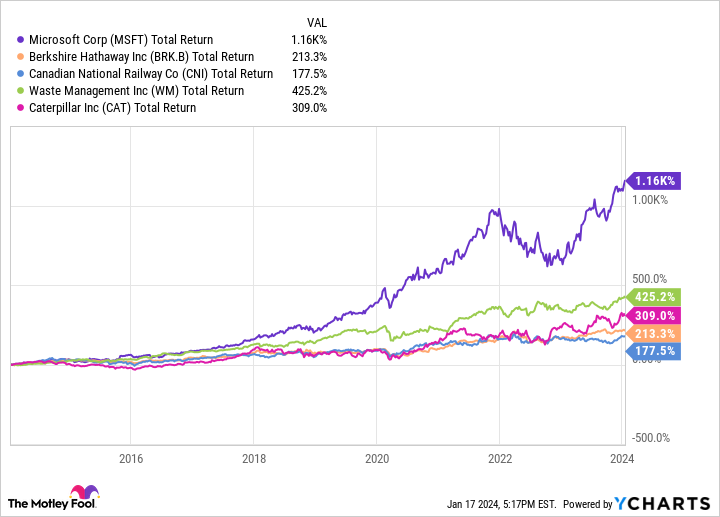
The Bill & Melinda Gates Foundation has 86% of its $39 billion portfolio invested in just 5 stocks, with Microsoft and Berkshire Hathaway comprising 52% of the total value. While this concentrated approach may work for the foundation, it's not a good model for most investors who should aim for diversification with at least 25 stocks to mitigate risk. However, the foundation's focus on dependable blue chip companies like Waste Management serves as a reminder of the importance of including reliable stocks in a portfolio for long-term positive returns.

"Bill & Melinda Gates Foundation's $39 Billion Portfolio Concentrated in 5 Stocks"

Originally Published 2 years ago — by Yahoo Finance

Featured image for "Bill & Melinda Gates Foundation's $39 Billion Portfolio Concentrated in 5 Stocks"
Source: Yahoo Finance

The Bill & Melinda Gates Foundation has 86% of its $39 billion portfolio invested in just five stocks, including Microsoft, Berkshire Hathaway, Canadian National Railway Company, Waste Management, and Caterpillar. While this concentrated approach may not be suitable for most investors, it reflects the foundation's focus on preserving capital and investing in dependable blue chip companies. However, for individual investors, diversifying into at least 25 stocks and considering higher growth opportunities may be more appropriate.

Maximizing Financial Gains: Strategies for Profiting from Shifting Interest Rates

Originally Published 2 years ago — by CNBC

Featured image for Maximizing Financial Gains: Strategies for Profiting from Shifting Interest Rates
Source: CNBC

As inflation cools and the market anticipates the end of the Fed interest rate hike cycle, financial advisors recommend three strategies to prepare for the shifting rate cycle. Firstly, individuals should ensure that their savings account is earning the most from their cash by exploring higher-yield options like certificates of deposit (CDs) and money market funds. Secondly, adding more equities to investment portfolios can be beneficial as the risk profile of equities improves with the expected rate cuts. Lastly, consumers should reevaluate their spending habits and consider making adjustments, such as seeking out deals and discounts, buying experiences instead of material gifts, and potentially downsizing their homes to alleviate financial strain.

"Retirees Can Safely Withdraw More with Higher Bond Yields"

Originally Published 2 years ago — by NewsNation Now

Featured image for "Retirees Can Safely Withdraw More with Higher Bond Yields"
Source: NewsNation Now

The 4% rule, a guideline for retirement withdrawals, may finally hold true as a safe starting withdrawal rate, according to a report by Morningstar. Amid higher bond yields and moderating inflation, retirees can feel comfortable drawing down more in their first year than in previous years. Morningstar's analysis found that in 90% of simulations, withdrawing 4% in the first year and adjusting for inflation thereafter left money in the account after 30 years. However, the 4% rule only considers investment portfolios and not other sources of income like Social Security or pensions. It serves as a simplified guideline while experts continue to debate the best approach for retirement withdrawals.

Bank of America's $109B Paper Losses Signal Banking Troubles

Originally Published 2 years ago — by Seeking Alpha

Featured image for Bank of America's $109B Paper Losses Signal Banking Troubles
Source: Seeking Alpha

Bank of America is facing significant paper losses of around $109 billion due to its capital allocation decision during low interest rates and cheap liquidity. The bank used deposit inflows to buy government bonds at high valuations and low yields, resulting in substantial losses compared to its rivals. While the losses may not lead to financial distress, they pose an earnings problem as the bank holds long-dated securities with low yields in a higher interest rate environment. The stress test results indicate confidence in the banking system, but Bank of America's management team's effectiveness in capital allocation is questioned, leading to a projected lag in profitability compared to peers.

Mormon Church's Finances Under Scrutiny After 60 Minutes Episode.

Originally Published 2 years ago — by Salt Lake Tribune

Featured image for Mormon Church's Finances Under Scrutiny After 60 Minutes Episode.
Source: Salt Lake Tribune

The Church of Jesus Christ of Latter-day Saints has called a recent "60 Minutes" episode on its investment portfolio "unfortunate" and based on "unfounded allegations." The segment featured a former portfolio manager accusing Ensign Peak Advisors, the church's investment arm, of violating its tax-exempt status and stockpiling over $100 billion instead of using it for charitable purposes. The church defended its financial responsibility and having adequate resources to fulfill its responsibilities, while referring to Ensign Peak as a "rainy day fund." The church declined to address assertions that the Ensign Peak assets have reached as much as $150 billion.