

Tag

Infrared Aurora

All articles tagged with #infrared aurora

astronomy2 years ago

"Infrared Auroras on Uranus: A Clue to Extraterrestrial Life?"

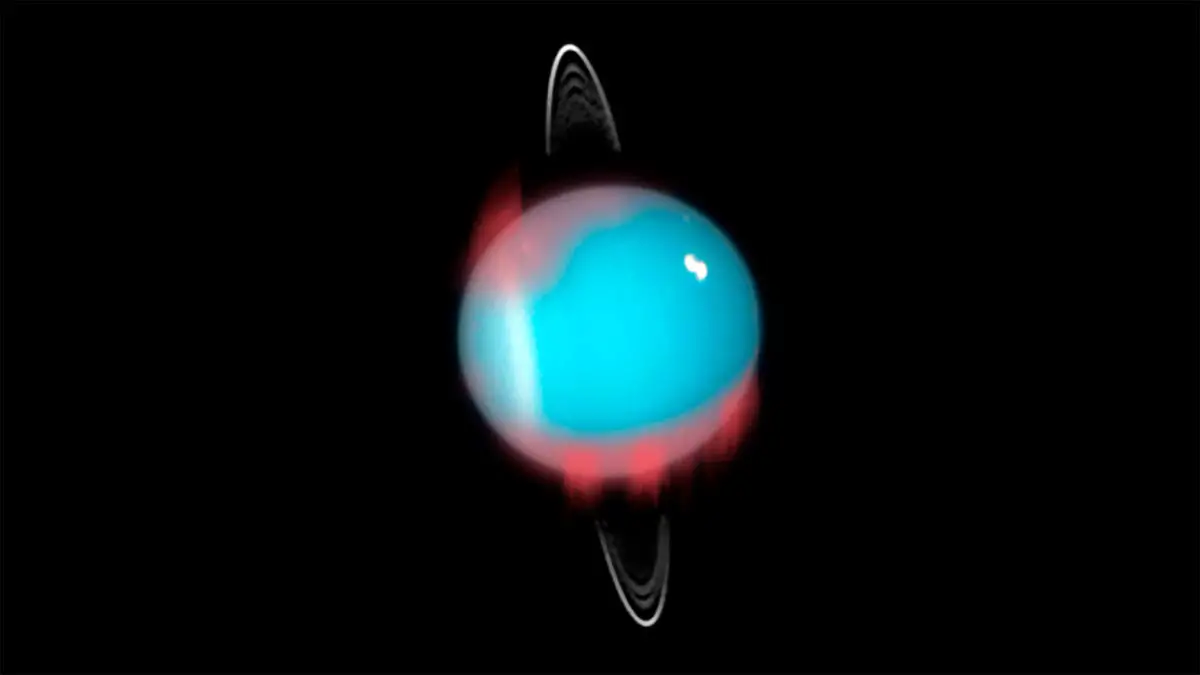
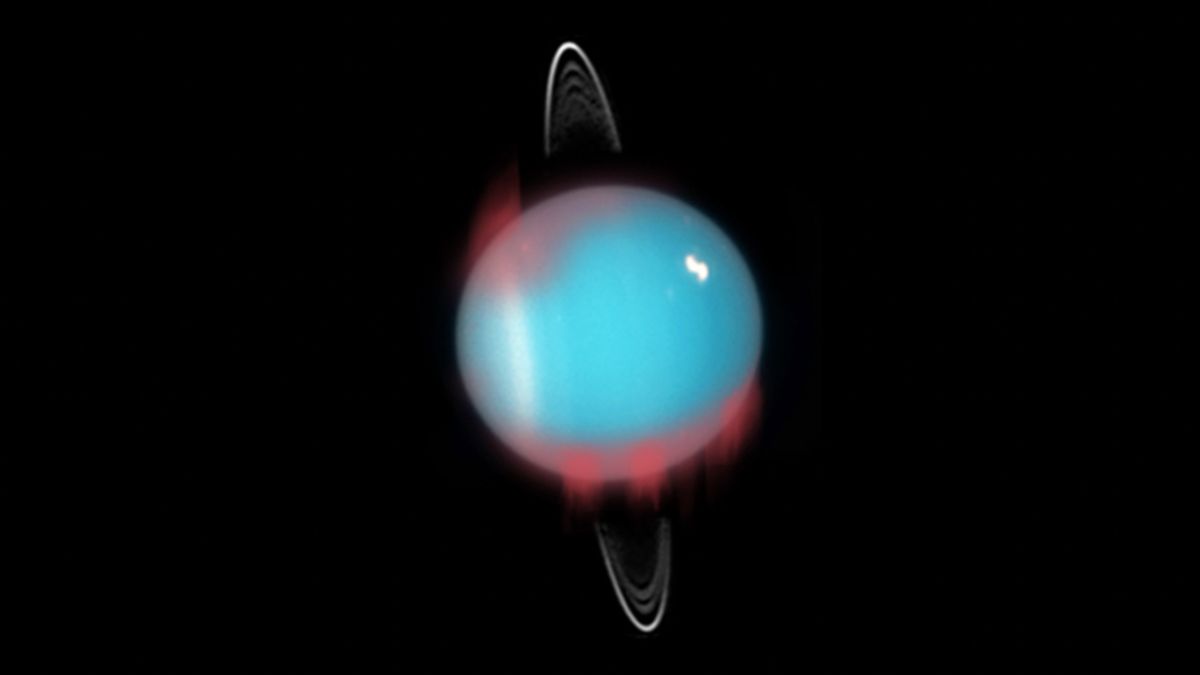
Scientists have confirmed the presence of infrared auroras on Uranus, filling in some of the unknowns about the planet's auroras and shedding light on its unusual heat. The discovery suggests that the energetic auroras on Uranus generate and push heat from the aurora down towards the magnetic equator, potentially explaining why the planet is hotter than expected. This finding could help us understand the mysteries of Uranus, such as its tilted and asymmetrical magnetic field, and provide insights into the atmospheres and magnetospheres of other similar planets in the galaxy.
space-science2 years ago

"Infrared Auroras on Uranus: Clues to Alien Life Unveiled"

Astronomers from the University of Leicester have confirmed the existence of an infrared (IR) aurora on Uranus, shedding light on the mysteries behind the magnetic fields of the planets in our solar system and the potential for life on distant worlds. While the ultraviolet (UV) aurorae of Uranus have been observed since 1986, this is the first confirmation of an IR aurora. The team used infrared auroral measurements taken by analyzing specific wavelengths of light emitted from the planet, revealing increases in H3+ density in Uranus's atmosphere, consistent with ionization caused by the presence of an IR aurora. The findings not only enhance our understanding of the magnetic fields of outer planets but also provide insights into the atmospheres and magnetic fields of exoplanets, potentially indicating their suitability for life.

astronomy2 years ago

First-Ever Infrared Aurora Confirmed on Uranus

Astronomers have observed Uranus' infrared aurora for the first time using archived data from the Keck II telescope. Similar to Earth's auroras, Uranus' auroras are caused by charged particles interacting with the planet's magnetic field. Unlike Earth, Uranus' auroras predominantly emit ultraviolet and infrared light due to the presence of hydrogen and helium in its atmosphere. The discovery could provide insights into the planet's temperature and the misalignment of its magnetic field with its rotational axis.