Heartbreaking footage captured by National Geographic shows a rare instance of orca infanticide, as a mother and her adult son from one pod team up to drown a calf from a neighboring pod. The behavior, likely aimed at enabling the male to breed with the mother of the deceased calf, is extremely rare and has only been documented once in published scientific literature. The footage provides scientists with a unique opportunity to study the roles and reactions of the orcas involved, shedding light on the power of the matriarch and the lengths she'll go to for the benefit of her pod and lineage.
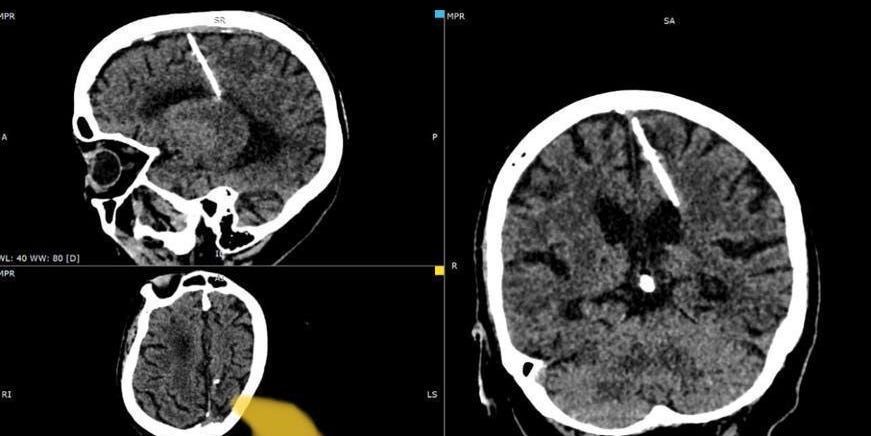
An 80-year-old Russian woman has been living with an inch-long needle in her brain since birth, likely due to a failed infanticide attempt by her parents during times of famine. The needle was discovered during an x-ray scan in 2023 and has been in her left parietal lobe all her life. Despite the presence of the needle, she has never experienced headaches, and doctors have decided not to remove it to avoid worsening her condition. The woman is being monitored by a physician, and her health is not at risk.
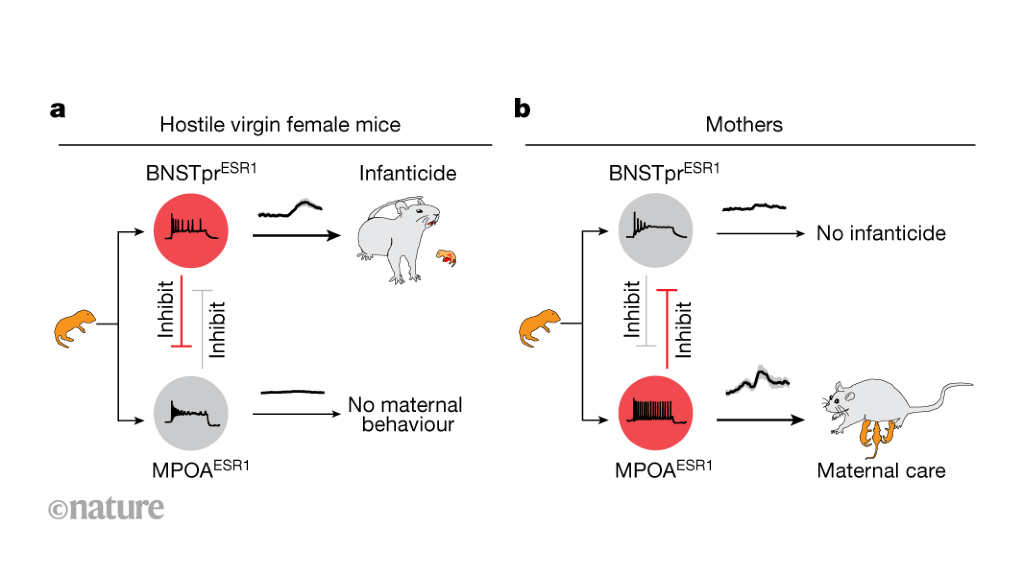
A recent study has identified a mid-brain region, the principal nucleus of the bed nucleus of stria terminalis (BNSTpr), as a trigger for infanticide in female mice. Blocking this region chemically prevented infanticide almost completely, while artificially activating it led to killings in nearly all instances. The study also revealed the BNSTpr’s antagonistic relationship with the medial preoptic area (MPOA), a brain region known to promote maternal behavior. The findings could play a similar role in better understanding infanticide by women, as the BNSTpr region is also present in humans.
A new study in mice has identified a middle-brain region called the principal nucleus of the bed nucleus of stria terminalis (BNSTpr) that is linked to the control of emotions and likely prompts females to kill their young. The study showed that chemically blocking the BNSTpr prevented infanticide nearly 100% of the time, while artificially activating the brain region caused both mothers and females without offspring to kill pups in nearly all trials. The investigation also revealed that the BNSTpr appears to work in opposition to a brain region called the medial preoptic area (MPOA), itself known to promote mothering behavior.
A new study has identified a previously unknown neural circuit in the brains of female mice that is activated during infanticidal behavior and inhibits another circuit that promotes maternal-care behavior. These circuits show opposing changes in excitability when female mice become mothers, explaining the switch in young-directed behaviors that occurs with motherhood.
Kathleen Folbigg, who was convicted of killing her four children and serving 20 years in prison, has been pardoned by the New South Wales Attorney General after an inquiry found "reasonable doubt" as to her guilt for all four deaths. Folbigg was convicted in 2003 on three counts of murder and one of manslaughter, but there was no physical evidence that she had caused their deaths. The jury relied on the prosecution's suggestion that the chances of four babies from one family dying from natural causes before the age of two were so low as to be compared to pigs flying.