Female mice are found to be protected against obesity and inflammation compared to males due to their secretion of an immune protein called RELMalpha, according to a study conducted by scientists at the University of California, Riverside. The study reveals that RELMalpha regulates immune cell types, such as anti-inflammatory macrophages and eosinophils, which play a crucial role in protecting against obesity. Deleting RELMalpha in female mice resulted in obesity and reduced levels of eosinophils, similar to male mice. However, treating female mice with eosinophils or RELMalpha reduced obesity, suggesting potential therapeutic targets. The study emphasizes the importance of considering sex differences in tackling metabolic diseases like obesity.

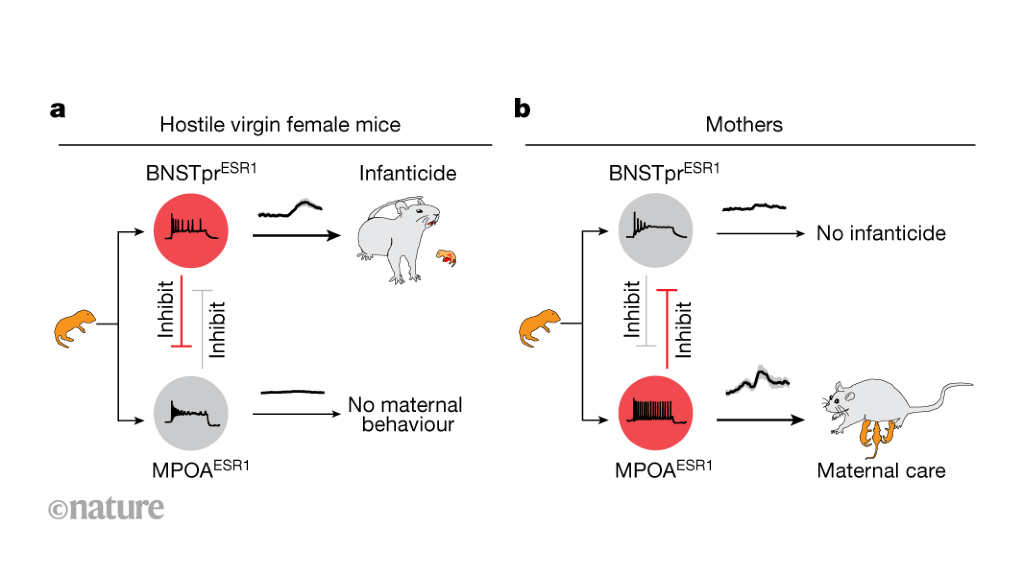
A recent study has identified a mid-brain region, the principal nucleus of the bed nucleus of stria terminalis (BNSTpr), as a trigger for infanticide in female mice. Blocking this region chemically prevented infanticide almost completely, while artificially activating it led to killings in nearly all instances. The study also revealed the BNSTpr’s antagonistic relationship with the medial preoptic area (MPOA), a brain region known to promote maternal behavior. The findings could play a similar role in better understanding infanticide by women, as the BNSTpr region is also present in humans.
A new study in mice has identified a middle-brain region called the principal nucleus of the bed nucleus of stria terminalis (BNSTpr) that is linked to the control of emotions and likely prompts females to kill their young. The study showed that chemically blocking the BNSTpr prevented infanticide nearly 100% of the time, while artificially activating the brain region caused both mothers and females without offspring to kill pups in nearly all trials. The investigation also revealed that the BNSTpr appears to work in opposition to a brain region called the medial preoptic area (MPOA), itself known to promote mothering behavior.
A new study has identified a previously unknown neural circuit in the brains of female mice that is activated during infanticidal behavior and inhibits another circuit that promotes maternal-care behavior. These circuits show opposing changes in excitability when female mice become mothers, explaining the switch in young-directed behaviors that occurs with motherhood.