Scientists are developing a blood test measuring NT-Pro-BNP levels to predict the risk of complications in people with hypertrophic cardiomyopathy, potentially enabling targeted treatment and better management of the inherited heart condition.
Cytokinetics received FDA approval for its first drug, Myqorzo, to treat obstructive hypertrophic cardiomyopathy, ending a 27-year R&D drought for the company. The drug will compete with a similar medication from Bristol Myers Squibb and is expected to launch in late January.
Cytokinetics announced FDA approval of MYQORZO (aficamten), a drug for treating adults with symptomatic obstructive hypertrophic cardiomyopathy, based on positive Phase 3 trial results showing improved exercise capacity and symptoms, with safety monitored due to heart failure risk.
Imbria Pharmaceuticals' fatty acid oxidation inhibitor showed promising results in a Phase II trial for non-obstructive hypertrophic cardiomyopathy (nHCM), suggesting potential efficacy in a separate heart failure trial. nHCM affects around one in 500 people, while heart failure with preserved ejection fraction (HFpEF) affects an estimated 2% of the population. Imbria's ninerafaxstat is currently in Phase II development for both conditions.
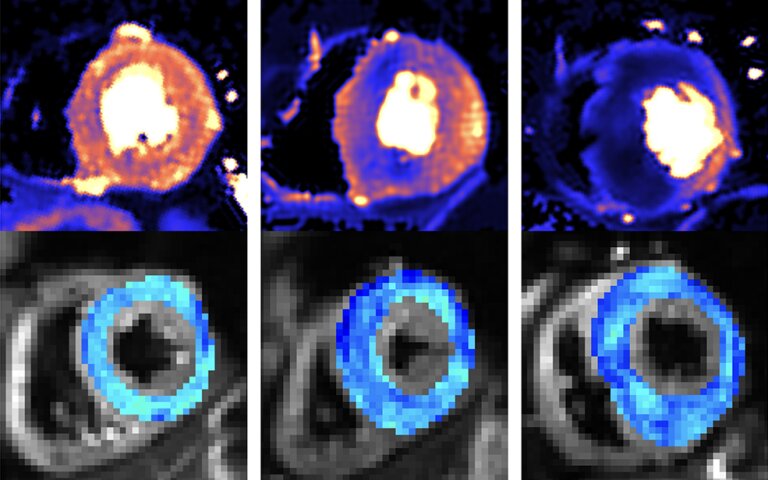
Combining cardiac diffusion tensor imaging (cDTI) and cardiac MRI perfusion (perfusion CMR) scans can help detect hypertrophic cardiomyopathy (HCM) before symptoms appear, according to a study by researchers at University College London. HCM is an inherited condition that thickens the heart's muscular walls, leading to heart failure and sudden cardiac death. The scans were able to identify abnormal microstructure and microvascular disease in individuals with a genetic mutation but no symptoms or muscle thickening. Early detection could aid in the development of gene therapies and drug treatments to prevent HCM from progressing.
A study supported by the National Institutes of Health found that vigorous exercise does not increase the risk of death or life-threatening arrhythmia for people with hypertrophic cardiomyopathy (HCM), a rare, inherited disorder that causes the heart muscle to become thick and enlarged. The observational study, the largest and most extensive to explore the relationship between HCM and exercise, was funded by the National Heart, Lung, and Blood Institute (NHLBI), part of NIH, and questions restrictions from exercise that are often recommended for anyone who has the disease.