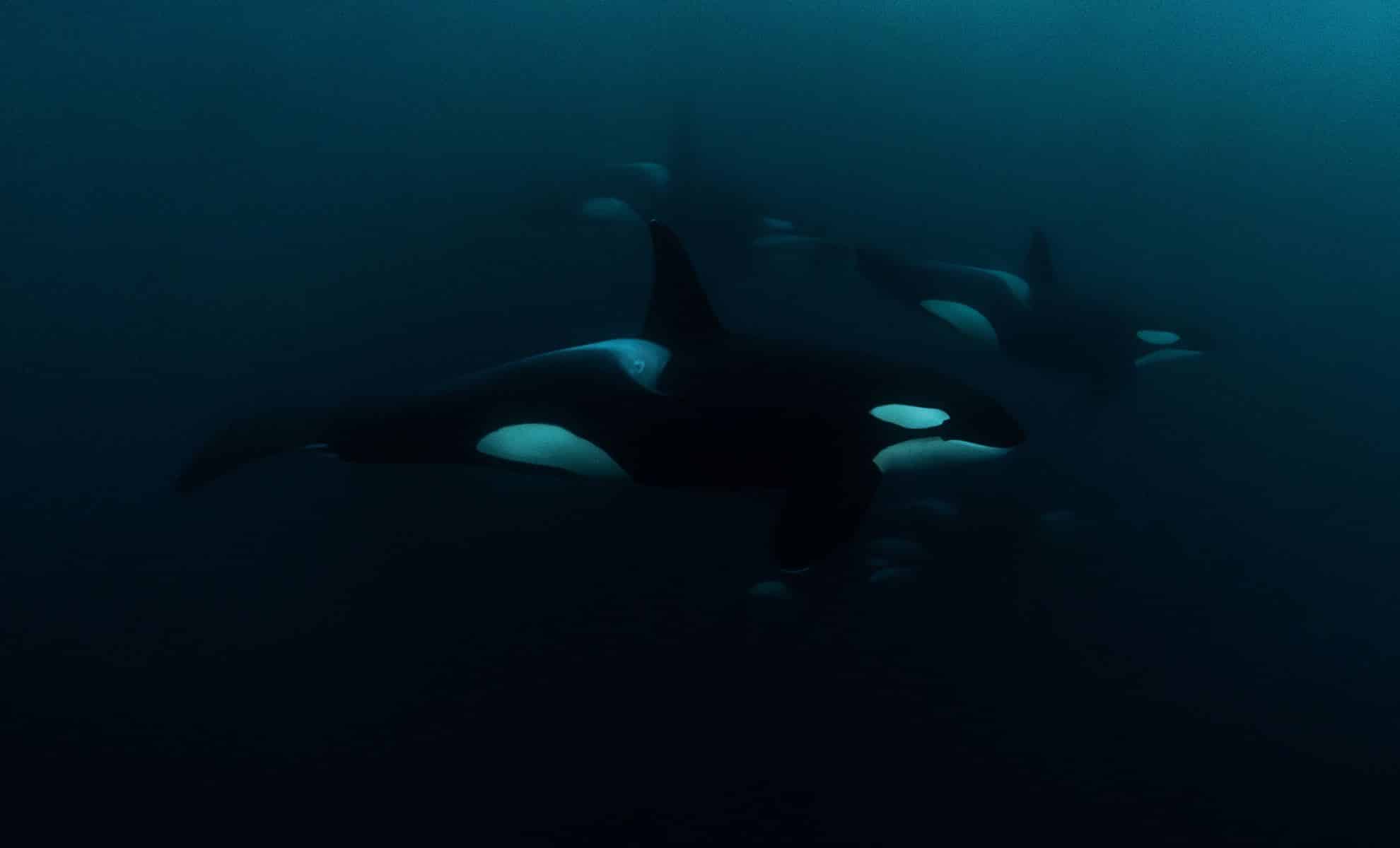
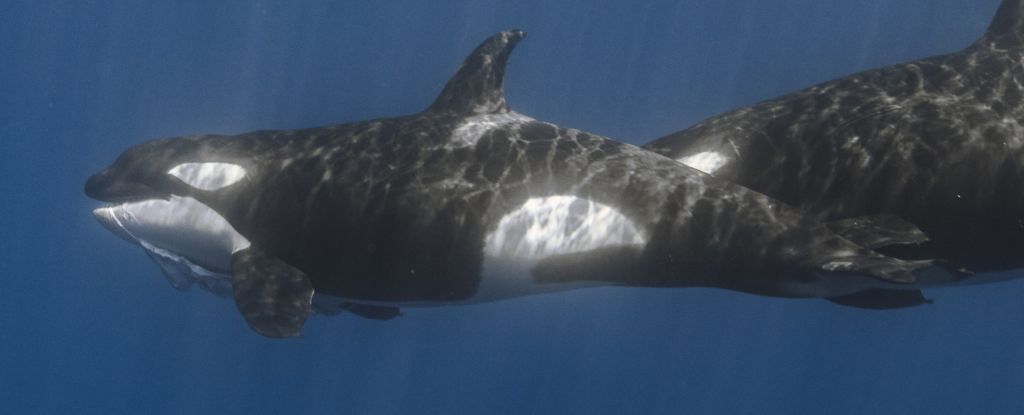
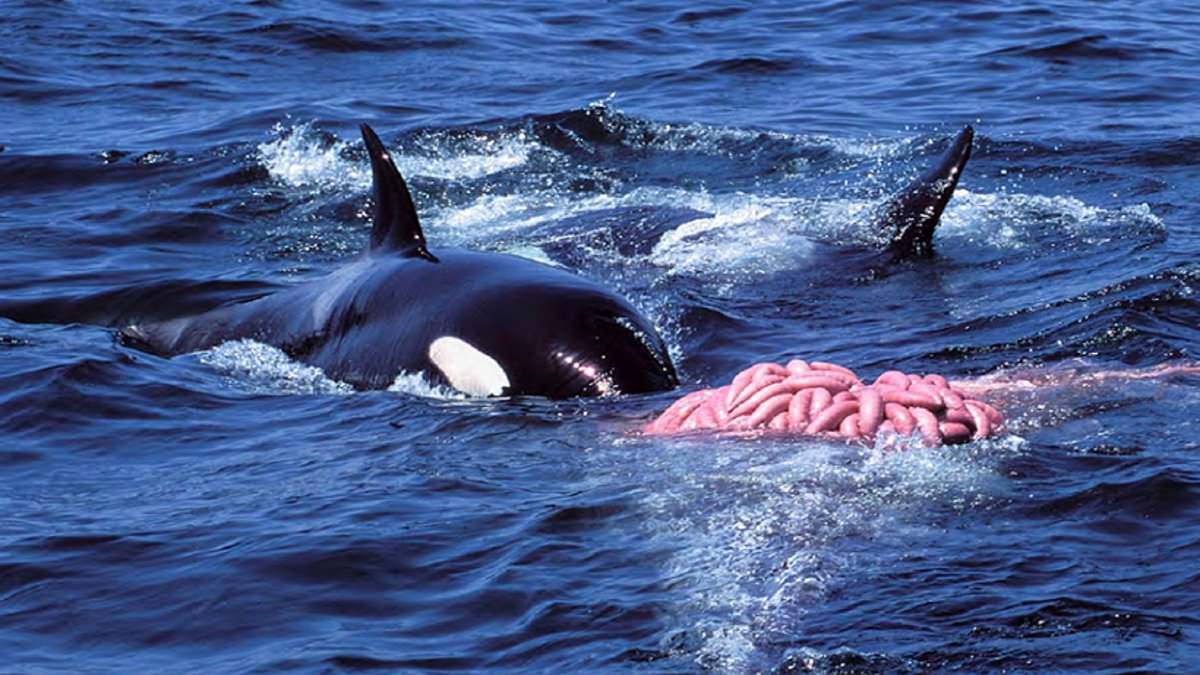
Recent footage reveals that orcas use a mock drowning training exercise to teach young pod members how to hunt large prey like blue whales, highlighting their sophisticated social and hunting strategies.
A pod of orcas in the Gulf of California has developed a specialized hunting technique to prey on whale sharks, the largest fish in the ocean. These orcas, including a male named Moctezuma, use coordinated attacks to immobilize the sharks and target their nutrient-rich livers. This behavior suggests a potential emerging ecotype with a focus on elasmobranchs, distinct from other orca groups. The findings highlight the orcas' adaptability and learning capabilities, contributing to the understanding of their complex hunting strategies.
Killer whales in the Monterey Submarine Canyon off the coast of California deploy brutal, co-ordinated attacks when hunting, targeting mother and calf pairs of grey whales. Different killer-whale ecotypes have distinct hunting cultures and communicate using unique dialects. A study led by Josh McInnes revealed specialized hunting strategies of outer-coast transient killer whales, including repeated battering and drowning of grey whale calves. Additionally, a newly discovered population of killer whales was observed hunting large marine mammals in the north Pacific, showcasing impressive predatory force. Further genetic data collection is needed to fully describe these new ecotypes.
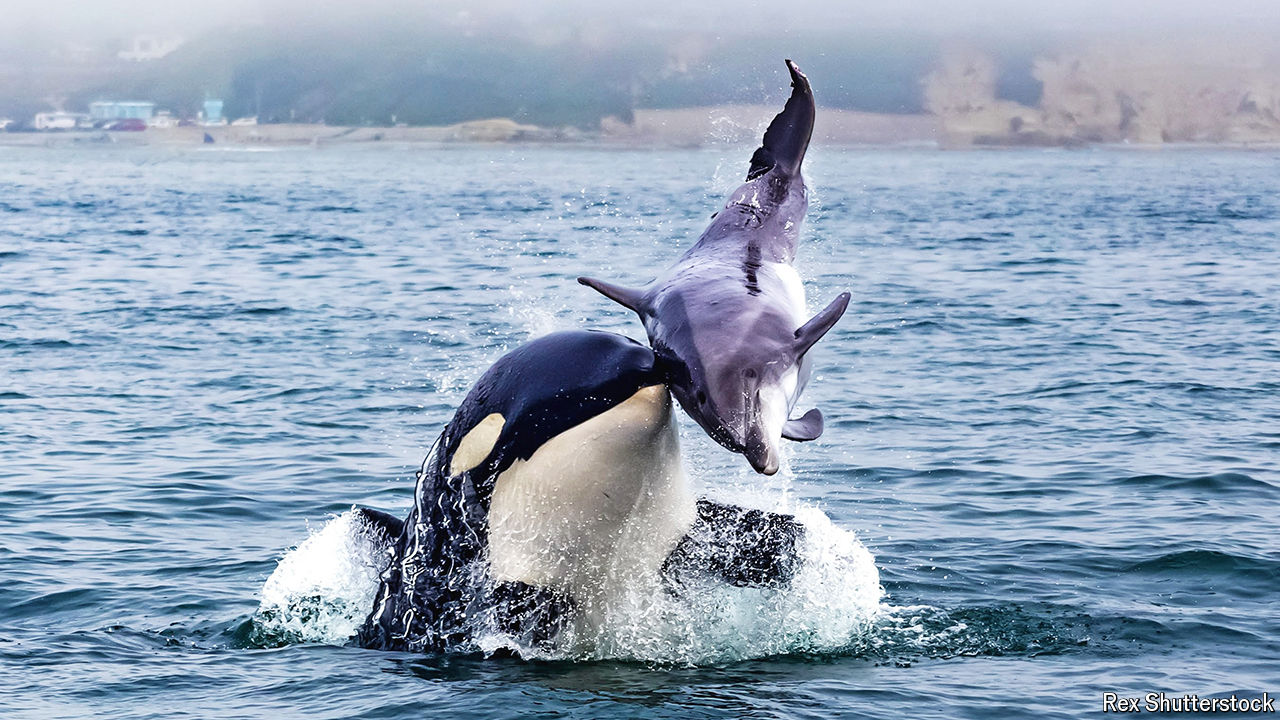
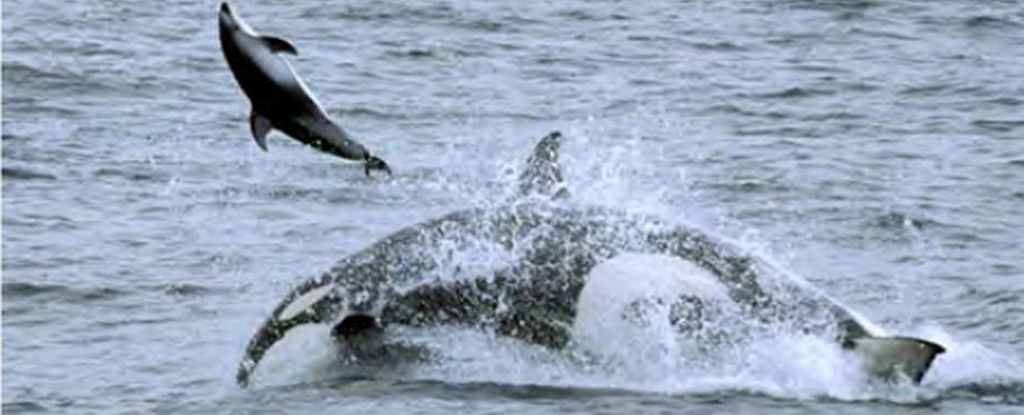
A population of transient orcas off the coast of California has developed specialized hunting techniques for catching marine mammals such as seals, whale calves, dolphins, and porpoises in open waters. These orcas use a mix of cunning and brute force, including ramming, tail slapping, and coordinated attacks to secure their prey. The study sheds light on the complex foraging behavior and ecology of transient orcas as apex predators in the North Pacific Ocean, highlighting their role in the marine ecosystem.
A study of killer whales in Monterey Bay has revealed their violent hunting techniques, including headbutting and tail slapping to stun prey. The whales predominantly hunt sea lions, grey whale calves, and elephant seals, using different tactics depending on the environment. The research provides insights into predator-prey interactions in the area's submarine canyon and deep-water environment, shedding light on the behavior of these apex predators. The study also highlights the distinct hunting behaviors of different killer whale groups, such as transients, residents, and offshores, and their adaptation to changing environmental conditions.