
Tag

Histones

All articles tagged with #histones

science2 years ago

Cracking the Code: Unveiling How Plants Pass on Genetic Memories

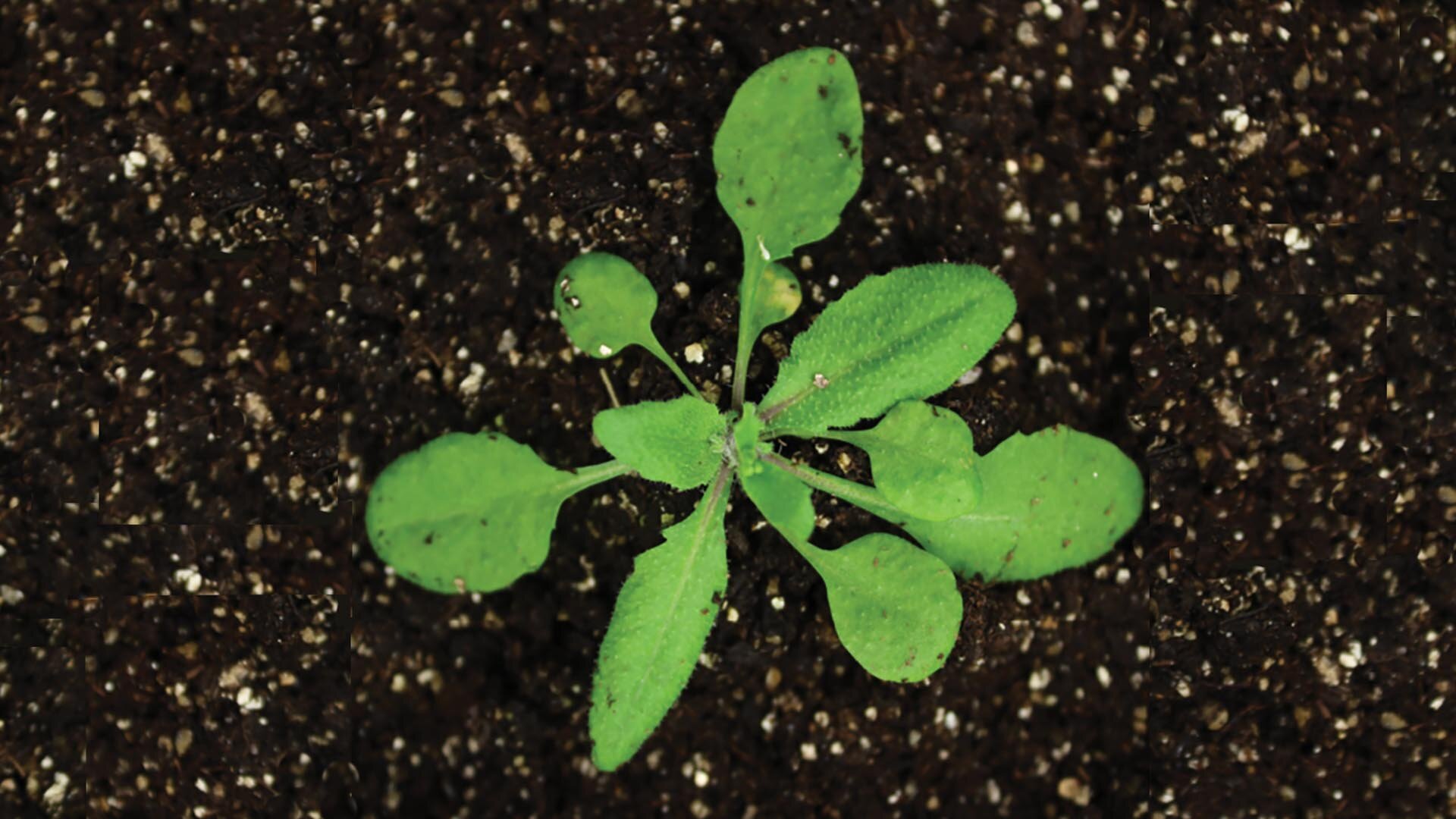
Scientists at Cold Spring Harbor Laboratory have discovered how plants pass along chemical markers, known as epigenetic inheritance, that control the activation of transposons or "jumping genes." The researchers identified the protein DDM1, which helps place regulatory marks on DNA strands to keep transposons inactive. They found that DDM1 displaces specific histones, which are packing proteins that wrap around DNA, to expose sites needing methylation. The study also revealed that a histone found only in pollen acts as a placeholder during cell division, preserving epigenetic controls across generations. This research may have implications for agriculture, food supplies, and understanding how similar proteins maintain DNA methylation in humans.
science-and-technology2 years ago

Unveiling the Mechanism of Nucleosome Assembly and Histone Binding by Chromatin Assembly Factor-1

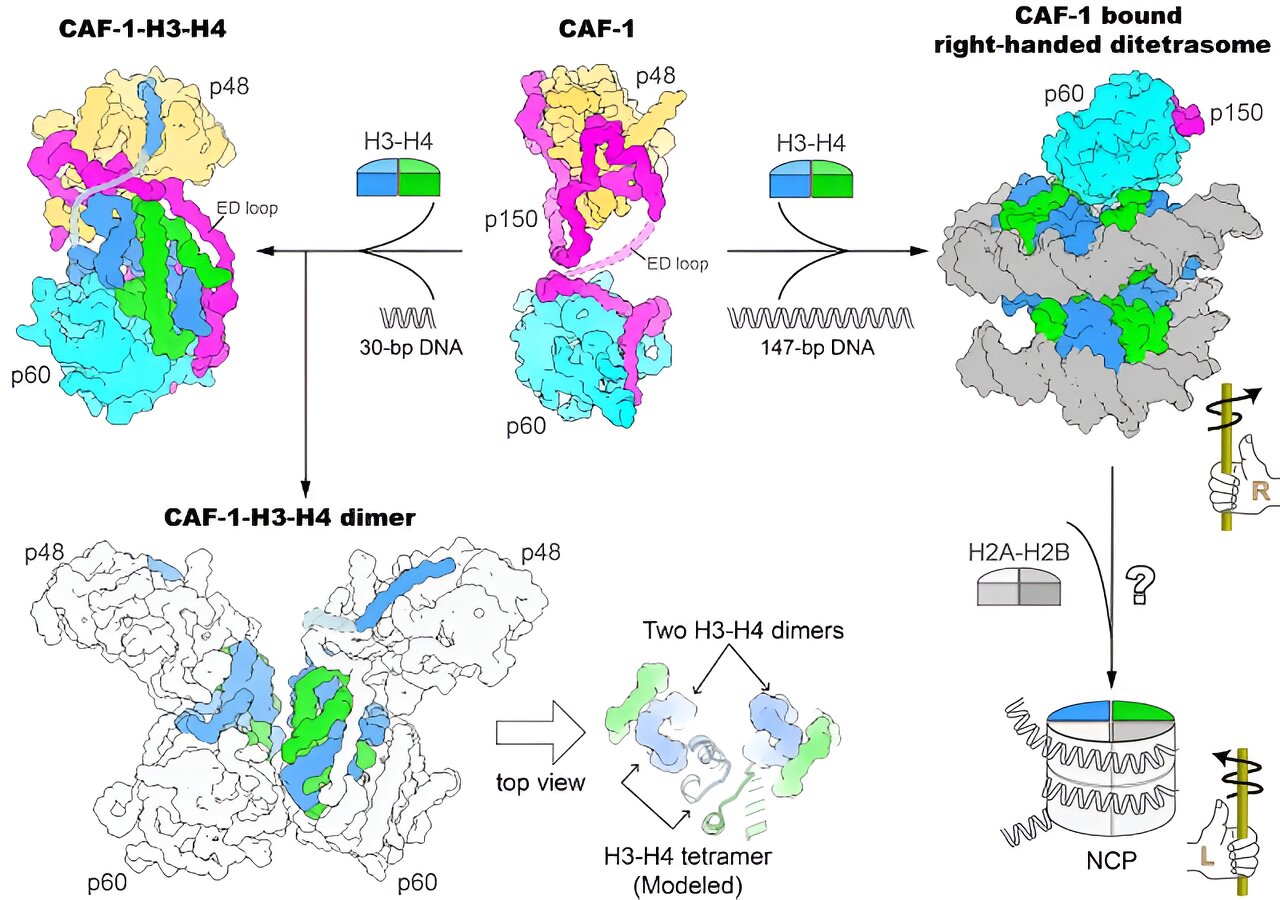
Researchers have revealed the mechanism of nucleosome assembly by chromatin assembly factor-1 (CAF-1), a protein complex responsible for depositing newly synthesized histones onto DNA. Through high-resolution structures and cryo-EM imaging, they discovered that CAF-1 binds to histones H3-H4 through specific subunits and loops. They also found that a DNA oligomer triggers the dimerization of the CAF-1-H3-H4 complex, leading to the formation of an H3-H4 tetramer. Additionally, they observed a CAF-1-bound right-handed di-tetrasome structure, suggesting the involvement of a right-handed nucleosome precursor in replication-coupled nucleosome assembly. These findings provide insights into the molecular mechanism of de novo nucleosome assembly.

science-and-technology2 years ago

"Unveiling the Role of Histones in CRISPR Spacer Acquisition in Archaea"

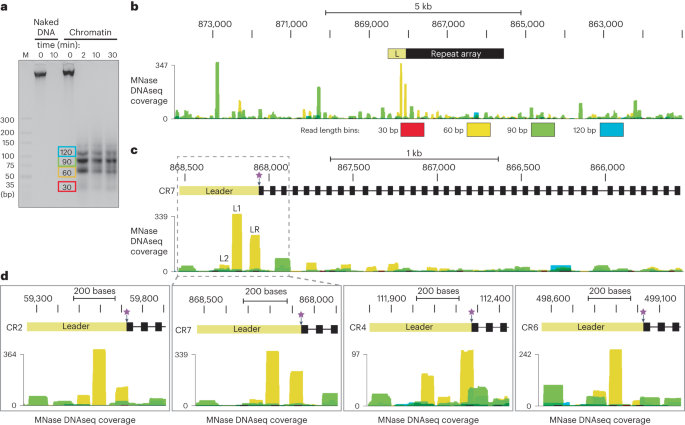
A recent study published in Nature reveals that histones, proteins that help organize DNA, play a crucial role in directing site-specific acquisition of CRISPR spacers in archaea. The researchers found that histones bind to specific DNA sequences near the CRISPR locus, facilitating the integration of new spacers into the CRISPR array. This discovery sheds light on the mechanisms underlying CRISPR adaptation and provides insights into the evolution of CRISPR-Cas systems.