
"Unveiling the Role of Histones in CRISPR Spacer Acquisition in Archaea"
TL;DR Summary
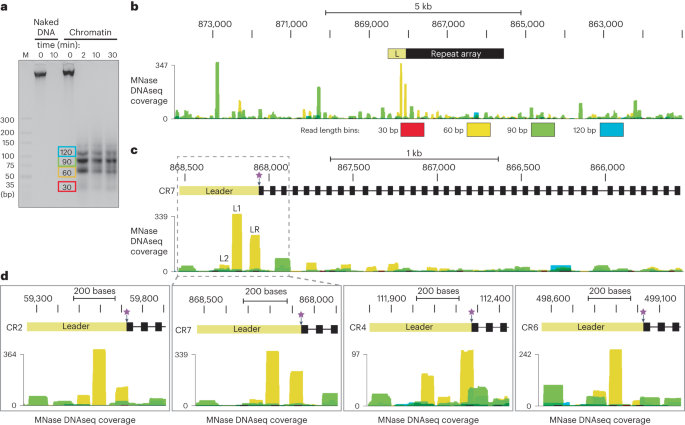
A recent study published in Nature reveals that histones, proteins that help organize DNA, play a crucial role in directing site-specific acquisition of CRISPR spacers in archaea. The researchers found that histones bind to specific DNA sequences near the CRISPR locus, facilitating the integration of new spacers into the CRISPR array. This discovery sheds light on the mechanisms underlying CRISPR adaptation and provides insights into the evolution of CRISPR-Cas systems.
Topics:science#archaeon#crispr#genome-integration#histones#science-and-technology#spacer-acquisition
Reading Insights
Total Reads
0
Unique Readers
1
Time Saved
10 min
vs 10 min read
Condensed
96%
1,973 → 70 words
Want the full story? Read the original article
Read on Nature.com