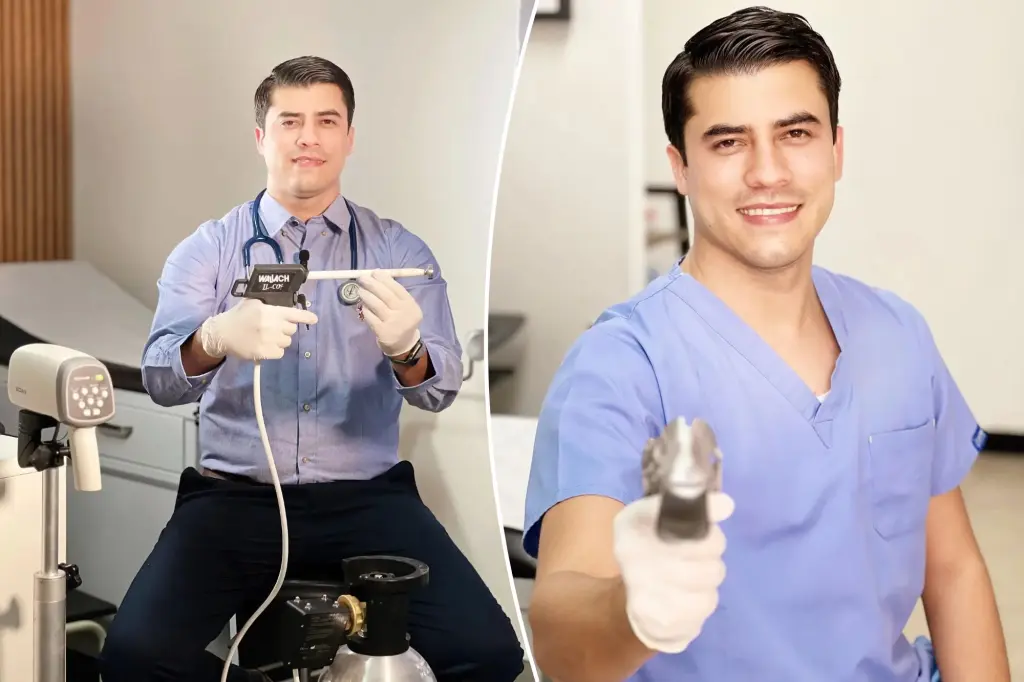
An Army gynecologist at Fort Hood is accused of secretly recording female patients during exams, with a lawsuit revealing he had been allowed to practice despite prior misconduct complaints. The Army has suspended the doctor and launched an investigation, with over 45 women coming forward with allegations of inappropriate behavior and non-consensual recordings, highlighting ongoing issues of misconduct within the military.

A lawsuit has been filed against a Chicago gynecologist, Dr. Fabio Ortega, and his employers, accusing him of sexually abusing over 300 female patients and alleging that the institutions covered up his behavior. The complaint details instances of inappropriate behavior dating back to the 1980s, including unnecessary exams, falsifying medical records, and targeting vulnerable patients. Ortega's medical license was permanently revoked in 2021, and he served time in prison for sexual assaults. The lawsuit claims that his suspension and arrest were not publicly reported, leaving former patients unaware.
Dr. George Tyndall, the former USC gynecologist accused of sexual abuse by hundreds of women, has died at the age of 76. Tyndall's alleged misconduct resulted in settlements of $1.1 billion, the largest payout in higher education history. He was set to stand trial next year on sex crimes, but his death means his accusers will be denied their day in court. Tyndall had denied all charges against him and was looking forward to the trial. His troubled history at the campus clinic exposed by the Los Angeles Times in 2018 led to reforms at USC and the ousting of the university's president.
George Tyndall, a former USC gynecologist who was awaiting trial on sex-related charges involving 16 patients, has been found dead in his Los Angeles home. Tyndall was facing 18 felony counts of sexual penetration of an unconscious person and nine felony counts of sexual battery by fraud. The charges alleged that the crimes occurred between 2009 and 2016. Tyndall had surrendered his medical license in September 2019 and had consistently maintained his innocence. In March 2021, USC reached an $852 million settlement with hundreds of women who claimed they were sexually abused by Tyndall.
George Tyndall, a former gynecologist at the University of Southern California (USC), accused of sexually preying on hundreds of patients, was found dead at his home in Los Angeles. Tyndall, who was expected to face a criminal trial next year, had been accused by numerous patients and settled multiple legal claims in 2021. The cause of death is currently unknown.
Former gynecologist Robert Hadden has been sentenced to 20 years in prison for sexually assaulting over 200 women between 1993 and 2012. Hadden, who worked at prominent hospitals including Columbia University Irving Medical Center, received the maximum sentence for each of the four counts against him. The sentencing guidelines called for 15 years per count. Hadden's victims made emotional statements during the sentencing hearing, with many expressing their ongoing pain and requesting that he be kept behind bars for as long as possible. Over $236 million in settlement money has been awarded to more than 200 former patients.
In this episode of ITK: Hack the Cycle, host Nadya Okamoto asks board-certified OB-GYN Dr. Nicole Sparks questions about gynecologists that people are too shy to ask. Dr. Sparks answers questions about pap smears, vaginal hygiene, UTIs, and the morning after pill. She recommends getting a pap smear every three years starting at the age of 21, washing the vagina with just water, and wiping front-to-back to prevent UTIs. There isn't a weight limit for the morning after pill, but it may be less effective for people over a certain weight.
In this episode of ITK: Hack the Cycle, host Nadya Okamoto asks board-certified OB-GYN Dr. Nicole Sparks questions about gynecologists that many people are too shy to ask. Dr. Sparks answers questions about pap smears, vaginal hygiene, UTIs, and more. She recommends getting a pap smear every three years starting at age 21, washing the vagina with just water, and wiping front-to-back to prevent UTIs.
In this episode of ITK: Hack the Cycle, OB-GYN Dr. Nicole Sparks answers questions about gynecologists that many people are too shy to ask. She explains that OB-GYNs deal with everything related to the reproductive system, including delivering babies and dealing with the vulva, vagina, ovaries, and uterus. Dr. Sparks also dispels myths about pap smears, recommends a pap smear every three years starting at age 21, and explains that the vagina is a "self-cleaning oven" that only needs water to clean. She also provides tips for preventing UTIs.
A TikTok video of a woman claiming her uterus came out of her vagina after farting has gone viral. While uterine prolapse is a real condition, it is very unlikely to happen to young people. Uterine prolapse is caused by weakened pelvic floor muscles and connective tissue, which can occur in older people who have experienced childbearing, chronic constipation, severe coughing, obesity, hormonal changes during menopause, or hysterectomies. Treatment options range from Kegel exercises to surgical intervention, and preventative measures include maintaining good pelvic floor strength, using stool softeners, increasing fiber in your diet, maintaining a healthy weight, and exercising. If you suspect you have uterine prolapse, speak to your primary care provider or OB-GYN.
A TikTok video of a woman claiming her uterus came out of her vagina after farting has gone viral. While uterine prolapse is a real condition, it is very unlikely to happen to young people. It usually occurs in older people who have experienced childbearing, chronic constipation, severe coughing, obesity, hormonal changes during menopause, or hysterectomies. Treatment options range from Kegel exercises to surgical intervention, depending on the degree of prolapse. Maintaining good pelvic floor strength, practicing Kegel exercises, using stool softeners, increasing fiber in the diet, maintaining a healthy weight, and exercising can help prevent uterine prolapse.
A high school senior in the US experienced a uterine prolapse after waking up from a fart last summer. The condition occurs when the pelvic floor muscles and ligaments are weakened to the point of not being able to provide enough support for the uterus, so the uterus either slips into or protrudes out of the vagina. While it is very unlikely for young people to experience prolapse, maintaining good pelvic floor strength, practicing Kegel exercises, using stool softeners, increasing fiber in the diet, maintaining a healthy weight, and exercising can help prevent it. If it happens, see an OB-GYN who can help get you into pelvic floor therapy and rehab, or refer you to a urogynecologist for surgical intervention.
Dr. Lauren Juyia, a gynecologist, was diagnosed with stage 4 colon cancer after experiencing pelvic pain and fatigue. Despite not having any major symptoms, Juyia got an ultrasound and discovered a mass on her ovary that was growing too quickly. Colon cancer is being diagnosed more in younger people, and Juyia urges younger people to get screened, even if symptoms are mild. Possible risk factors for colon cancer include smoking, diet, and weight, and "pencil-shaped" stools can be a potential sign of colon obstruction.
A gynecologist in Honduras was shocked to find a dead cockroach inside a patient's vagina. The patient, who hailed from a rural part of the country, complained of something "extremely strange" in her vagina. The gynecologist, who frequently documents his unusual cases on TikTok, had previously discovered everything from condoms to sex toys inside female reproductive organs. Leaving an object in a vagina for too long can lead to infections, tissue damage, and other complications. Women are advised to see a doctor if they suspect any trouble in their nether regions.