"Stress, Gut Virome, and Immune Responses: A Groundbreaking Discovery"
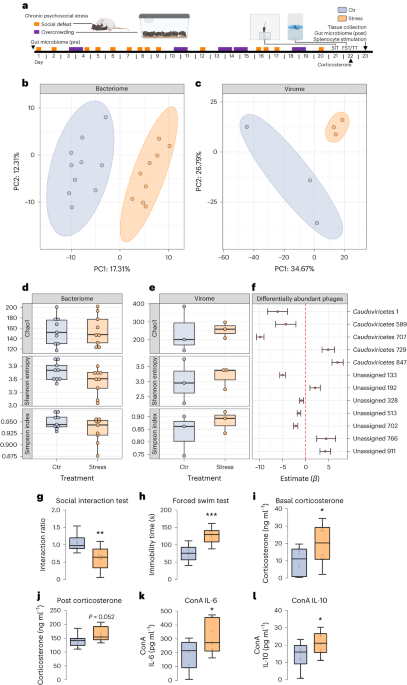
A study on mice suggests that chronic social stress alters the gut virome and bacteriome composition, leading to changes in behavior and immune responses. The researchers found that an autochthonous faecal virome transplant (FVT) from healthy mice prevented the manifestation of stress-related behavioral, immune, and neurobiological changes in the stressed mice. The FVT treatment modulated the microbiota and improved stress-related behavioral sequelae, indicating the potential of virome interventions in mitigating the effects of chronic stress.