The government shutdown has caused financial hardship for federal workers in San Diego, leading to increased demand for food aid and community support, with workers expressing concern over delayed pay and political uncertainty.
The Trump administration is significantly weakening federal employee unions by ending most collective bargaining agreements across various agencies, citing national security concerns and alleging unions obstruct management, leading to legal battles, employee resignations, and concerns over the loss of workplace protections and expertise.
Argentine President Javier Milei plans to fire 70,000 government workers, freeze public works, cut off funding to provincial governments, and terminate social welfare plans in an effort to reach fiscal balance, showcasing his libertarian approach to slashing the state.
Argentine President Javier Milei plans to cut 70,000 government jobs, freeze public works, and terminate social welfare plans as part of his austerity measures to achieve fiscal balance. Despite facing pushback from labor unions and private sector wage losses, Milei remains committed to his strategy, citing optimism among Argentines about the economy's future. He also outlined plans for economic reforms and expressed confidence in a V-shaped economic recovery.
Former President Donald Trump plans to reshape the federal government if he returns to the White House, including firing thousands of workers and replacing them with loyalists. Liberal organizations are quietly preparing to install roadblocks in case Trump wins, promoting new federal rules to limit presidential power and urging Biden’s White House to protect his accomplishments. Trump supporters are also strategizing for a second term through "Project 2025." Both sides are focused on deciding how many government workers can be removed and replaced with loyalists, with potential implications for the functioning of the government and continuity of policies.
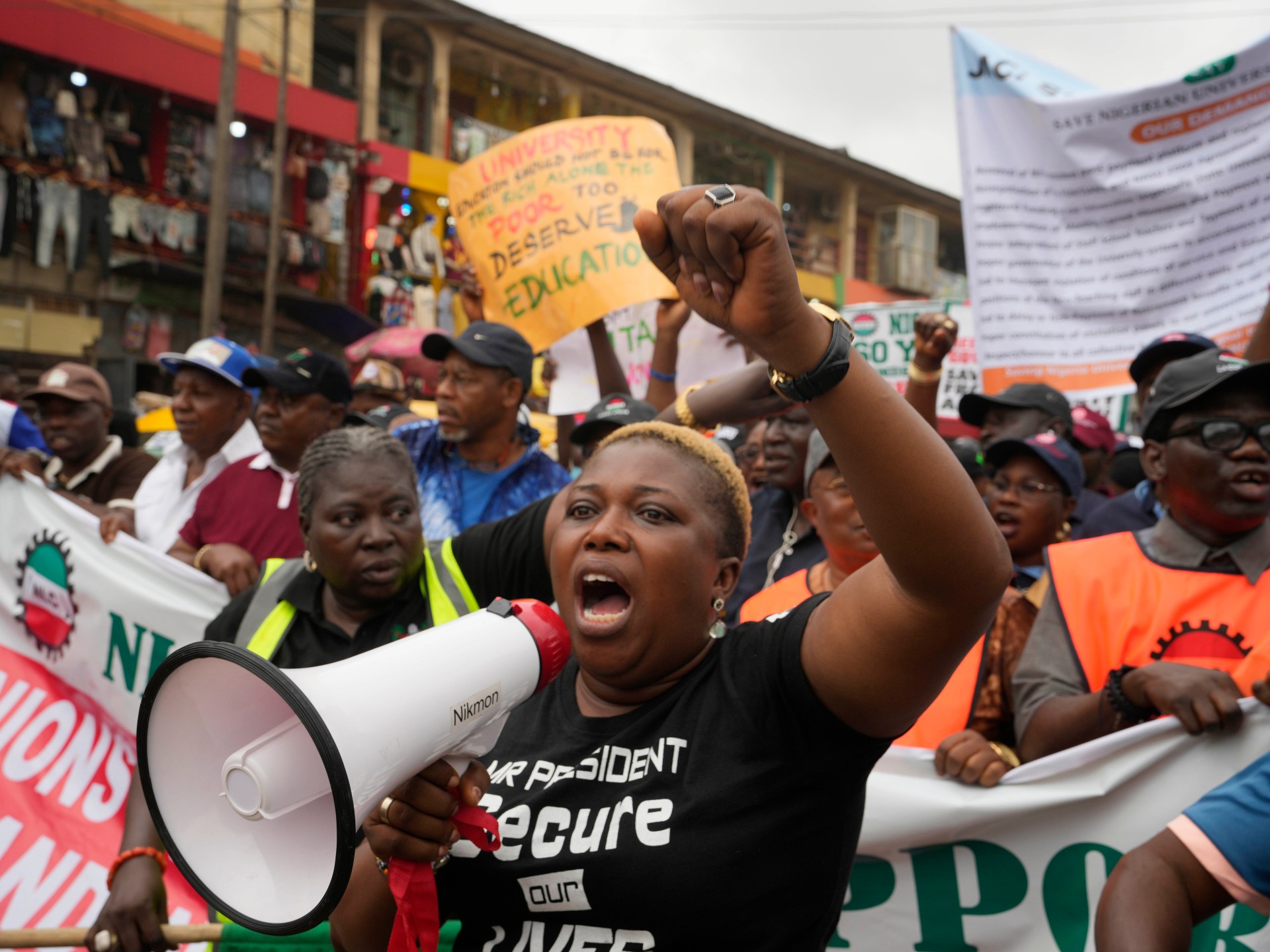
Nigerian government workers, represented by the Nigeria Labour Congress, have initiated a two-day strike to protest against the soaring costs of living exacerbated by the removal of petrol subsidies. The strike, the second in over a month, aims to demand improved welfare and an increase in wages. The workers have threatened to shut down the country's largest economy if their demands are not met. The removal of petrol subsidies has led to a significant increase in petrol prices, impacting small businesses and households reliant on petrol generators. The government has taken steps to alleviate the hardship, but workers argue that these measures are insufficient.