Gold prices rose by 0.9% to $4,368.30 per ounce following increased geopolitical tensions after the U.S. captured Venezuelan President Nicolás Maduro, supporting gold demand as a safe-haven asset amid global political unrest.
US gold futures surpassed $4,000 per ounce for the first time, driven by safe-haven demand amid the ongoing US government shutdown, expectations of a Federal Reserve rate cut, and strong central bank buying, with gold rallying 51% this year.
Gold futures opened at a record $3,863.10 per ounce amid economic uncertainty and a looming government shutdown, marking its first open above $3,800 and reflecting a 45.2% increase over the past year, driven by safe-haven demand and tariff-related tensions.
Gold prices dropped by the largest margin in three months, mainly due to reports that the U.S. might clarify that gold imports will not face tariffs, coupled with reduced haven demand amid hopes for a Ukraine-Russia ceasefire.
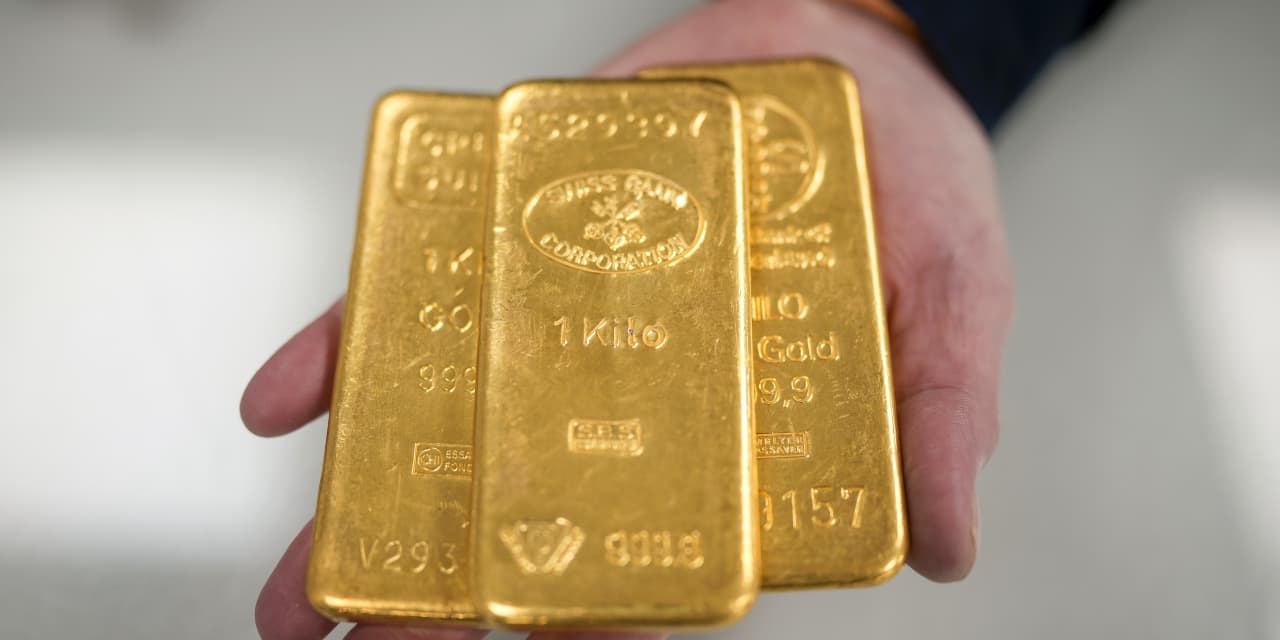
Gold futures reached a record high of $3,534 after the US announced tariffs on Swiss gold bars, significantly impacting Switzerland's dominant gold trade and causing market turmoil amid ongoing trade tensions.
US gold futures reached a record high following President Trump's announcement of tariffs, which caught global markets off guard, indicating increased investor interest in gold as a safe haven amid trade tensions.
The stock market is experiencing volatility due to triple witching, where stock options, stock index futures, and stock index options all expire simultaneously. Treasury yields have fallen, with the 10-year at 4.231%. Nvidia's stock continues to slip, and crude oil prices are expected to rise due to seasonal demand and geopolitical tensions. Gold futures fell 1.2% as the dollar strengthened on positive U.S. business activity data. The Dow Jones Industrial Average, S&P 500, and Nasdaq Composite are all experiencing minor fluctuations.
Stock futures were little changed as investors awaited March inflation data, with S&P 500 and Nasdaq 100 futures hovering near the flatline. The 10-year Treasury yield topped 4.4% as investors awaited the consumer price index report for insight into the Federal Reserve's rate policy impact on inflation. Real estate sector outperformed on a tepid day, while gold futures extended their rally to touch an intraday record of $2372.50/ounce. Additionally, various commodity futures, including silver, copper, aluminum, and tin, experienced notable movements in 2024.
Gold futures closed at a new record high due to weak U.S. economic data, leading to a decline in the dollar and Treasury yields. The complex interplay of economic data, fluctuating dollar fortunes, bond yields, and Federal Reserve actions contributed to this surge. Factors such as tamer U.S. inflation data and a weaker dollar index supported the rally. The market dynamics, including strong Asian buying and expectations of Fed rate cuts, are driving the gold price higher, with experts predicting a continued rally.
US Treasury Secretary Janet Yellen warned of severe economic consequences if the House does not address and raise the debt ceiling. Republicans are demanding dramatic cuts to future spending in exchange for increasing the debt ceiling. The uncertainty of a government default has been highly supportive of gold futures pricing which remains above $2000.
US stock futures fell ahead of the highly anticipated Friday's job report, with tech stocks leading the Nasdaq lower than other indexes. Gold futures broke the $2,000-per-ounce barrier on the back of weak US economic data, as well as hopes that the Fed will raise rates more slowly. Applications for US unemployment benefits rose by 228,000 for the week ended April 1, higher than consensus estimates of 200,000. Economists surveyed by Bloomberg expect Friday's jobs report to show 240,000 jobs created last month, significantly lower than the average job gains of 343,000 over the last six months.
US stock futures edged lower as private-sector hiring slowed down, with the S&P 500 and Dow Jones Industrial Average slightly beneath the flatline. Treasury yields inched lower, while gold futures hovered at their highest level in over a year after US job vacancies dropped in February to their lowest levels since May 2021. The monthly Job Openings and Labor Turnover Survey (JOLTS) showed that US employers reported 9.93 million job openings in February, down from over 10.5 million in January. Federal Reserve Bank of Cleveland President Loretta Mester said inflation remains too high and stubborn, and expects to see interest rates move above 5%.