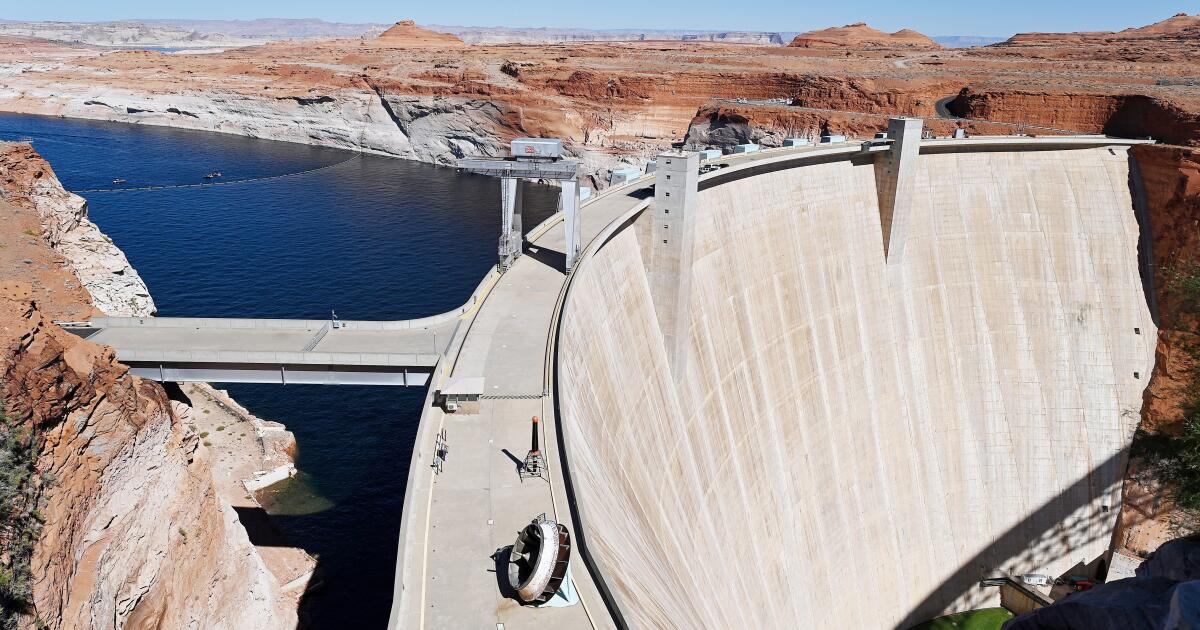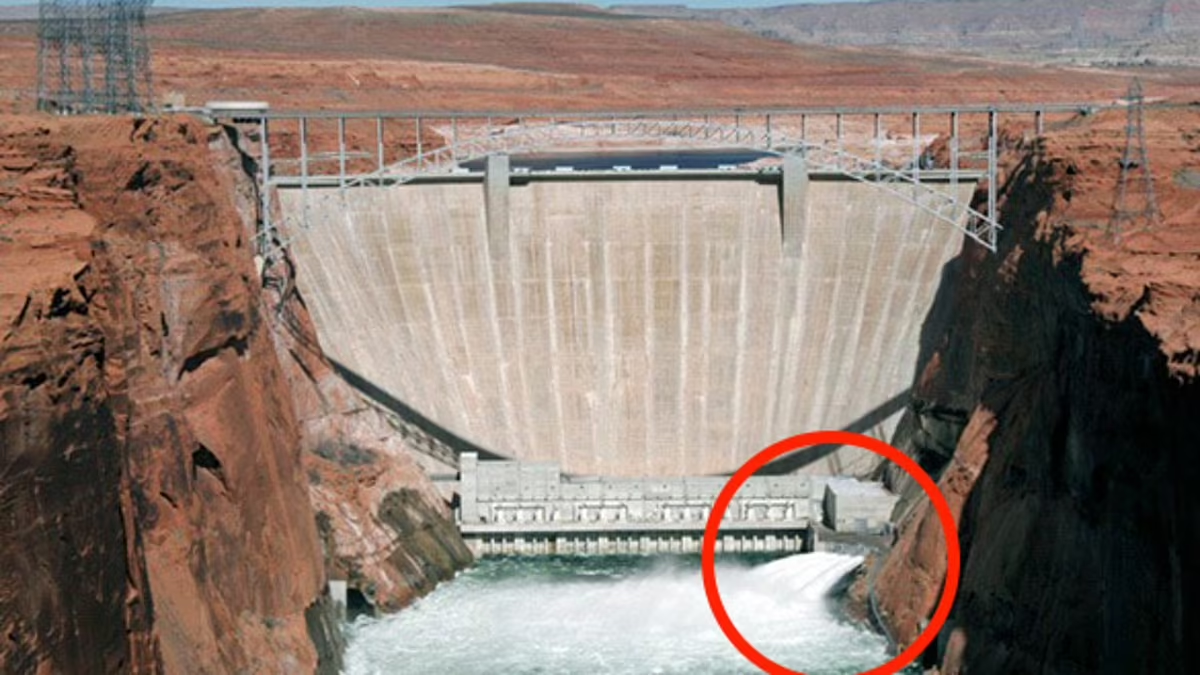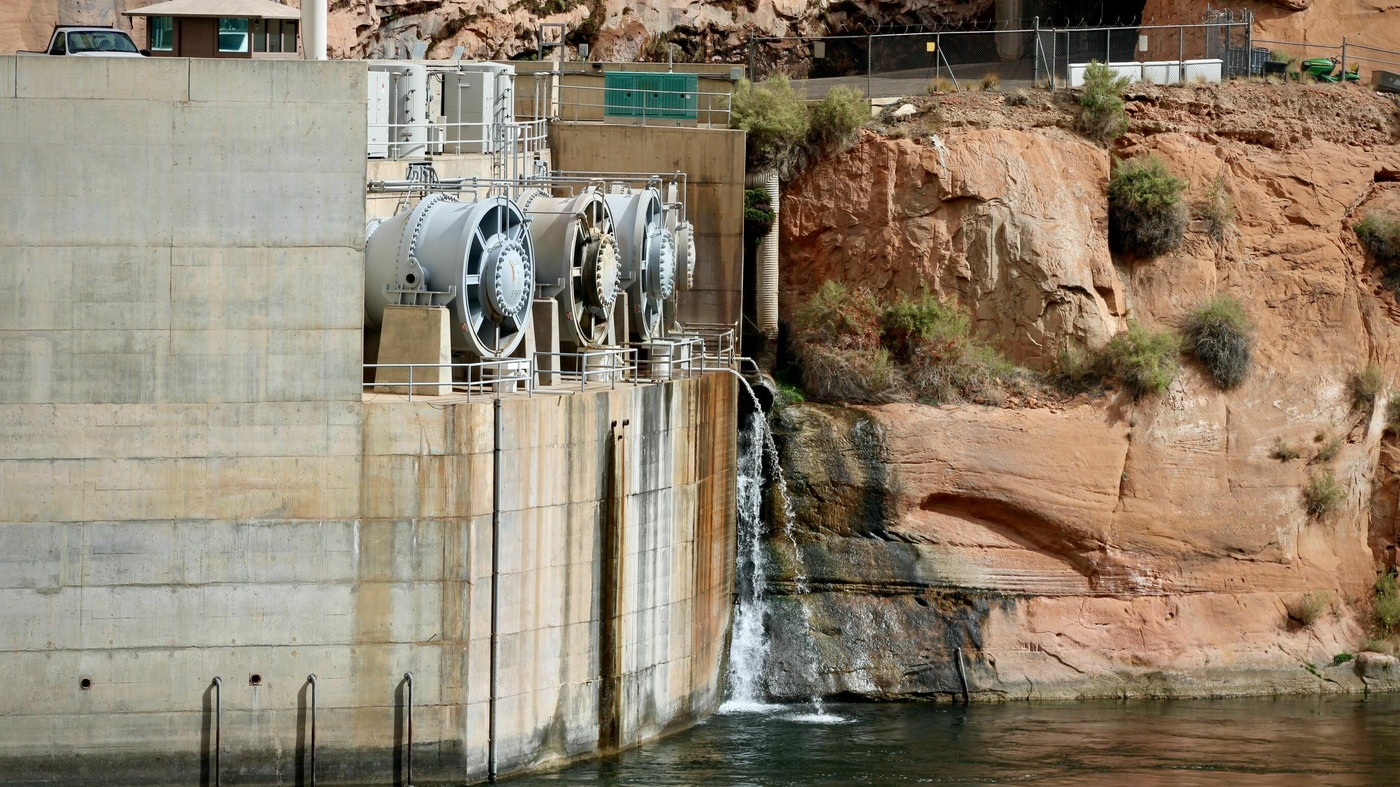
Damage to the "river outlet works" at Glen Canyon Dam has raised concerns about the ability to manage water from the shrinking Lake Powell and meet obligations to downstream states. The discovered damage inside the important tubes has caused worries among water managers and stakeholders, with calls for re-engineering the dam and re-negotiating agreements for sharing the Colorado River. Fixing the pipes is seen as a short-term solution, with larger changes needed to address the long-term challenges of water management in the region.
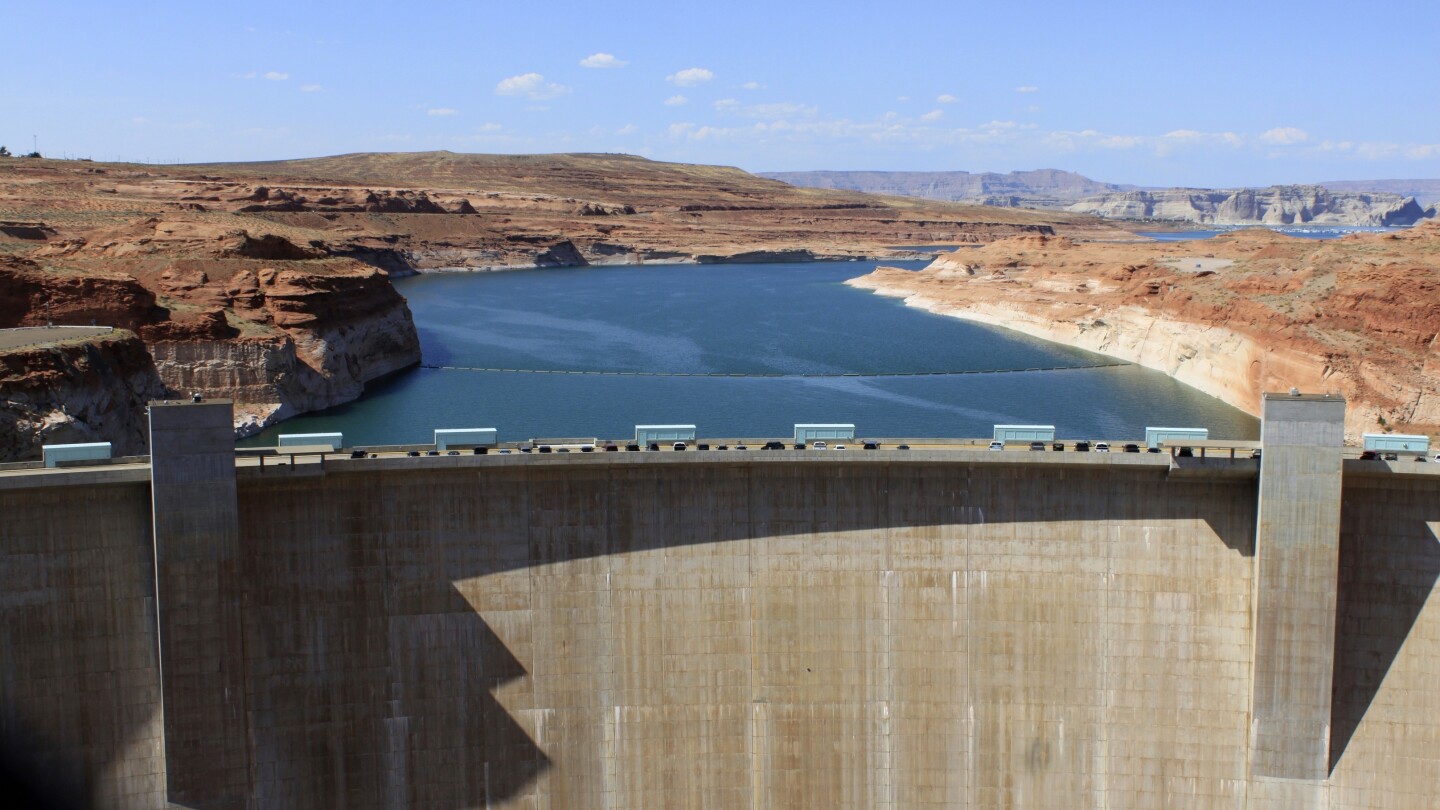
Plumbing problems at Glen Canyon Dam, which holds back the second-largest reservoir in the U.S., have raised concerns about future water delivery to Southwestern states supplied by the Colorado River. The dam's damaged tubes could complicate water management as Lake Powell reaches low levels, potentially impacting water supply for millions of people and agricultural producers. Federal officials are evaluating the issues, and states and tribes reliant on the Colorado River are working on a long-term deal to share the dwindling resource.
Damage to the infrastructure of Glen Canyon Dam, including deterioration in steel tubes that allow water to pass through the dam, has raised concerns about potential water shortages in the Southwest, particularly for California, Nevada, Arizona, and Mexico. The dam's design poses structural risks under low reservoir levels, potentially leaving as much water stranded as California's largest reservoir. Federal officials are analyzing potential fixes, but the situation adds complications to long-term water management plans for the Colorado River, which has long been overallocated and has seen reduced flows due to climate change.
More than 30 million Americans could face a drinking water crisis as major plumbing issues were found in the Glen Canyon Dam, threatening water supplies downstream to Lake Mead. The dam's river outlet works, responsible for releasing water to Lake Mead, have serious pipe damage, potentially leading to existing water shortages worsening for residents of California, Nevada, and Utah. The unfavorable inspection report suggests that the pipes may not be up to the task of releasing water, posing a significant risk to the water supply for millions of people.
Federal officials predict that Lake Powell's water levels could rise by 50 to 90 feet this spring and summer, with the most probable scenario being a 65-foot increase by June. The increase comes as the National Weather Service's Colorado Basin River Forecast Center projects that 1.3 million acre-feet worth of water will flow toward Lake Powell over the next few months. The lake would remain about 110 to 126.5 feet below full-pool status in the probable scenario, but it would also place the reservoir between 80 and 100 feet above the minimum pool level needed to generate power. The Bureau of Reclamation also approved a four-day controlled release from the Glen Canyon Dam to move sediment in the Paria River onto the beaches and sandbars in Marble Canyon and the eastern Grand Canyon.