China is poised to dominate the global renewable energy sector due to its rapid technological advancements, production capabilities, and geopolitical strategies, making it a key player in the future of energy and international power dynamics.
OpenAI's recent decision to release open-source versions of its models marks a significant shift in U.S. AI strategy, driven by China's rapid open-source AI development and competition. Chinese companies like DeepSeek, Baidu, and Tencent are embracing open-source to foster innovation and demonstrate technological prowess, challenging the traditional proprietary approach of U.S. firms. This move reflects a broader geopolitical and economic contest, with the U.S. potentially falling behind in AI leadership as open-source models gain prominence globally.
NASA Administrator Bill Nelson warned lawmakers that China's civilian space program is likely a cover for its military ambitions in space, emphasizing the need for the US to stay ahead in the geopolitical competition. He urged for a $25.6 billion NASA budget for fiscal 2025, expressing concerns about China's secretive and rapid advancements in space. Nelson also highlighted the importance of maintaining a global edge and peaceful use of space, as China aims to have astronauts on the moon by 2030.
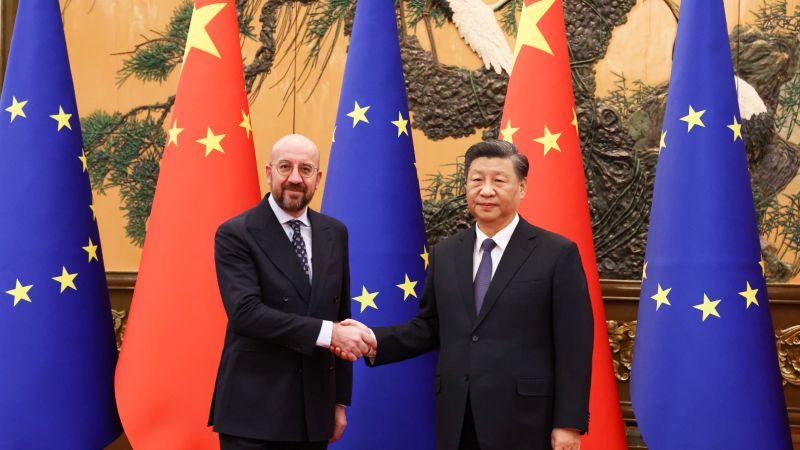
European Union leaders are meeting with Chinese leader Xi Jinping in Beijing for a summit aimed at resolving deep trade tensions and addressing key economic grievances. The EU arrived with concerns about the trade deficit, subsidies for Chinese companies, and barriers to entry into the Chinese market. While Beijing seeks to stabilize its domestic economy, it also sees the EU as a valuable partner. Expectations for major breakthroughs are low, given the entrenched differences between the two sides. The meeting comes as Europe recalibrates its policy toward China, seeking to diversify supply chains and secure critical technologies. Both sides are expected to look for areas of collaboration, but major concessions from China are unlikely without significant gains in return.
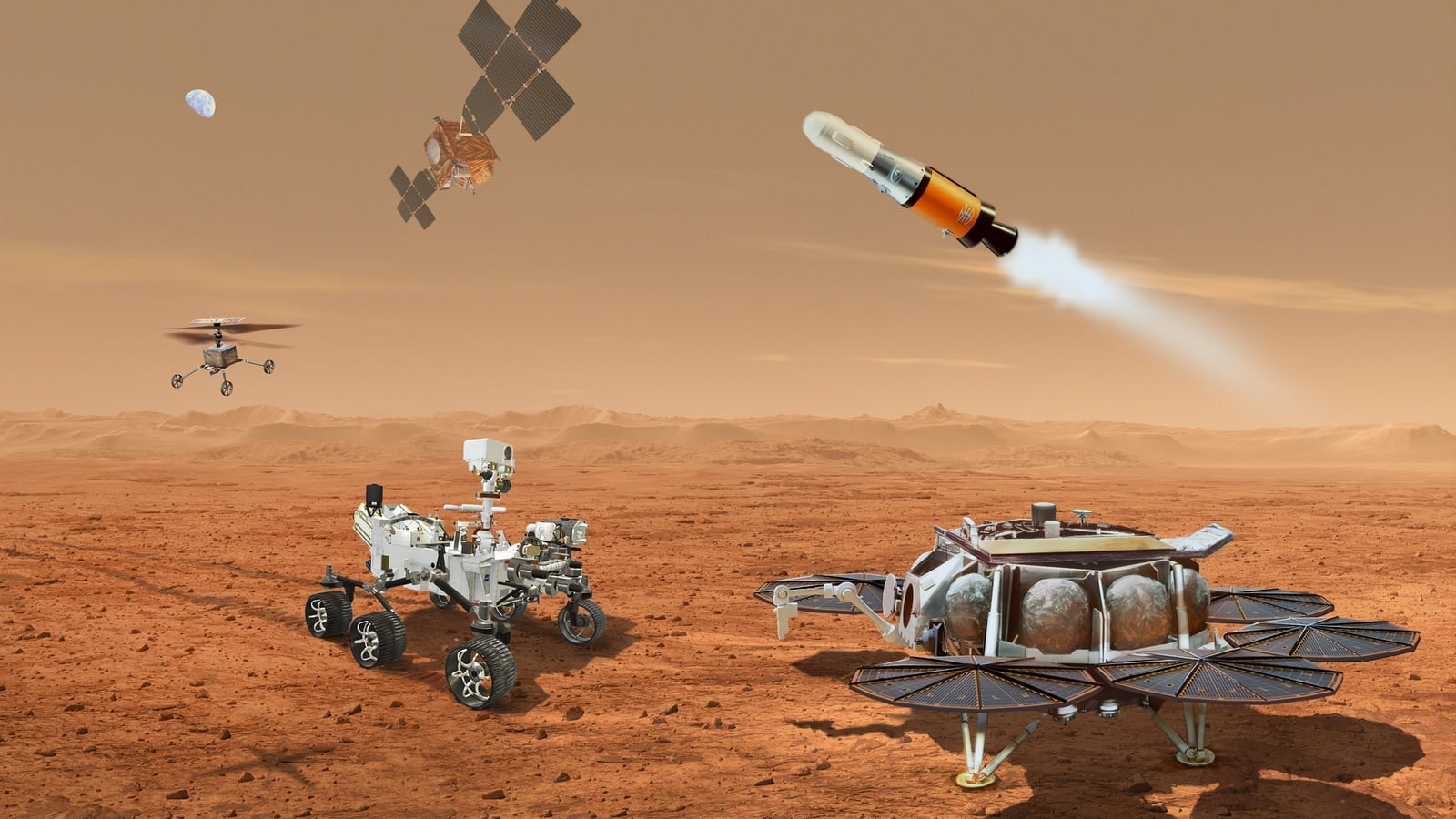
Members of Congress, including senators and representatives from California, are urging NASA to maintain progress on the Mars Sample Return (MSR) program and secure increased funding for the initiative in 2024. The lawmakers expressed opposition to NASA's directive to slow down MSR work due to uncertainty about funding availability. They argued that the reduction in funding violates Congress's appropriations authority and could jeopardize the mission's launch window, contracts with American businesses, and hundreds of jobs. The bipartisan group also emphasized the importance of MSR in maintaining a competitive advantage over China in space and meeting national security challenges. The funding debate coincides with NASA's evaluation of alternative architectures for MSR in response to an independent review board report.
The European Commission has identified four sensitive technology areas - advanced semiconductors, artificial intelligence, quantum computing, and biotechnology - that will be carefully scrutinized for potential risks, particularly in the hands of rival countries like China. The EU aims to develop a strategy to guarantee its economic security and reduce dependencies on critical minerals and natural gas. While the EU executive branch did not explicitly mention China, the move aligns with a broader strategy of "de-risking" relations with Beijing. The next step involves consulting EU member states to decide on measures, which could include export controls, increased investment in the EU, or partnerships to reduce dependencies. The selected technology areas were chosen based on their transformative power, potential military use, and potential for human rights infringements.
The European Commission has identified four sensitive technology areas - advanced semiconductors, artificial intelligence, quantum computing, and biotechnology - that will be carefully scrutinized for potential risks, particularly in the hands of rival countries like China. The EU aims to develop a strategy to ensure its economic security and reduce dependencies on critical minerals and natural gas. While the EU executive branch did not explicitly mention China, the move aligns with a broader strategy of "de-risking" relations with Beijing. The next step involves consulting EU member states to decide on measures, which could include export controls, increased investment in the EU, or partnerships to reduce dependencies. The selected technology areas were chosen based on their transformative power, potential military use, and potential for human rights infringements.