Scientists at Northwestern University have created the most detailed 4D maps of the human genome's 3D organization over time, revealing how DNA folding influences gene activity and cell function, with implications for understanding diseases and developing targeted therapies.
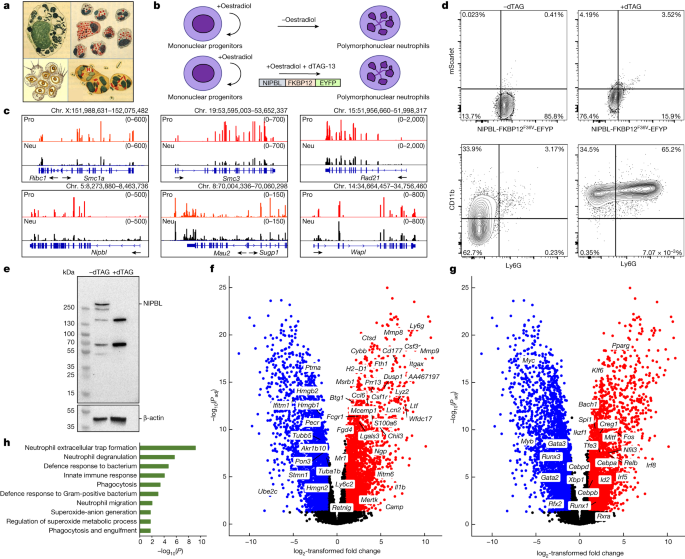
A study has revealed that nuclear morphology is influenced by loop-extrusion programs, shedding light on the mechanisms that shape the structure of the nucleus. The research utilized various datasets and references to investigate the organization of chromosomal DNA and its impact on nuclear deformations. The findings provide insights into the intricate processes governing genome folding and chromatin interactions, contributing to a deeper understanding of nuclear architecture and its functional consequences.
A chance rearrangement of the human genome over a million years ago probably kick-started the evolution of modern humans from our primate ancestors. These stretches of human-specific DNA are called human accelerated regions (HARs). The physical structure of a section of DNA can be an important indicator of its function. The researchers analyzed 241 different mammalian genomes and found that HARs tend to arise in parts of the human genome that are structurally very different to their counterparts in other mammalian genomes. The team then used a machine-learning approach to compare human and chimpanzee DNA sequences, and concluded that almost 30 percent of HARs were in genomic regions that were folded differently in humans than in chimpanzees.