FuelCell Energy reported its full-year 2023 earnings, with revenues of $123.4 million, down 5.4% from the previous year, and a net loss of $107.6 million, narrowed by 26%. However, the company's earnings per share (EPS) beat expectations, improving from a loss of $0.38 in FY 2022 to a loss of $0.26. While revenue fell short of analyst estimates by 2.1%, EPS exceeded expectations by 6.8%. Looking ahead, FuelCell Energy forecasts an average annual revenue growth of 28% over the next three years, outperforming the 8.4% growth forecast for the Electrical industry in the US.

FuelCell Energy reported a year-over-year decline of 42.7% in revenue for Q4, with EPS of -$0.07 compared to -$0.11 a year ago. The reported revenue of $22.46 million fell short of the Zacks Consensus Estimate of $26.11 million. Key metrics, such as revenues in generation, advanced technologies, and service, also missed analyst estimates. Despite this, shares of FuelCell Energy have returned +23.4% over the past month. The stock currently has a Zacks Rank #3 (Hold).
FuelCell Energy's stock surged after announcing a partnership with ExxonMobil's affiliate in the Netherlands to develop and test carbon-capture technology aimed at reducing CO2 emissions. If successful, the technology could be deployed globally, offering a game-changing solution for decarbonizing heavy industry.
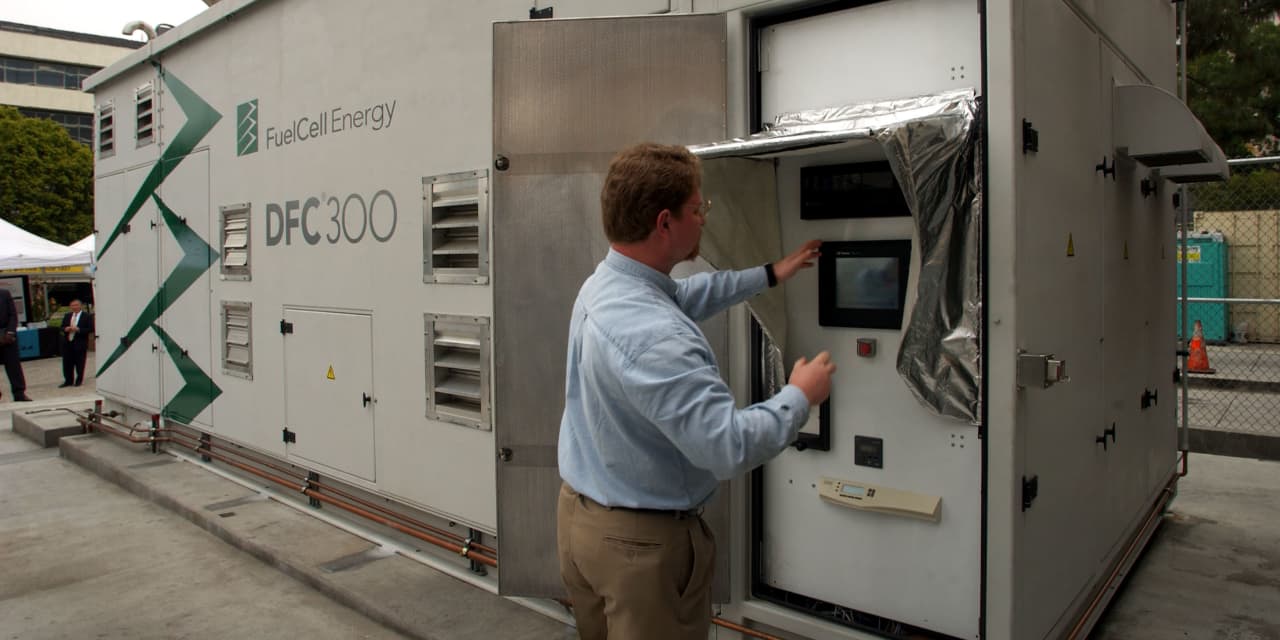
Toyota and FuelCell Energy have deployed the world's first "tri-gen" system at Toyota's port facility in Long Beach, California. The system converts methane-rich waste gas into electricity, clean hydrogen, and water. It cost $35 million to build and takes up the space of three basketball courts. Toyota will use the hydrogen for its fleet of fuel cell trucks and electric sedans, while the electricity will power all port operations. The system is expected to eliminate over 9,000 tons of CO2 annually and excess electricity will be transmitted to the local utility. FuelCell Energy sees potential for deploying similar systems in other applications such as mining.
Toyota and FuelCell Energy have deployed the world's first "tri-gen" system at Toyota's Long Beach port facility in California, which converts methane-rich waste gas into clean hydrogen, electricity, and water. The system, powered by a molten carbonate fuel cell, is capable of producing 2.3 megawatts of electricity, 1,200 kilograms of hydrogen, and 1,400 gallons of water per day. Toyota will use the hydrogen for its fleet of fuel cell trucks and vehicles, while the electricity will power all port operations. The project is expected to eliminate over 9,000 tons of CO2 annually and may have future applications in other industries.