Tag

Fractional Quantum Hall Effect

All articles tagged with #fractional quantum hall effect

science-and-technology1 year ago

"Graphene's Groundbreaking Discovery: Unveiling Electron Fractionalization"

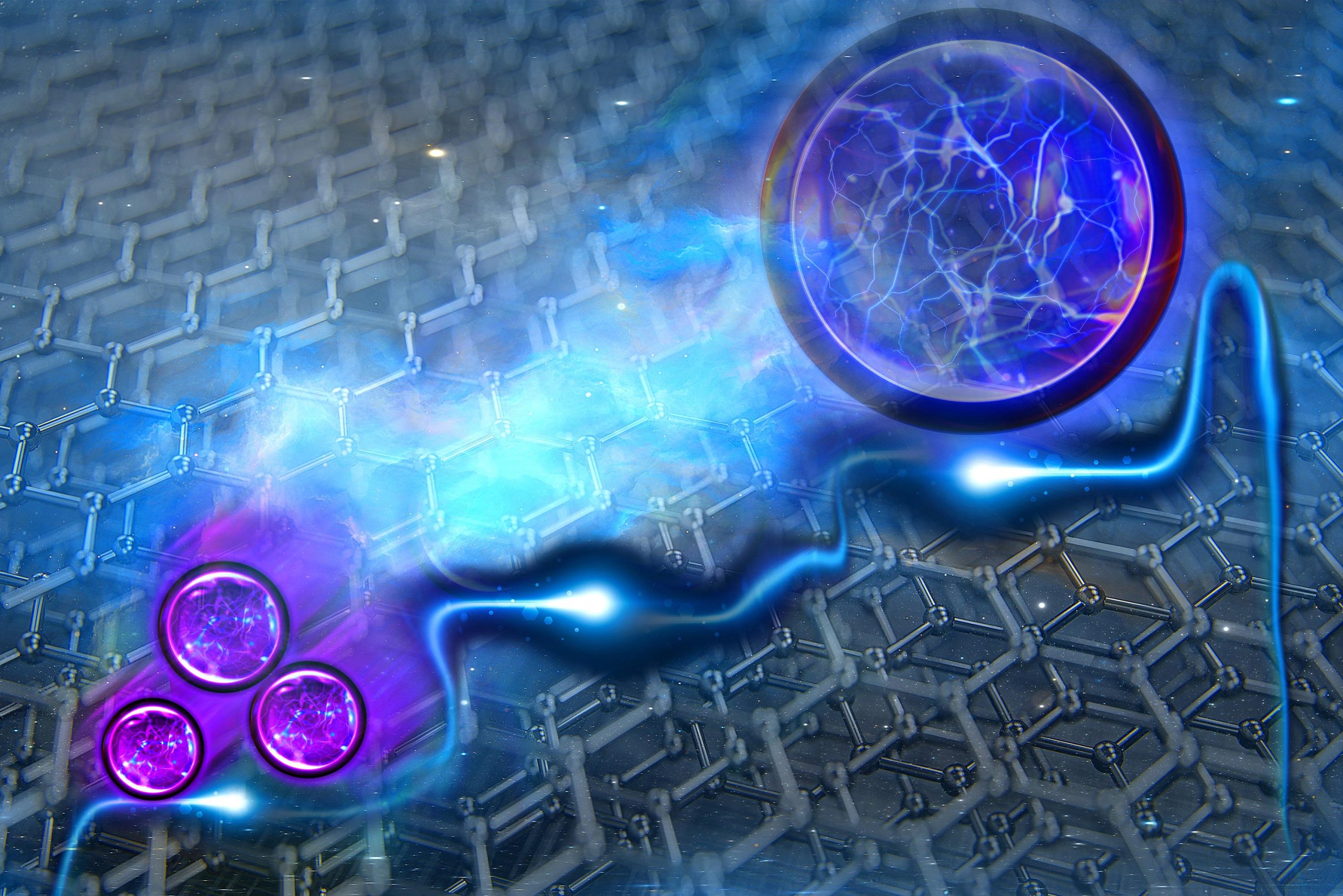
MIT physicists have observed the fractional quantum anomalous Hall effect in a simpler material, five layers of graphene, without the need for an external magnetic field. This exotic electronic state could enable more robust forms of quantum computing and is a significant breakthrough in fundamental physics. The researchers found that the graphene structure inherently provides the right conditions for electrons to pass through as fractions of their total charge, opening up possibilities for a type of quantum computing that is more resilient against perturbation.
science1 year ago

"Uncovering Electron Fractionalization in Graphene: A Quantum Leap for Quantum Computing"

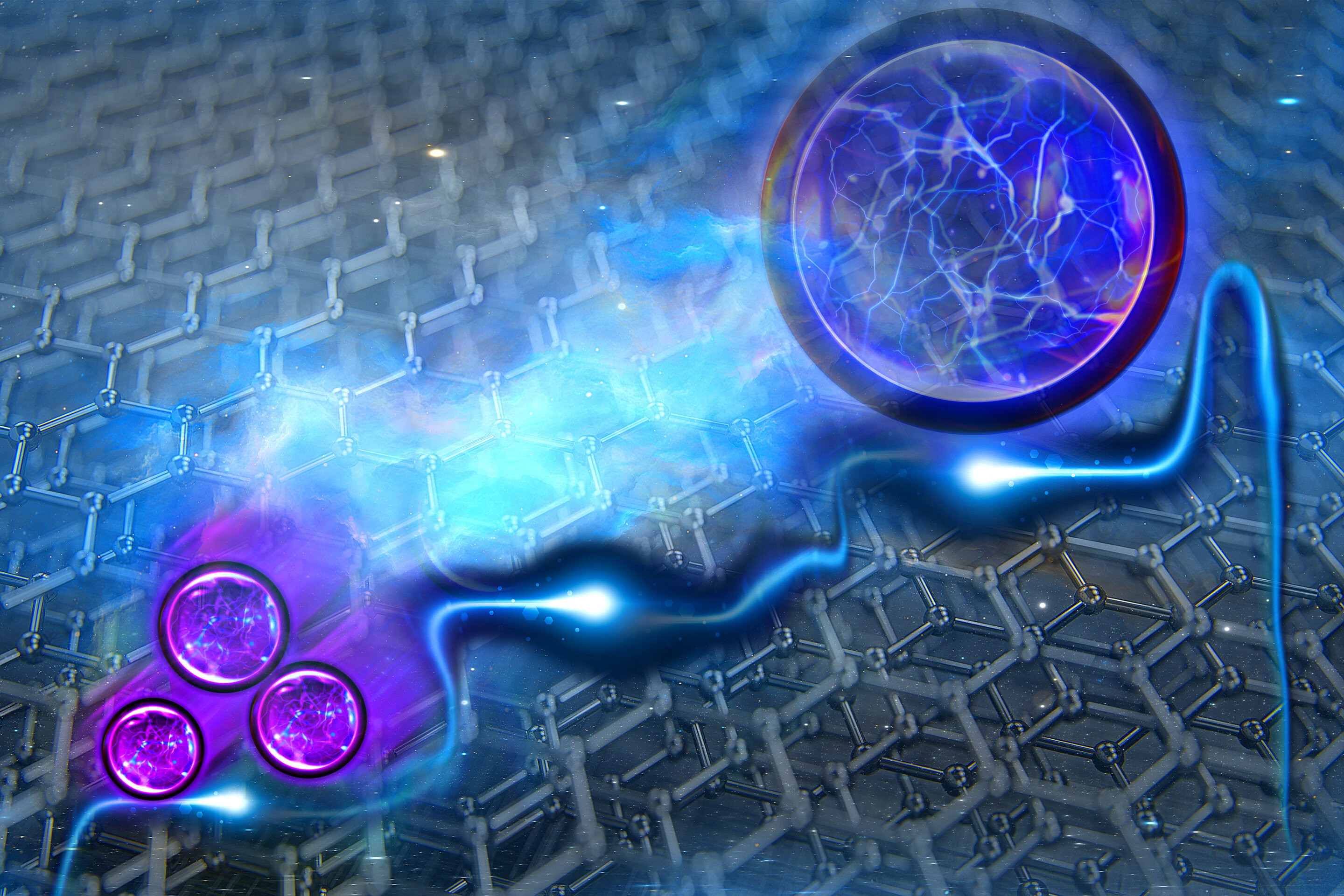
MIT physicists have observed the fractional quantum anomalous Hall effect in a simpler material, five layers of graphene, without the need for an external magnetic field. This exotic electronic state, where electrons behave as fractions of their total charge, could have implications for building resilient quantum computers. The researchers found that when five sheets of graphene are stacked in a specific configuration, the resulting structure provides the right conditions for electrons to exhibit fractional charge. This unexpected discovery opens up new possibilities for fundamental physics and potential applications in quantum computing.

physics2 years ago

"Unifying Forces: The Power of Composite Fermions in Physics"

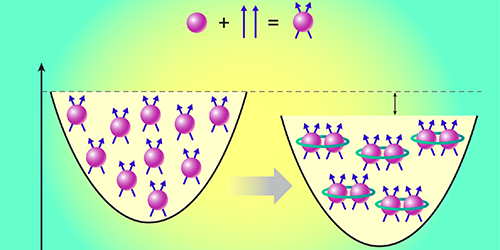
Researchers have developed a new understanding of electron pairing in nanoscale semiconductor devices, leading to the formation of composite fermions and the induction of the fractional quantum Hall effect. This insight could provide clues for the development of high-temperature superconducting materials. The pairing of composite fermions releases an energy that is 20 times more stable than electron pairs responsible for superconductivity in known materials, potentially comparable to the pairing energy seen in the highest-temperature superconductors. Further testing and improvements in device quality are needed to validate these findings, with potential implications for future advancements in materials science and superconductivity.

physics2 years ago

"Unveiling the Surprising Behavior of Composite Fermions: Flowing Without Magnetic Fields"

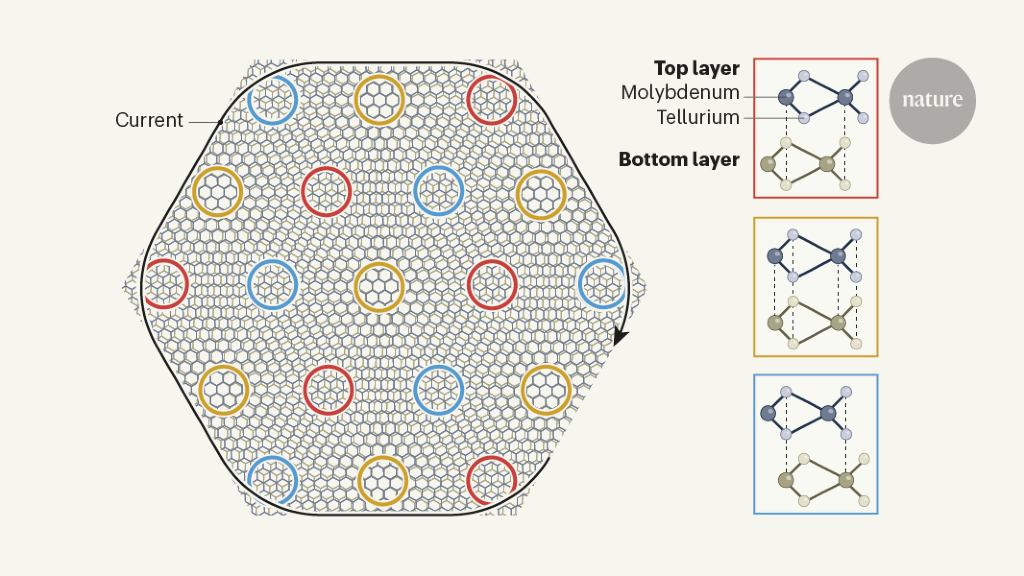
Researchers have discovered that certain twisted semiconductor bilayers can host a Fermi liquid of composite fermions (CFs) without the need for an applied magnetic field. CFs are weakly interacting particles that capture part of a magnetic field and display phenomena such as the fractional quantum Hall effect. Recent experiments have shown that a twisted bilayer of MoTe2 semiconductor exhibits CFs and the fractional quantum Hall effect without a magnetic field. Theoretical analysis predicts that this twisted bilayer can also realize a state called a CF Fermi liquid, which is a strongly correlated metallic state fundamentally different from ordinary electron Fermi liquids found in metals. The ability to create a CF Fermi liquid at zero magnetic field opens up new possibilities for exploring this peculiar state and its potential applications.

science-and-technology2 years ago

Unraveling the Secrets of Twisted Materials and Composite Fermions

Researchers have observed the fractional quantum Hall effect in a thin semiconductor material without the need for a magnetic field. This phenomenon, which involves the splitting of electrons into new particles called anyons, has potential applications in quantum computing. The findings were reported in three papers in Nature and one in press at Physical Review X.