Major U.S. indices closed higher, with notable stock movements including Intel's surge after strong earnings, Scienture Holdings' significant jump on FDA approval, Ford's earnings beat, Deckers Outdoor's mixed results, and Super Micro Computer's decline following a disappointing revenue forecast, reflecting varied investor reactions to quarterly reports and company news.

Six analysts have recently evaluated Ford Motor, showing a range of sentiments from bullish to indifferent. The average 12-month price target is $15.00, with a high of $18.00 and a low of $13.00, reflecting a 7.14% increase from the previous average. Analysts have adjusted their ratings and price targets based on market conditions and company performance, providing insights into Ford's market position and financial health.
The stock market closed with all three major indexes in positive territory, with Wells Fargo stock rising 7% after a regulatory penalty was lifted. Shake Shack's shares surged 26% following strong fourth-quarter earnings, while Ford Motor's CEO emphasized the potential of its "Pro" business. Toast, a restaurant management software company, announced layoffs and reported fourth-quarter earnings that beat expectations. Intuitive Machines saw its stock soar 34.5% after a successful launch for its mission to the moon.
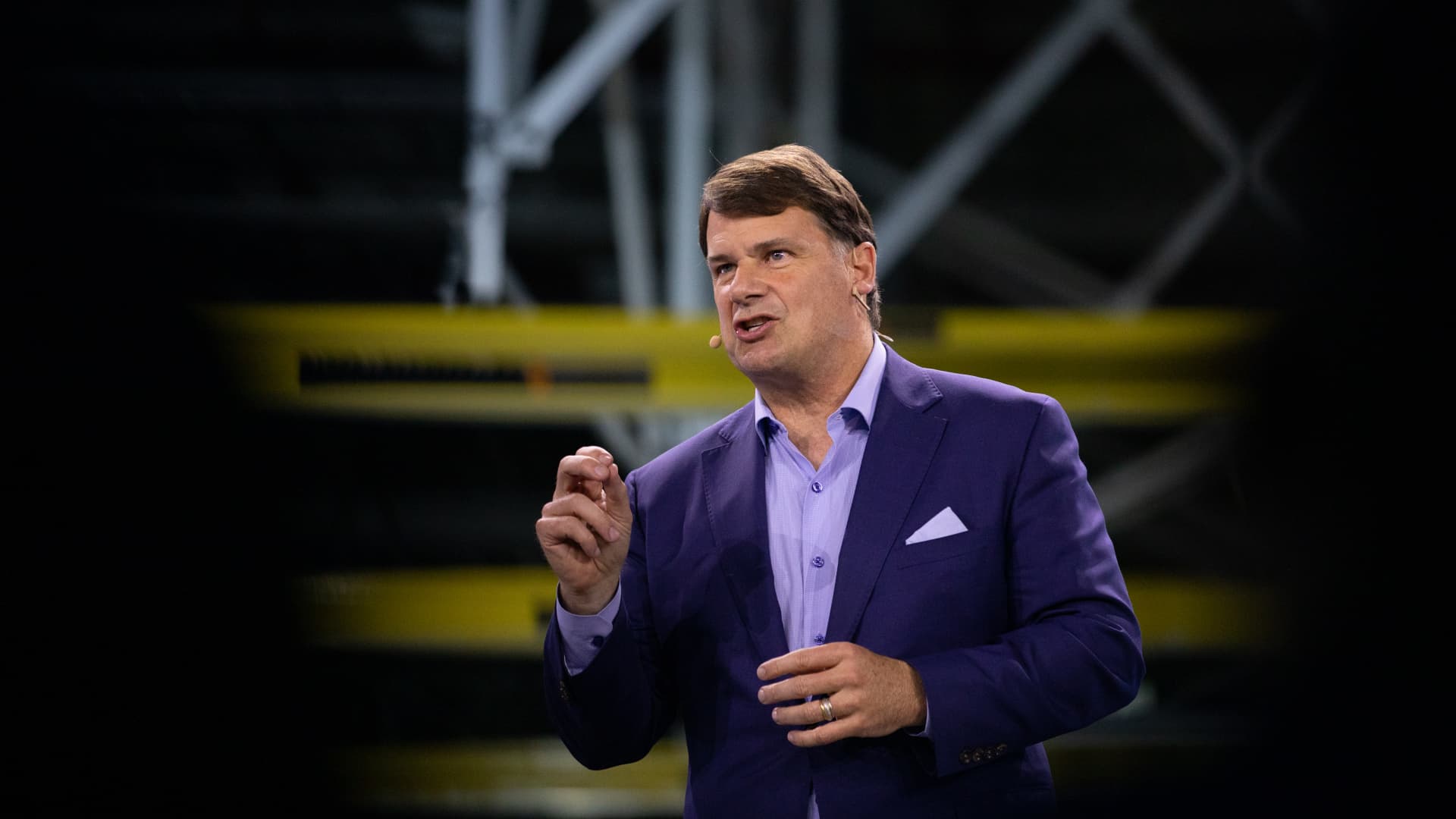
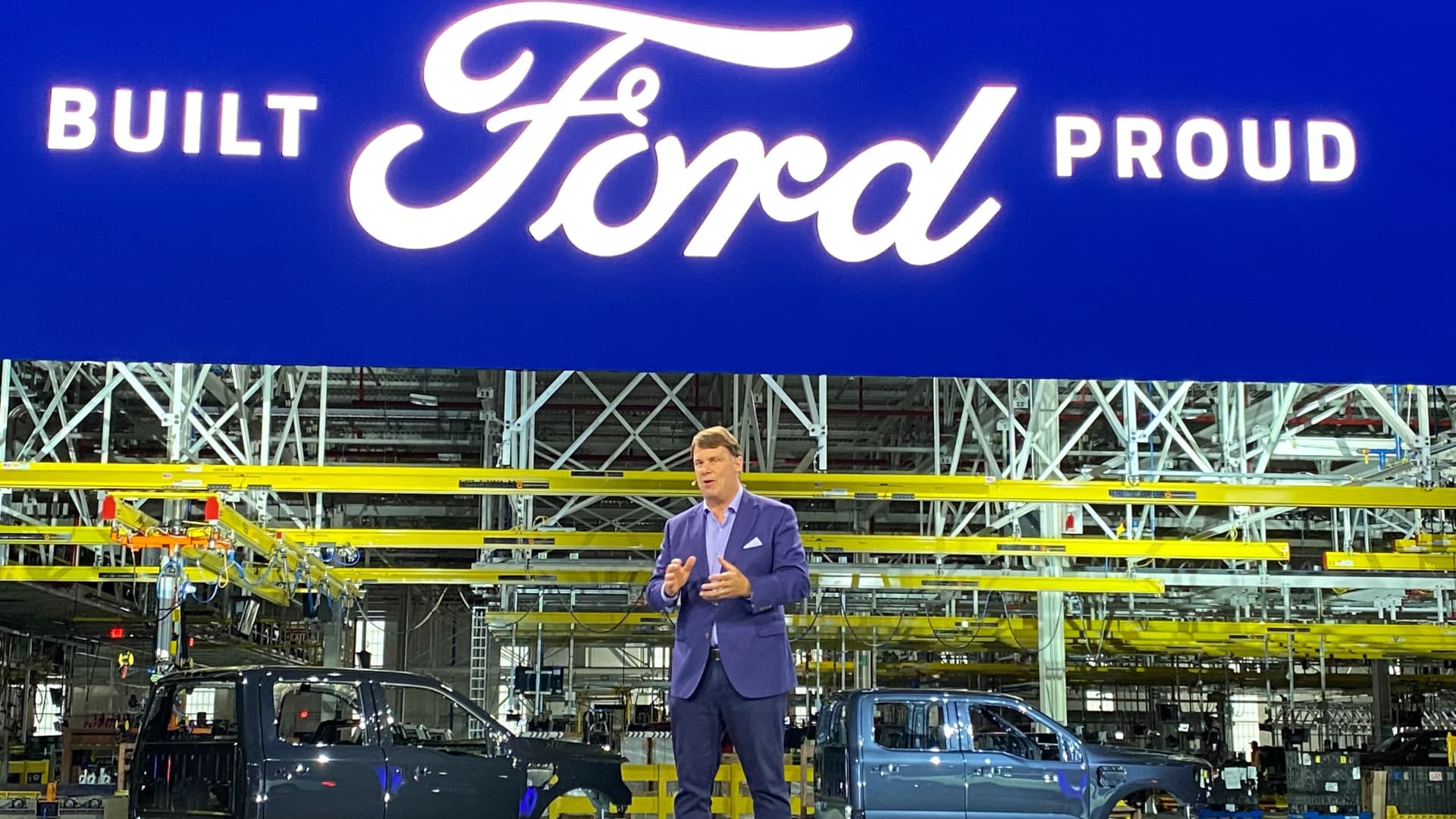
Ford Motor's stock is on the rise in pre-market trading following the announcement of fourth-quarter results that exceeded analyst expectations and the declaration of a supplemental dividend. CEO Jim Farley outlined the company's plans for new vehicles, including a focus on larger trucks and SUV EVs, as well as smaller cars. Despite anticipated steeper losses in 2024 due to increased investment, investors are optimistic about Ford's future prospects.
Ford Motor is set to announce its fourth-quarter and 2023 earnings, with Wall Street expecting 14 cents adjusted earnings per share and $40.12 billion in automotive revenue. Analysts anticipate flat to slightly lower 2024 guidance compared to 2023, with expectations ranging between $9 billion and $11 billion. Ford faces challenges from increasing labor costs due to a new UAW contract, but is expected to benefit from its Ford Pro fleet unit and traditional Ford Blue internal combustion engine business amidst headwinds such as lower vehicle prices and warranty costs.
Ford Motor has reinstated its 2023 guidance, projecting adjusted earnings before interest and taxes (EBIT) of $10 billion to $10.5 billion and adjusted free cash flow of $5 billion to $5.5 billion. The company expects the United Auto Workers (UAW) labor agreement to cost $8.8 billion over the contract's lifespan, with an additional $900 in costs per assembled vehicle by 2028. Ford plans to cancel or postpone $12 billion in investments related to electric vehicles. The UAW agreement includes pay raises, cost-of-living adjustments, and enhanced profit-sharing payments.
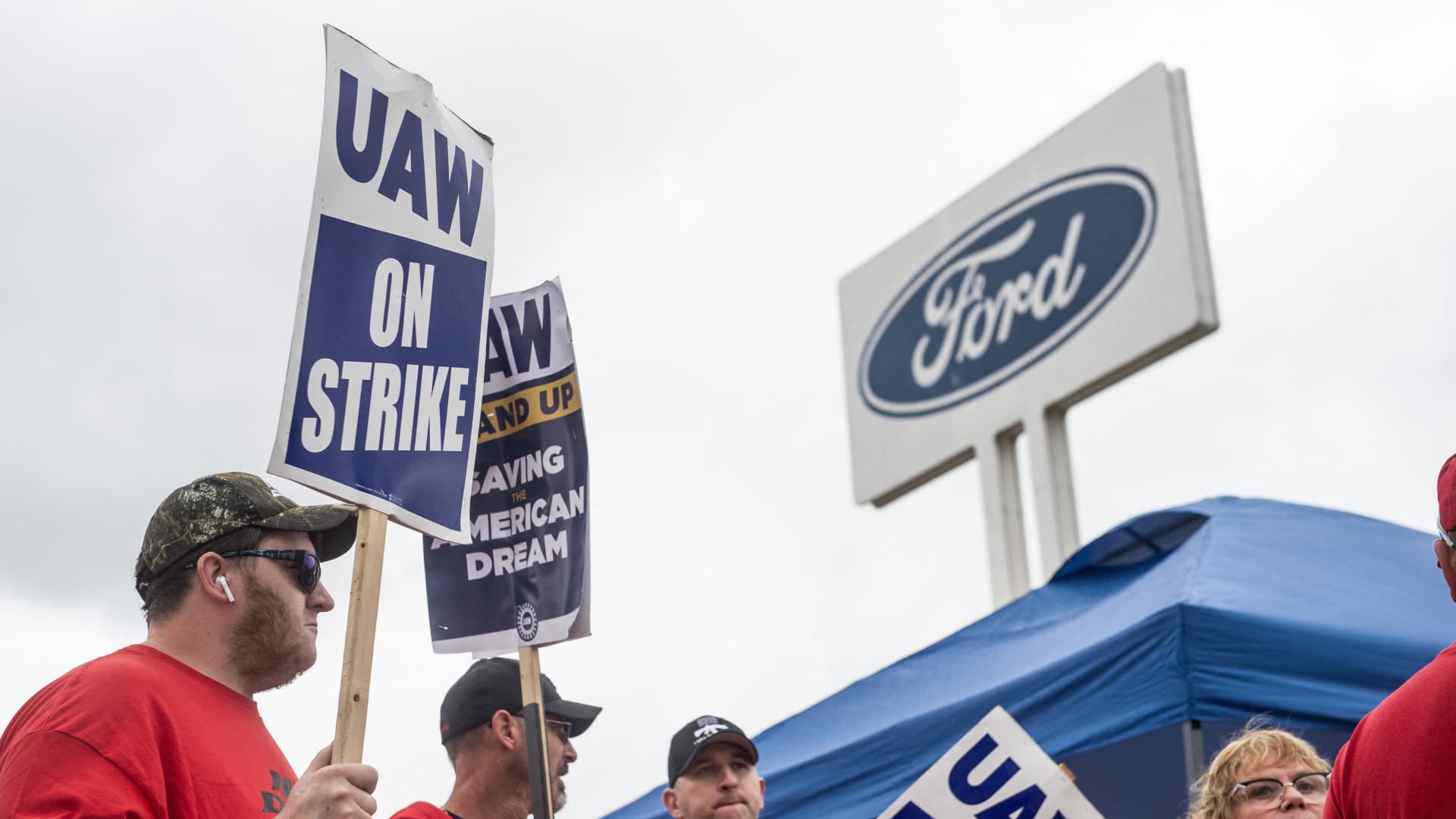
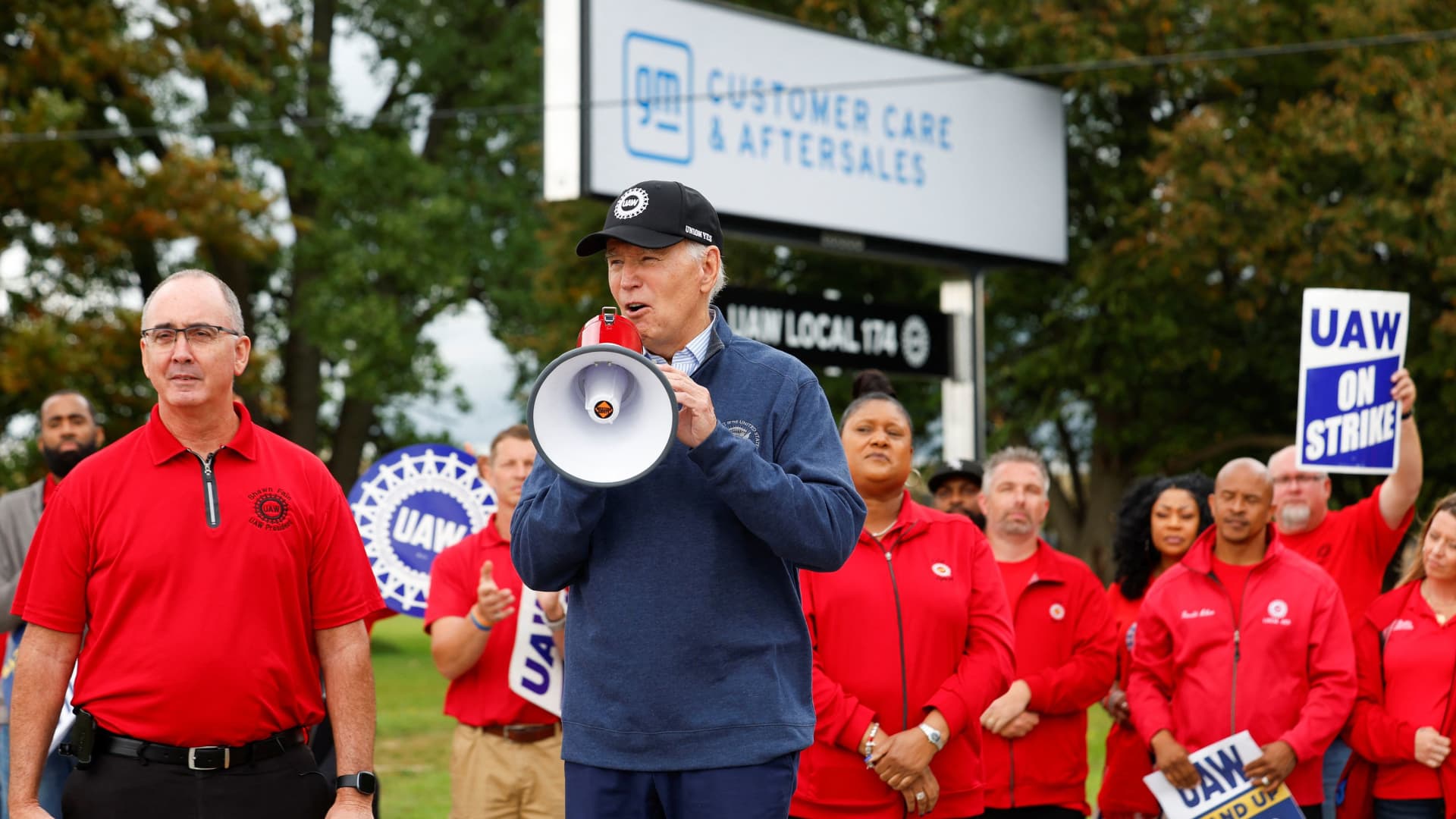
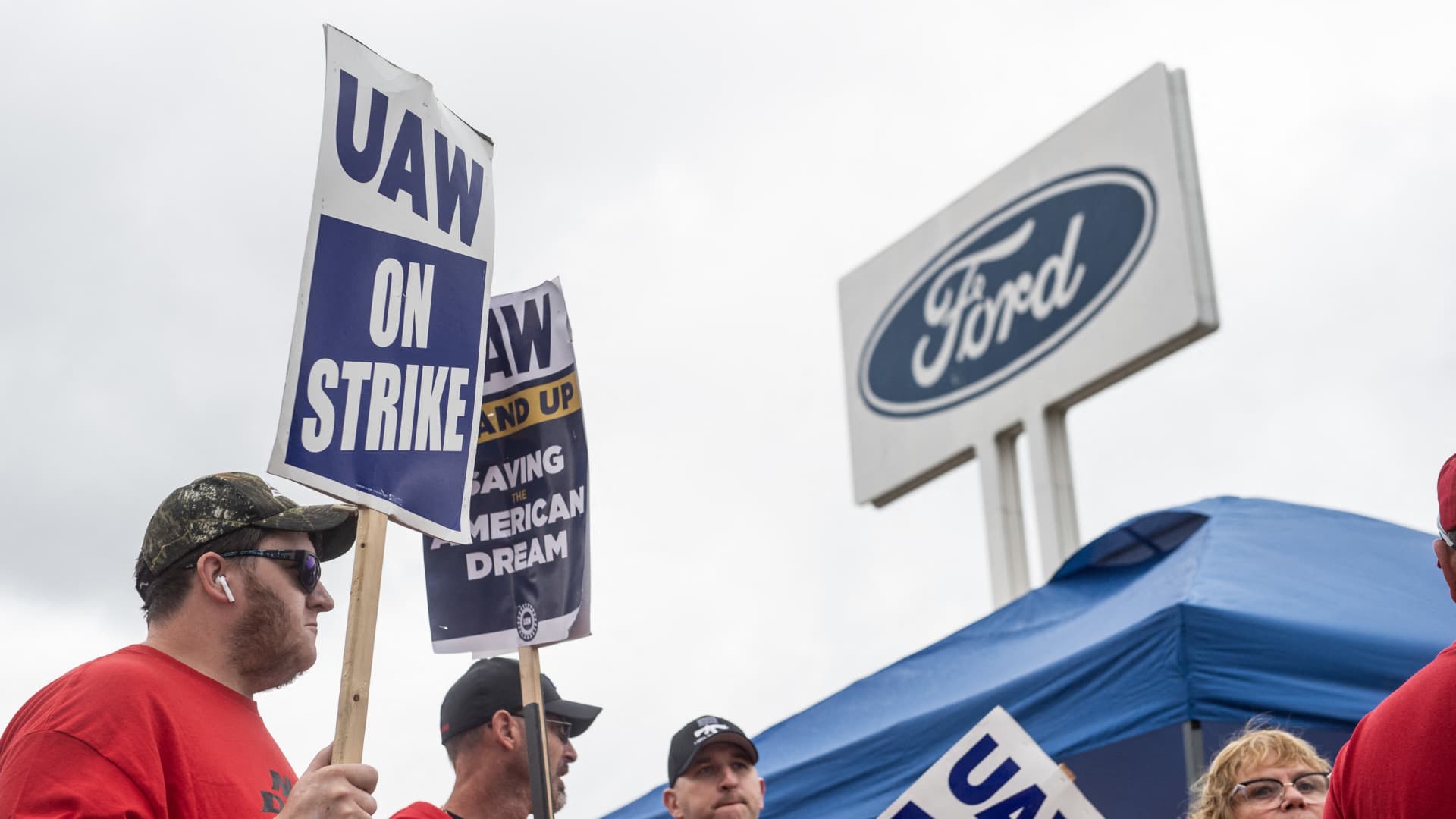
The United Auto Workers (UAW) reached tentative deals with General Motors (GM), Ford Motor, and Stellantis, ending weeks of labor strikes. The agreements include 25% compounded raises, reinstatement of cost-of-living adjustments, increased 401(k) contributions, and enhanced profit-sharing bonuses. UAW members still need to vote to ratify the deals. UAW President Shawn Fain emerged as a winner, successfully leveraging targeted strikes to secure record contracts. The automakers underestimated the union's strategy and may face increased labor costs. The UAW plans to use the deals to assist in organizing efforts at other auto companies. Nonunion plants and electric vehicle ambitions may be potential losers, while Tesla and President Joe Biden could benefit from the slower rollout of EVs and union support, respectively.
The United Auto Workers (UAW) union has approved a tentative agreement with Ford Motor, which includes $8.1 billion in new plant investments, $5,000 ratification bonuses, 25% compounded wage increases, and improved profit-sharing payments. The agreement will now be presented to UAW-Ford members for voting. The deal also includes benefits such as job security, easier organizing rights at battery and electric vehicle plants, and enhanced retirement benefits. While the agreement falls short of some initial goals, the UAW plans to use it to support organizing efforts beyond the "Big Three" automakers.
Ford Motor has withdrawn its full-year results forecast due to uncertainty over the pending ratification of its deal with the United Auto Workers (UAW) union and warned of continued pressure on electric vehicles (EVs). The company expects the new contract with the UAW to add $850 to $900 in labor costs per vehicle. Ford's concern about cooling EV demand follows General Motors' decision to postpone a $4 billion electric truck plant. Ford lost an estimated $36,000 on each of the 36,000 EVs it delivered in the quarter. The automaker will delay some of its planned investments in new EV and battery production capacity due to downward pressure on prices.
Asia-Pacific stock markets rebounded, minimizing weekly losses, while the tech-heavy Nasdaq Composite Index is down over 10% from its highest close in July. Amazon reported strong third-quarter earnings, with its ad business and cloud unit showing significant growth. Ford Motor missed earnings expectations due to restructuring and the impact of a labor strike. Intel's third-quarter earnings beat expectations, leading to a rise in shares. China's former premier, Li Keqiang, passed away at the age of 68. Concerns are rising about the U.S. consumer running out of excess cash and slowing spending, as indicated by recent economic indicators and cautious earnings guidance.
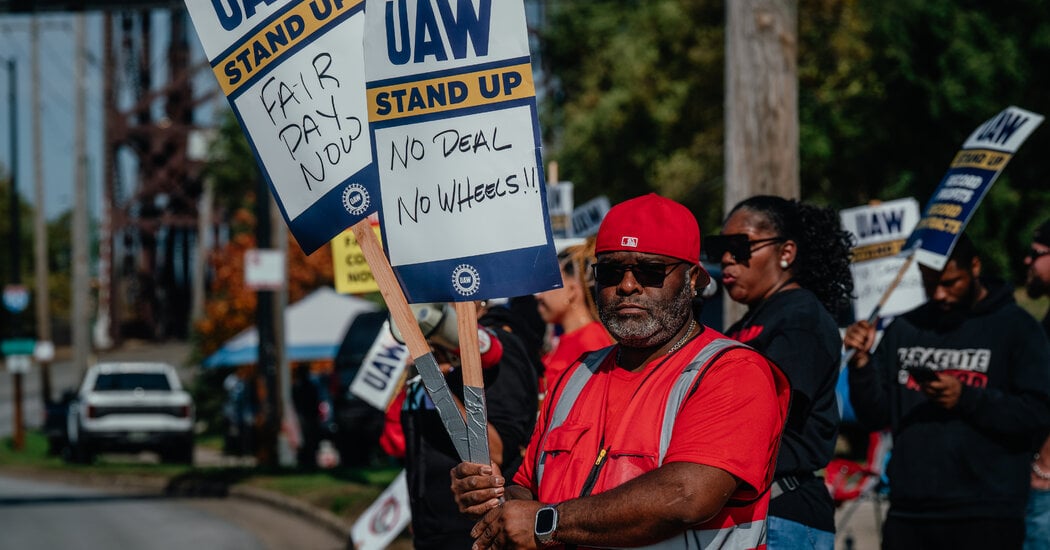
Negotiators for the United Automobile Workers (U.A.W.) and Ford Motor have reached an agreement on terms for a new four-year labor contract, including a roughly 25 percent pay increase over four years. The deal is subject to approval by the U.A.W. council and ratification by Ford's union workers. The U.A.W. continues to negotiate with General Motors and Stellantis. The tentative deal with Ford could increase pressure on the other companies to reach an agreement. The companies are investing in the transition to battery-powered vehicles, making it harder for them to pay substantially higher wages. The U.A.W. began a wave of walkouts against the three Detroit automakers in mid-September, demanding higher wages, an end to a system that pays new hires less, cost-of-living adjustments, and improved benefits.
General Motors and Ford Motor are set to report their third-quarter earnings and future guidance this week amidst ongoing strikes and contract negotiations with the United Auto Workers (UAW) union. The automakers face a delicate balance as exceeding Wall Street's expectations could fuel the union's argument for more concessions, potentially prolonging the work stoppages. However, being too bearish on guidance or the impact of UAW efforts risks scaring Wall Street and further impacting their stock prices. The effects of the UAW strike and negotiations on near-term earnings and longer-term plans will be closely watched by investors and the union.
William Clay Ford Jr., the executive chair of Ford Motor, discusses the ongoing labor negotiations with the United Automobile Workers union, emphasizing the importance of patience and not taking the negotiations personally. He believes that the real competition is not between the U.A.W. and Ford, but rather between the U.A.W. and other automakers like Toyota, Honda, Tesla, and Chinese automakers. Ford expresses concern about the impact of the strikes on the supply base and the national security implications of a prolonged strike. He also addresses the politicization of electric vehicles and the need for prices to come down to drive wider adoption.
Dow Jones futures, along with S&P 500 futures and Nasdaq futures, rose modestly ahead of the release of the CPI inflation report. Delta Air Lines and Ford Motor were also in focus. The stock market rally erased early gains but bounced back to close near session highs, with the Nasdaq leading. Delta Air Lines topped third-quarter earnings views, while Ford Motor faced an expanded strike at its truck plant in Kentucky. Economists expect the September consumer price index to rise 0.3%, with the CPI inflation rate slowing to 3.6% year over year.