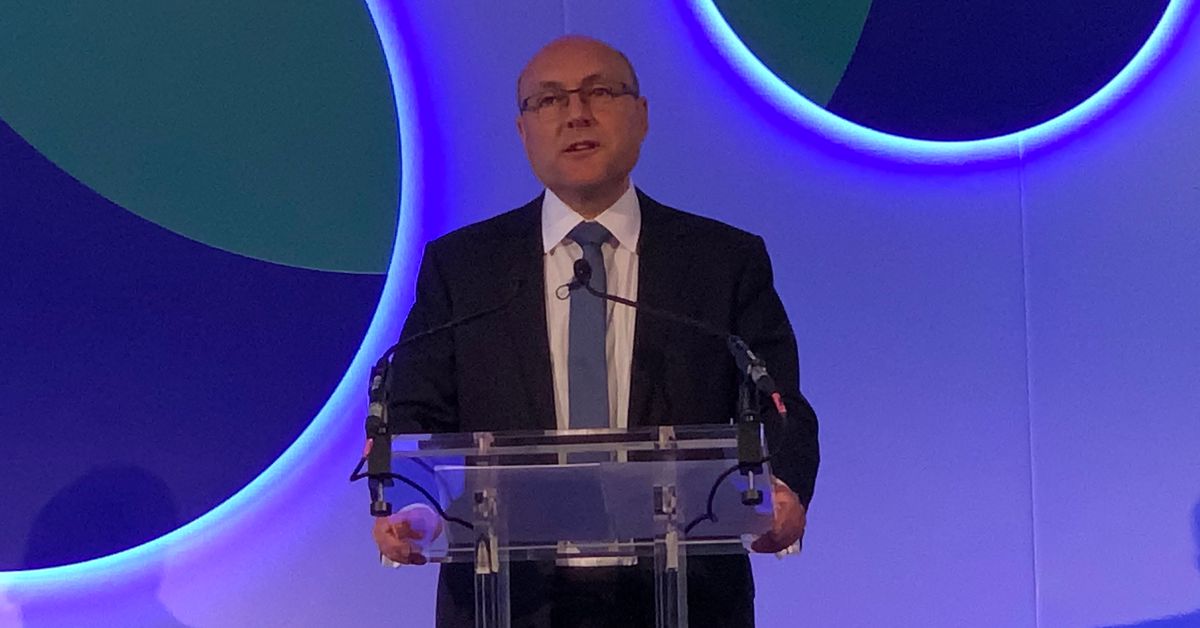
Jes Staley, former Barclays CEO, failed to overturn a FCA ban for misleading regulators about his links to Jeffrey Epstein, with the tribunal reducing his fine from £1.8mn to £1.1mn, citing misconduct despite his achievements.
The UK's Financial Conduct Authority has fined Barclays £40 million ($50.9 million) for failing to disclose arrangements with Qatari entities during the 2008 financial crisis. The fine relates to undisclosed fees paid to Qatari funds to avoid a state bailout. Although Barclays initially appealed the fine, it has now withdrawn the appeal, citing the time elapsed and the interests of its stakeholders, while maintaining there is no material financial impact from the penalty.
Online fashion firm Shein is preparing to file a prospectus with Britain's Financial Conduct Authority for a potential London IPO valued around 50 billion pounds ($63.70 billion), following regulatory challenges in the U.S. Shein is addressing governance and compliance concerns amid scrutiny from British lawmakers.
Bitcoin surged to a new record high above $71,000 as the UK's Financial Conduct Authority announced it would allow institutions to apply for cryptocurrency-linked exchange-traded products, marking the first time such products will be permitted. The FCA stated that recognized investment exchanges can create a U.K.-listed market segment for crypto-backed exchange traded notes, provided they meet regulatory requirements and ensure proper investor protection. Bitcoin's price rose over 3% to $71,726.49, while Ether also climbed nearly 2% to $4,014.90.
Robinhood, the online investment app, is set to launch its platform in the UK in early 2024, marking its third attempt at international expansion. The platform will initially offer 24-hour trading for 6,000 US stocks, with plans to add UK stocks later. Options and derivatives will not be available at launch. Robinhood aims to capitalize on market-moving news and plans to be one of the largest employers in England. The company has obtained a license from the UK's Financial Conduct Authority and will hold customer cash in segregated accounts protected by US Federal Deposit Insurance Commission insurance. Robinhood will not offer payment-for-order-flow in the UK and expects to generate revenue through other means.
British investment managers have received approval to develop tokenised funds, allowing assets to be split into smaller tokens backed by blockchain technology. This move aims to enhance transparency, liquidity, and risk management in the industry. Funds authorized by the Financial Conduct Authority can now begin offering tokenised funds, as long as the investments are in mainstream assets and valuation and settlement arrangements remain unchanged. The Investment Association believes that fund tokenisation has the potential to revolutionize the industry by enabling greater efficiency and the creation of more bespoke portfolios.
The Bank of England (BOE) and the Financial Conduct Authority (FCA) have published discussion papers outlining their plans to regulate stablecoins and the wider crypto sector in the UK. The BOE will oversee "systemic stablecoins" that could potentially disrupt financial stability, while the FCA will regulate the broader crypto sector. The proposals aim to bring stability and oversight to the growing cryptocurrency industry, following the collapse of stablecoin empire Terraform Labs and the emergence of stablecoin proposals from Big Tech companies like Facebook (now Meta) and PayPal. The BOE's proposals would allow companies to issue payments-focused, fiat-backed stablecoins in the UK if approved. The FCA's plans require stablecoin issuers to seek authorization and ensure appropriate asset backing. The regulators aim to consult on final rules by mid-2024 and implement stablecoin regimes by 2025.
The UK government has published its final proposals for regulating the crypto ecosystem, aiming to make the country a preferred destination for the industry. The phased introduction of regulation will begin with legislation for fiat-backed stablecoins in early 2023, followed by other crypto areas such as algorithmic stablecoins. The Financial Conduct Authority (FCA) will oversee these activities, bringing them under conventional financial regulation. The government clarified that traditional securities and certain non-fungible tokens (NFTs) will not be subject to financial services regulation, but NFTs used as exchange tokens may fall within future rules. The FCA will soon consult on an authorization regime for crypto companies, and the government plans to formulate equivalence measures for overseas firms. The government also stated it does not intend to ban decentralized finance (DeFi).
The UK has passed the Economic Crime and Corporate Transparency Bill, a cryptocurrency seizure bill aimed at combating economic crime and regulating illicit cryptocurrency assets. This legislation is part of the UK's ongoing efforts to tackle a wide range of illegal activities, including drug trafficking, cybercrime, and terrorism. The bill is closely tied to the Proceeds of Crime Act 2002, emphasizing the UK's commitment to recovering criminal assets. The Financial Conduct Authority (FCA) has also been actively involved in regulating the cryptocurrency landscape, issuing warnings to over 220 cryptocurrency companies and enforcing stricter rules on cryptocurrency advertisements. The bill awaits Royal Assent and is expected to become law soon.
The UK's Financial Conduct Authority (FCA) has identified potential "regulatory breaches" in NatWest's handling of the decision to close Nigel Farage's accounts. NatWest has acknowledged shortcomings in its treatment of Farage and will implement all recommendations from an initial review. The bank will disclose a decision on whether to dock former CEO Alison Rose's pay over the matter soon. The FCA is reviewing NatWest's governance, systems, and controls in light of the potential breaches.
Binance, one of the world's largest cryptocurrency exchanges, will stop accepting new users from the U.K. in order to comply with the country's crypto marketing rules. Under the new regulations, firms registered with the U.K.'s Financial Conduct Authority (FCA) can approve their own ads or use authorized entities for approval. Binance had partnered with a firm for ad approval, but the FCA stated that the firm was not authorized. Existing U.K. users will still have access to services but will not be able to access new products and services during this period. Binance is working to find another authorized firm to approve its financial promotions.
New consumer protection rules have come into force in the UK, aiming to ensure fair treatment of customers in financial services. The Consumer Duty requires financial firms to provide products that meet customers' needs, end hidden charges, and inform customers of better deals. The reform overseen by the Financial Conduct Authority (FCA) aims to offer fair value to savers and improve support for vulnerable individuals. However, concerns have been raised about businesses being ill-prepared for the changes, with some banks failing to effectively communicate with customers.
Ripple has applied for registration as a crypto asset firm with the UK's Financial Conduct Authority (FCA) and is seeking a payments license in Ireland. This move comes after Ripple's partial win against the US SEC regarding the classification of its XRP token. More crypto firms are turning to the UK for regulatory clarity and a supportive business environment, as the country has introduced laws to establish a crypto-regulated environment.
Crispin Odey, founder of Odey Asset Management, is leaving the company after 13 women accused him of sexual harassment or assault over 25 years. Odey denies the allegations, which were reported by the Financial Times. The hedge fund said it takes "all allegations of misconduct extremely seriously" and that its policies and procedures "have been followed at all times". Odey Asset Management has been fully transparent with the regulator Financial Conduct Authority and will contact clients over the weekend.