The article highlights two promising growth stocks, Figma and CoreWeave, which are positioned to benefit from the expanding AI market. Figma is a cloud-based UI/UX design tool company with strong growth prospects, while CoreWeave is a cloud infrastructure provider for AI tasks, with rapid revenue growth and significant expansion plans. Both stocks are considered good long-term investments despite current valuation concerns.
Cathie Wood, head of Ark Investment, actively buys battered stocks like Figma and Bullish, reflecting her high-risk, high-reward strategy focused on emerging tech sectors. Despite recent volatility and outflows, her funds have rebounded with strong year-to-date gains, and she remains optimistic about technological innovation and digital assets.
Figma's stock (FIG) dropped 14% following its first post-IPO earnings report that missed expectations, leading to a significant decline in investor confidence.
Figma's shares dropped over 10% after-hours following a Q2 earnings report that missed profit expectations but showed record revenue and strong user growth. The company announced an upcoming early lock-up release of employee shares, which may increase selling pressure. Despite raising full-year revenue guidance and positive financials, investor sentiment remains cautious due to potential share overhang from lock-up expirations.
Figma's first earnings report as a public company showed a slight profit and revenue beat, but fell short of investor expectations, leading to a 13% drop in shares. Despite strong revenue growth and new product launches, including AI-powered tools, high valuation concerns and management outlook disappointment caused investor sell-off, with shares down over 40% since debut.
Figma's first quarterly earnings report since its IPO missed forecasts, leading to a 15% drop in after-hours trading. Despite a 41% revenue increase to $249.6 million, the company barely broke even and its stock remains highly valued at nearly 200 times earnings estimates, raising concerns about its premium valuation and future growth prospects amid competition and AI developments.
The IPO market is rebounding with 202 IPOs in the U.S. this year, including notable companies like Figma, Firefly Aerospace, Klarna, StubHub, and others, with several more expected to go public in 2025, signaling renewed investor interest and market activity.
Dow Jones futures are steady as the market rebounded Monday with notable moves including Palantir's 4% jump on strong earnings, Figma's significant drop after its IPO, Nvidia's recovery, Spotify's price hike, and Tesla's stock award approval. The market is in rally mode, with upcoming economic data and earnings reports to watch, and investors are advised to methodically buy strong breakouts.
Figma's successful IPO has reignited interest in tech startups going public, with investors eyeing companies like Canva, Revolut, and Anduril as potential next IPO candidates, amid a broader context of market optimism and the ongoing private status of major tech firms like OpenAI and SpaceX.
Figma's recent IPO surged initially but has fallen nearly 20% as traders lock in profits, despite some analysts viewing it as a promising sign for the tech IPO market due to its strong growth and profitability.
Figma, a web-based design tool founded by Dylan Field and Evan Wallace, went public with a $68 billion valuation, marking the largest U.S. tech IPO in four years and a significant milestone for the company, which was initially backed by early investments from notable venture capital firms and Peter Thiel. The company, which had previously been valued at $10 billion in 2021, saw its stock surge 250% on debut, reflecting strong investor interest and its growing dominance in the design software market, with 95% of Fortune 500 companies using its platform.
Figma's IPO debut saw a 250% increase, valuing the company at over $65 billion and surpassing its previous sale valuation, positioning it as a major player in creative AI software and challenging rivals like Adobe and Canva.
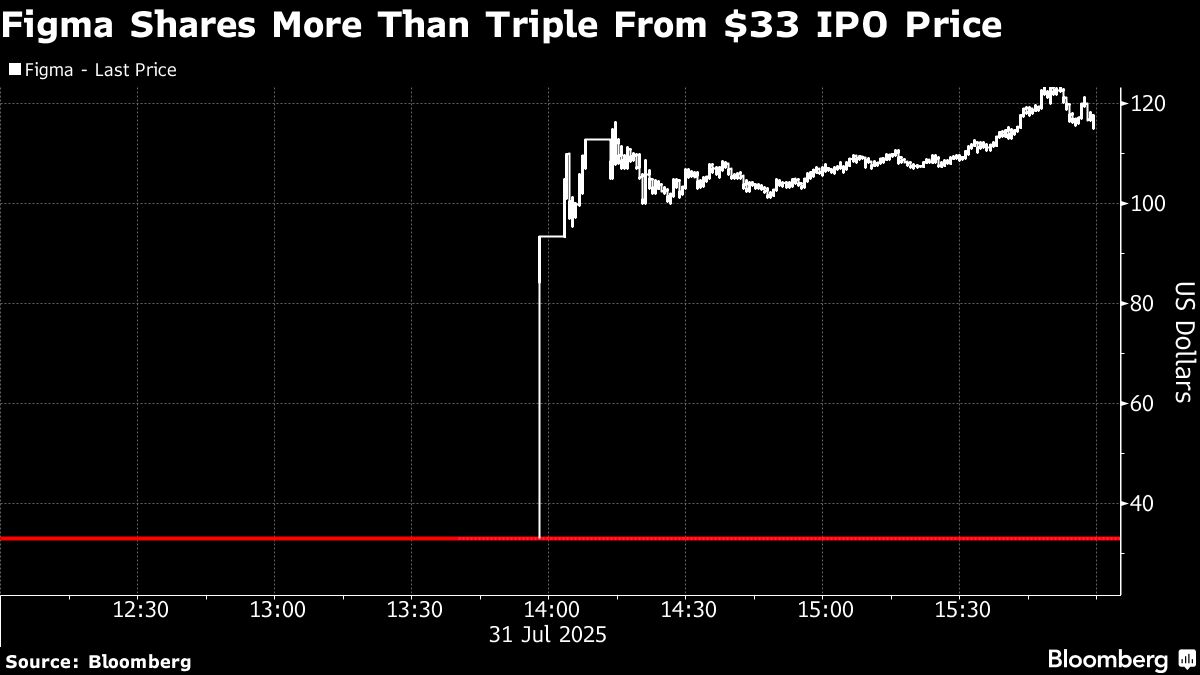
Figma's stock price soared over 250% after its IPO, closing at over $117 per share and valuing the company at around $50 billion, making CEO Dylan Field a billionaire and marking one of the year's biggest tech IPOs amid a warming market for public offerings.
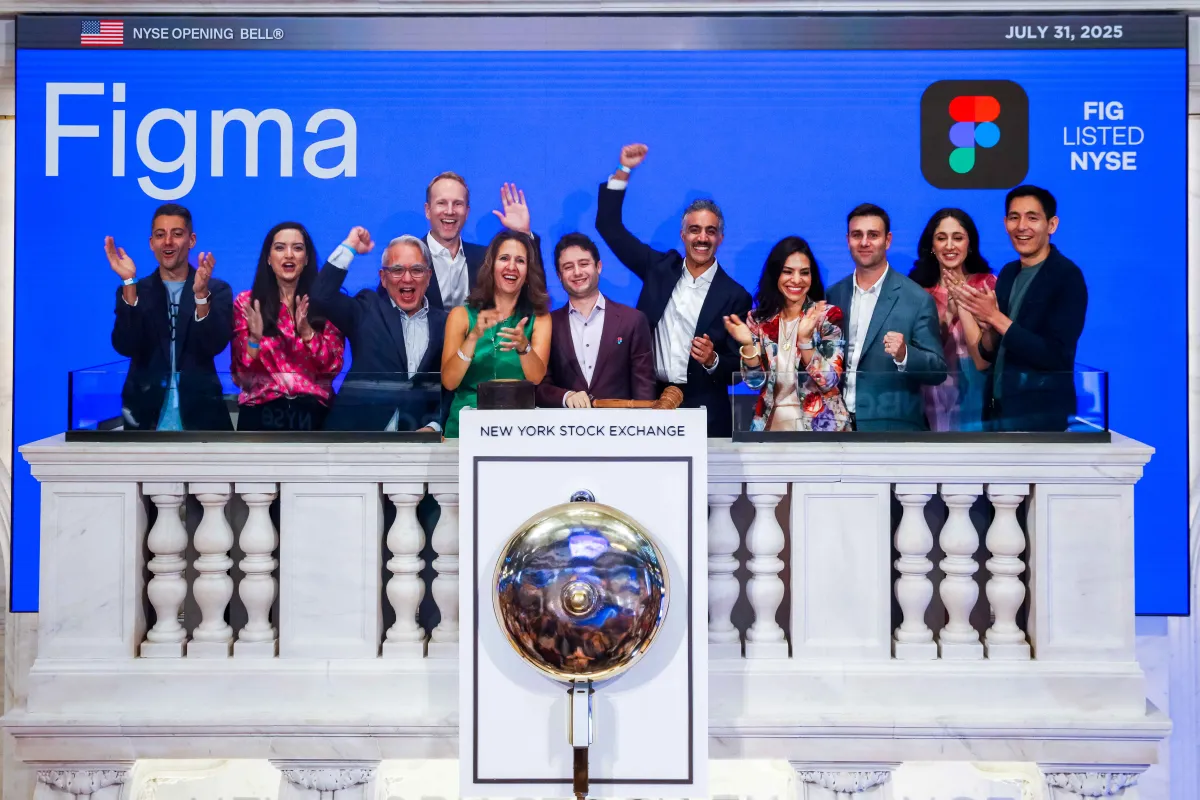
Figma's IPO on the NYSE was highly successful, with the stock soaring and market cap reaching $45 billion, marking a significant milestone after its failed acquisition attempt by Adobe.
Figma Inc. went public with an IPO that raised $1.2 billion, valuing the company near $20 billion, with shares indicated to start trading at $95-$98, significantly above the IPO price, reflecting strong investor demand and growth in the design and collaboration software sector.