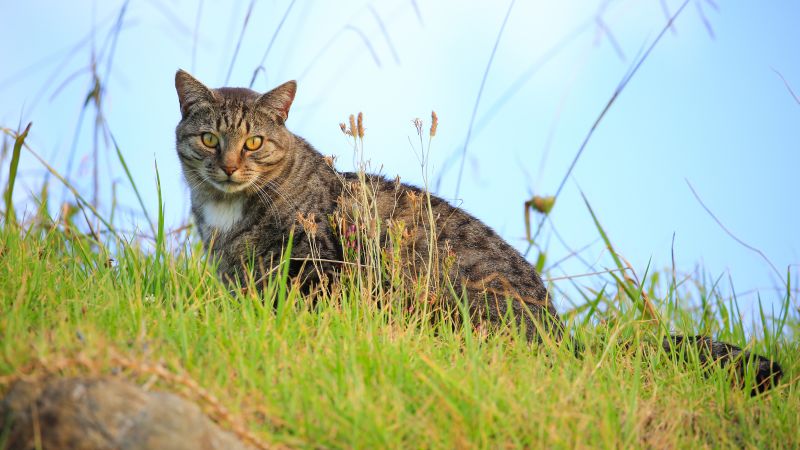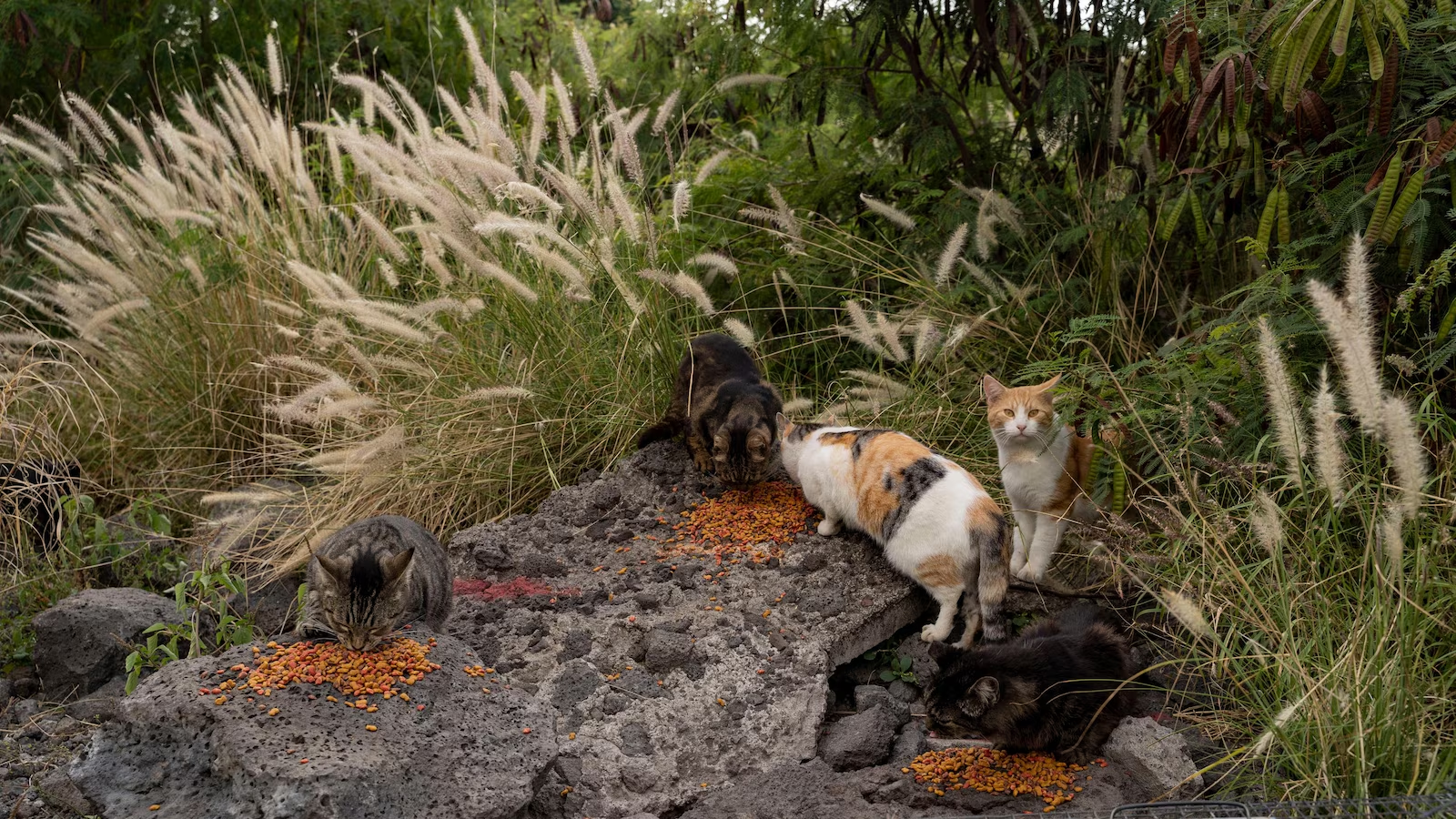
Hawaii's Big Island has implemented a ban on feeding feral cats on county property to protect endangered native species like the nene goose, sparking controversy among animal lovers who argue it may hinder population control efforts and lead to more hunting by hungry cats. The measure aims to reduce threats to native wildlife from predation and disease, but opponents fear it will push feeding underground and harm the cats.
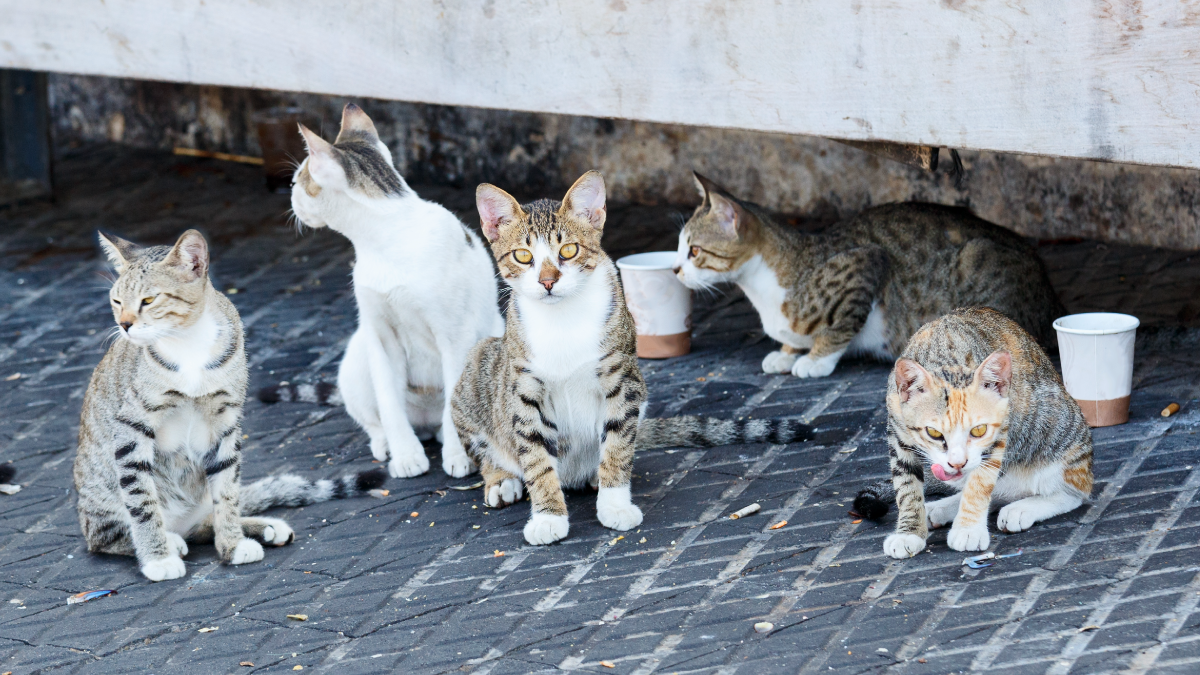
In August 2024, a rabid feral cat from an unmanaged colony in Maryland led to the exposure of three people who received postexposure prophylaxis, highlighting the public health risks posed by unmanaged feral cat colonies and the need for improved management and vaccination efforts.
The red-headed wood pigeon, critically endangered on Japan’s Ogasawara Islands, has experienced a remarkable recovery after feral cats were removed, with its population rebounding rapidly. Genetic analysis revealed that this species has a lower load of harmful mutations due to long-term genetic purging, which contributed to its resilience despite a small population size. This case challenges the common belief that inbreeding always hampers recovery, highlighting the importance of genetic factors in conservation success.
Nineteen feral cats have been declared "living fixed assets" by the Mexican government, ensuring they receive food and care for life at the National Palace, the residence of President Andrés Manuel López Obrador. The cats, who freely roam the palace, have been vaccinated, sterilized, and chipped, with little cat homes and feeding stations built for them. They have become a symbol of the palace, with names like Bowie and Ollin, and are now officially recognized as part of the historic building's heritage.
Nineteen feral cats have been declared "living fixed assets" by the Mexican government, ensuring they receive food and care for life at the National Palace, the residence of President Andrés Manuel López Obrador. The cats, named after artists and Aztec words, freely roam the palace and have become a symbol of the historic building. Staff and vets have worked to vaccinate, sterilize, and provide homes for the cats, who have been a part of the palace for decades.
The New Hampshire Department of Health and Human Services has issued a warning after two stray kittens in the state tested positive for rabies. The first kitten, found in North Conway, exhibited symptoms of the disease and tested positive. A second kitten also tested positive shortly after. Authorities are now investigating if any other individuals or animals have been exposed to the virus.
The Australian government is seeking public feedback on a plan to address the issue of feral cats, which are responsible for killing billions of native animals each year. The proposed strategies include regional laws imposing curfews on pet cats and requiring owners to keep them indoors. The plan also suggests implementing neutering requirements and limits on the number of cats per household. While some argue that the research on the ecological impact of cats is weak, authorities in Australia believe that feral cats pose a significant threat to native wildlife and are taking action to reduce their population.
Monongalia County Health Department and animal control officials are attempting to locate and capture 20 feral cats that may have rabies after a confirmed case of the disease. Residents and businesses in the Distributor Drive area have been alerted to be cautious of stray cats and seek treatment if exposed. In August, wildlife rabies vaccines will be distributed in the area to help prevent the spread of rabies.
Multiple individuals in Morgantown, West Virginia were exposed to rabies from a feral cat colony. The Monongalia County Health Department (MCHD) has been working with animal control to trap around 20 cats. Those who were exposed have been advised to seek treatment. Rabies is treatable in humans through a vaccine, and it is important to avoid contact with unknown animals. Businesses in the area have been notified, and wildlife rabies vaccines will be deployed in August. It is not possible to determine if an animal has rabies just by looking at it, and signs of rabies in animals can vary.
A New Zealand school's "cat hunt" fundraiser has caused outrage after children dangled dead feral cats in front of animal rights activists while chanting "meat, meat, meat." The junior category was eventually scrapped following public uproar, with activists arguing novice hunters might accidentally take out someone's beloved pet instead of a feral pest. The adult version of the feral cat section went ahead with a series of strict rules in place, alongside categories for wild pigs, possums, rats, and deer. Feral cats present a major headache for New Zealand's conservation department, which says they hunt and kill endangered birds as well as bats and lizards.
Five people and a dog in a Wake Forest neighborhood were exposed to a feral cat that tested positive for rabies. The cat was captured and placed in quarantine, where it later died. The individuals and the dog were given treatment and a rabies booster shot, respectively. Wake County Health and Human Services urges residents to avoid approaching unfamiliar animals and to ensure their pets have a current rabies vaccination. Anyone who sees an animal acting in an unusual manner is urged to call Animal Control officials.
Scientists at the Cincinnati Zoo & Botanical Garden have developed a single-dose contraceptive injection for female cats that could help control the 480 million population of feral or stray felines worldwide. The treatment involves the Anti-Müllerian hormone (AMH), which connects to receptors in the ovary and helps regulate ovulation. The injection is administered into the animal's thigh muscle while they are awake and could be used on other species in the future. The researchers hope to help alleviate the strain caused by the estimated 480 million domesticated cats across the world who are feral or strays.
A contest in New Zealand that involved children hunting and killing feral cats for a cash prize has been canceled following public outcry and concerns raised by animal rights groups. The event was part of a fundraising effort to protect native species, but organizers received "vile & inappropriate" messages and decided to cancel the junior category for children under 14. The New Zealand Society for the Prevention of Cruelty to Animals welcomed the decision, citing concerns about the potential harm to both feral and domestic cats.
A hunting contest in New Zealand, which would have seen children under 14 compete to kill the most feral cats, has been cancelled after animal rights groups raised concerns. The North Canterbury Hunting Competition, which is open to both children and adults, aims to manage invasive species and raise money for local causes. Feral cats are a problem in New Zealand, with the Department of Conservation estimating there could be as many as 2.5 million, which is about double the number of domestic cats in the country.
A children's cat-killing contest in New Zealand has been cancelled following public backlash and criticism from animal rights groups. The contest was part of a fundraiser organized by the North Canterbury Hunting Competition for the Rotherham School. The event drew public anger leading organizers to withdraw the event. While cats are a popular and beloved pet among many New Zealanders, feral cats have been a long-standing issue between animal lovers and authorities because of the impact they can have on other wild animals.