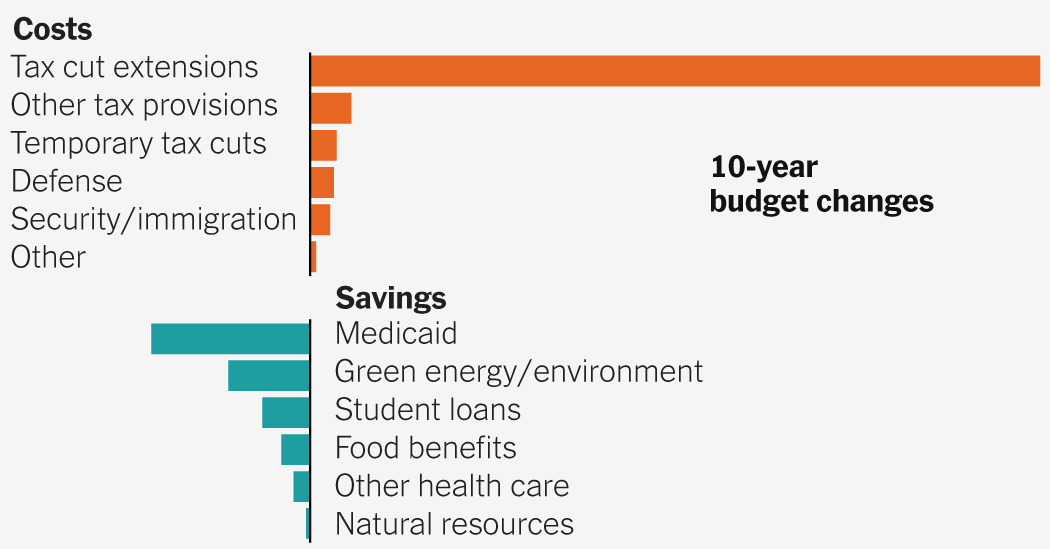
The Senate GOP bill includes extensive tax cuts and spending provisions, projected to add over $3 trillion to the national debt over 10 years, with detailed estimates on how each provision impacts the federal budget, including tax extensions, health care cuts, energy policies, and immigration enforcement.
The U.S. national debt has surpassed $34 trillion for the first time, raising concerns among fiscal watchdogs and leading to political disputes over government spending and taxation. The increase in debt comes despite a strong economy and low unemployment, typically a period to reduce deficits. Both parties have contributed to the rising debt through various policies, and the issue is complicating negotiations for the fiscal year 2024 budgets, with the threat of a government shutdown looming. Rising interest rates have also significantly increased the cost of servicing the debt, with the U.S. spending $2 billion daily on interest payments. Lawmakers are considering various measures, including tax increases, spending cuts, and the formation of a bipartisan debt commission to address the growing fiscal challenge.
The U.S. public debt has surpassed $34 trillion, a record high, as Congress faces imminent deadlines for federal funding decisions. The increase in debt is attributed to rising federal deficits, with falling tax revenues and increased expenditures. The upcoming negotiations are complicated by the approaching presidential and congressional elections, with Republicans calling for spending cuts and the White House blaming the debt on past tax cuts for the wealthy. The situation puts pressure on lawmakers to find a compromise to avoid a government shutdown and address fiscal responsibilities.