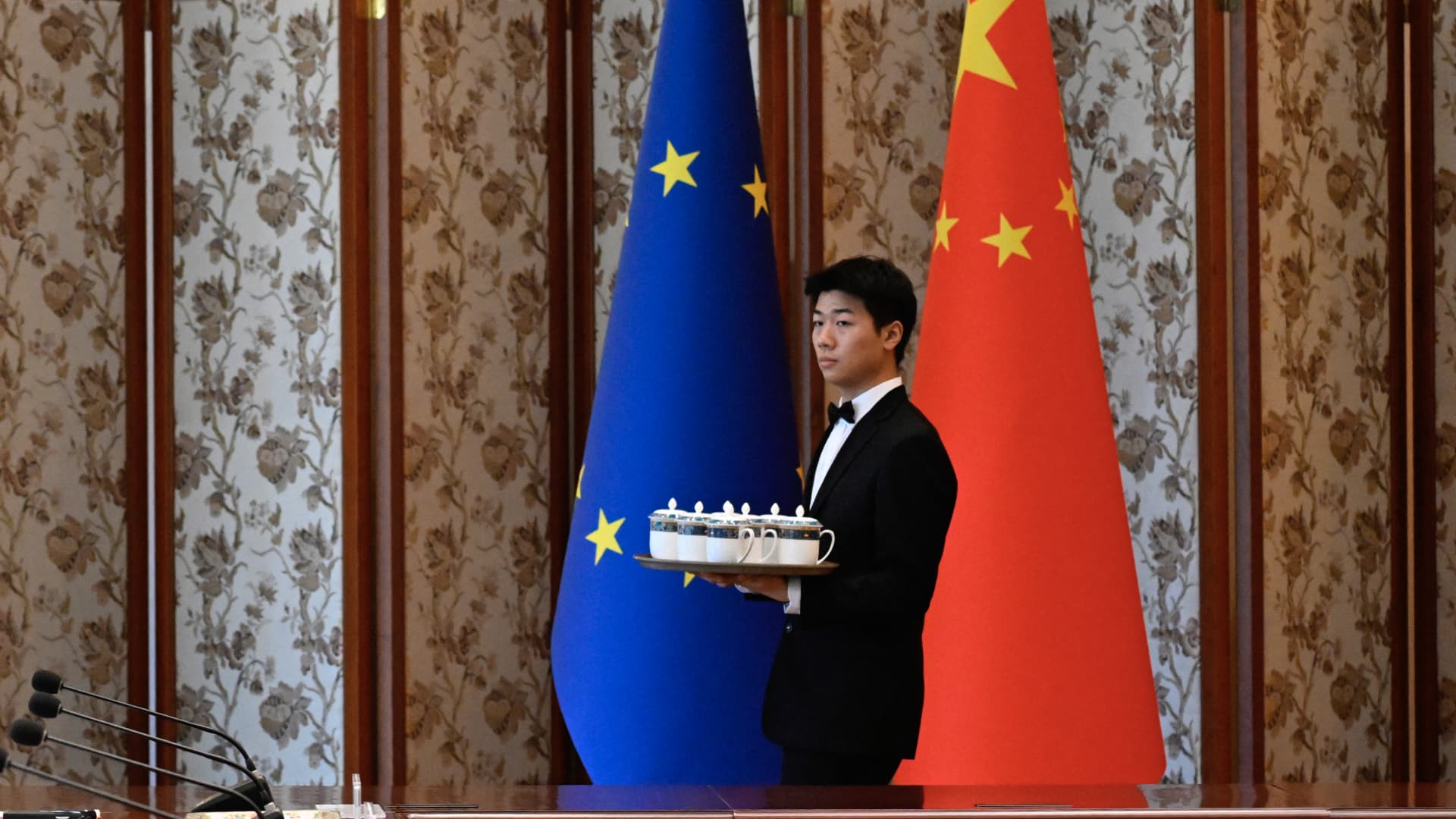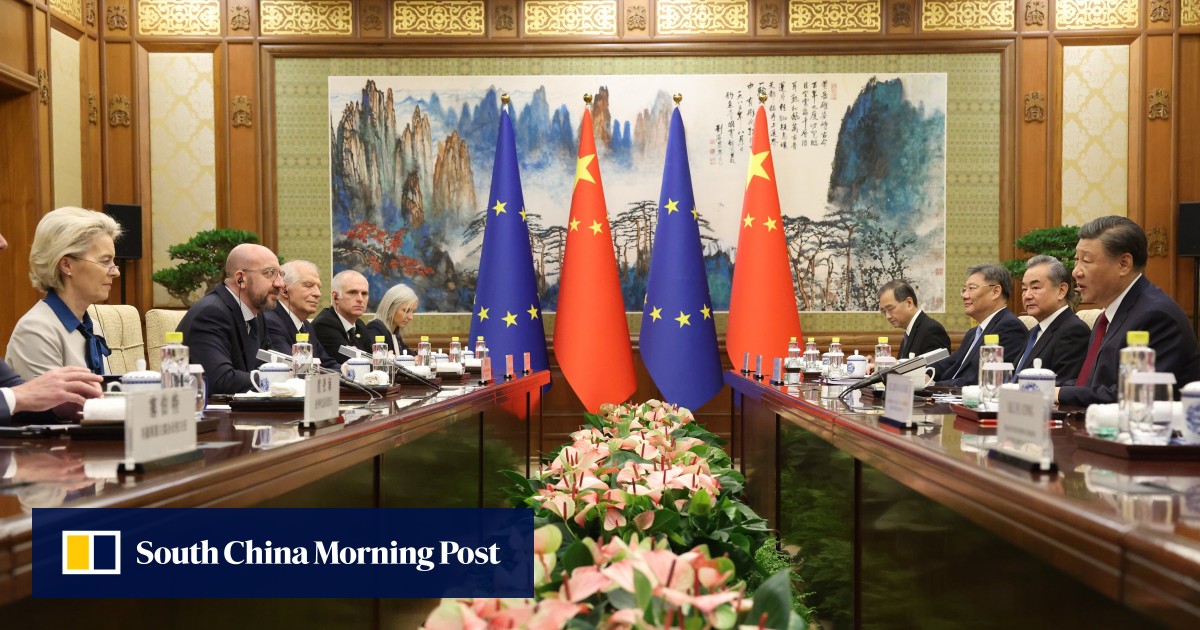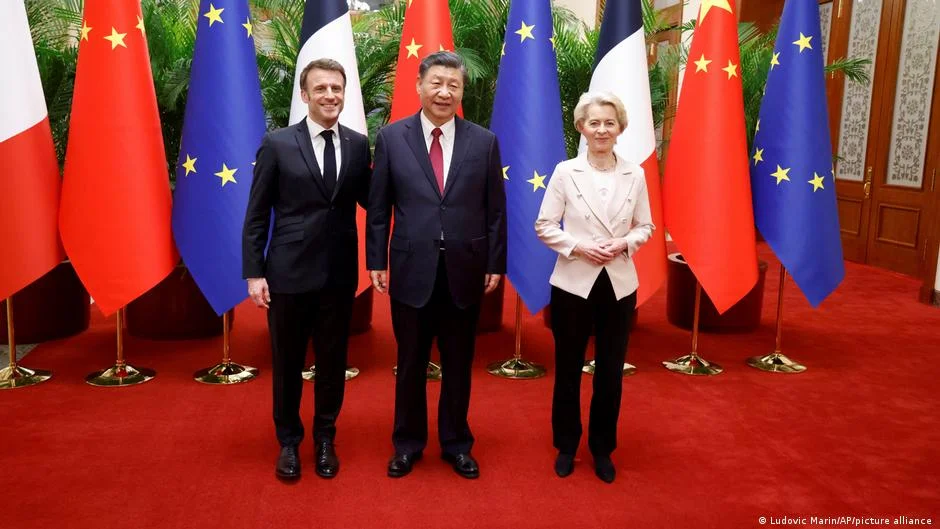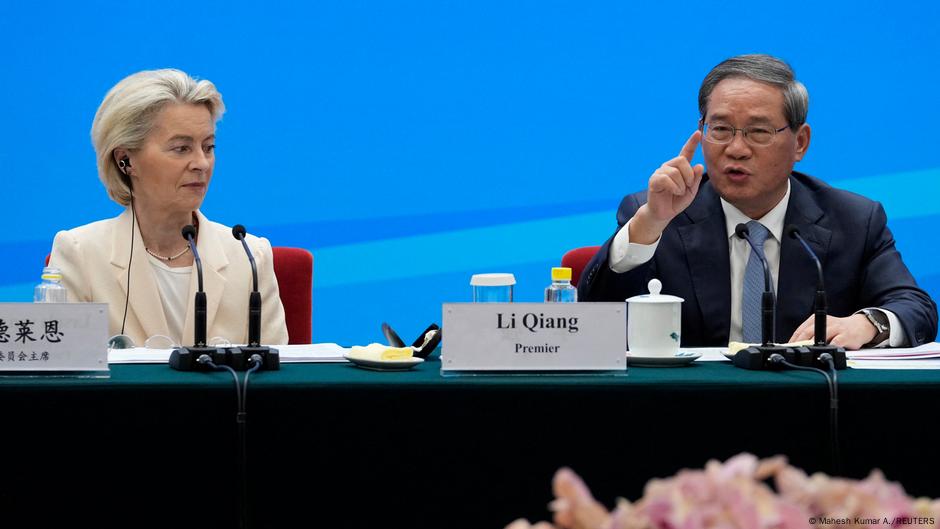
The EU-China summit in Beijing revealed deepening tensions over trade imbalances, geopolitical disputes, and support for Russia, despite some progress on climate change and rare earth cooperation. EU leaders criticized China's trade surplus and alleged support for Russia, while China called for a deeper partnership and emphasized cooperation on green issues. The summit's outcomes are seen as limited, with analysts suggesting long-term challenges in EU-China relations, especially amid broader geopolitical and economic strains.
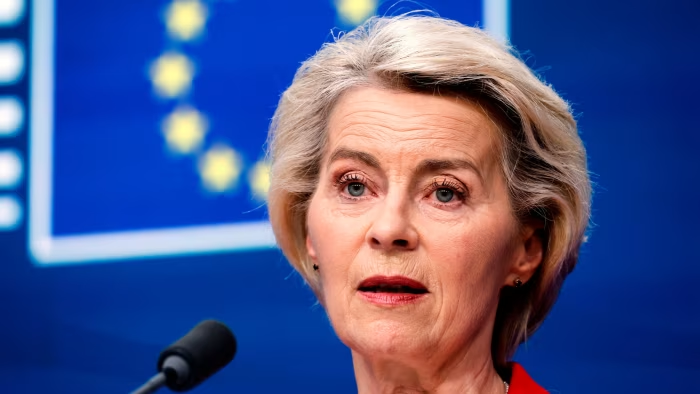
European Commission President Ursula von der Leyen warned Chinese leader Xi Jinping that EU-China relations are at a critical 'inflection point' due to trade imbalances and geopolitical tensions, emphasizing the need for rebalancing and mutual benefits amid ongoing disputes over trade, Ukraine, and strategic cooperation.
China and the EU are set to hold a high-level meeting amidst strained relations, with tensions exacerbated by US policies and trade disputes, making the summit more about managing ongoing disagreements than achieving major breakthroughs.
The European Commission is set to unveil recommendations for EU states to address foreign interference in research and innovation, particularly from strategic adversaries like China, in an effort to safeguard European research. The proposal aims to establish a new center dedicated to keeping European research secure and urges EU members to be vigilant about the risks associated with international research collaboration. Additionally, the Commission plans to promote dual-use research and may open up the Horizon Europe R&D program to technologies with both civil and military applications.
European Union leaders felt that Chinese President Xi Jinping and Premier Li Qiang took their concerns seriously during a summit in Beijing, signaling a potential improvement in EU-China relations. While the two sides remain far apart on core issues such as trade and Russia, Xi assured EU leaders that China sees Europe as a "pole" in its own right and not a "vassal" of anyone. The EU raised concerns about the lopsided trading relationship, overcapacity in the Chinese economy, circumvention of sanctions on Russia, and re-engagement in Ukraine-backed talks. Although no major breakthroughs were achieved, there is a sense that Beijing wants to avoid a full-blown trade war with the EU. Technical groups will be established to discuss specific issues, but suspicions remain about Beijing's intentions.
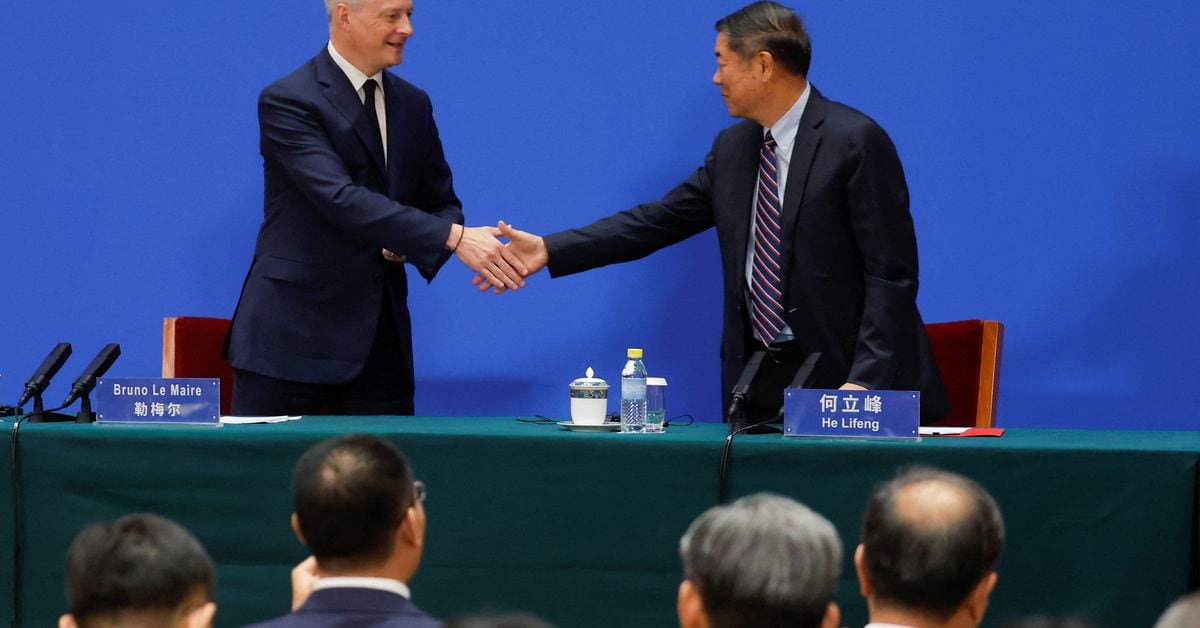
China hopes that France can help stabilize the tone of EU-China relations as European leaders discuss how to manage risks while cooperating with China. China expressed its willingness to deepen cooperation with France in finance, science, and technological innovation. French firms are concerned about getting caught in the crossfire of rising rivalry between China and the US. The two countries discussed challenges such as the green transition, reorganization of value chains, and technological revolution, as well as market access issues for French companies. Both sides expressed the importance of expanding and deepening economic and financial cooperation.
French President Emmanuel Macron and European Commission President Ursula von der Leyen met with Chinese President Xi Jinping to persuade China to play a bigger role in ending Russia's war in Ukraine. However, they failed to convince China to condemn Russia. Both leaders emphasized the importance of maintaining dialogue with China, given its close ties with Russia. They also acknowledged the critical imbalances in their economic relationship that should be addressed. The visit also took place amid tensions in the Taiwan Strait.