
Tag

Ependymoma

All articles tagged with #ependymoma

Dominant clones co-opt developmental epigenomics to drive paediatric ependymoma
science4 hours ago

Dominant clones co-opt developmental epigenomics to drive paediatric ependymoma

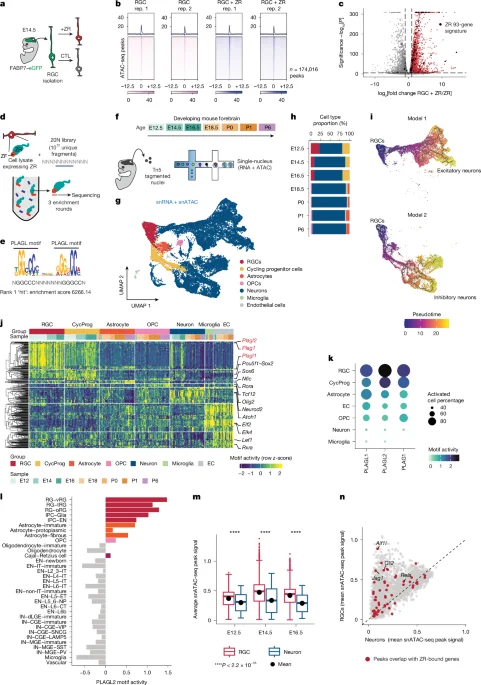
A multi-omics study in mouse and human ependymoma reveals that ZFTA–RELA fusion co-opts brain-development PLAG/L motif–driven chromatin programs in cycling progenitors to sustain oncogenic gene expression, driving dominant tumor clones that establish the cancer's cellular hierarchy across species; lineage tracing shows early clonal diversity converging on a single dominant lineage, highlighting PLAG/L networks as potential therapeutic targets and suggesting differentiation-based strategies.
Developmental cell states drive heterogeneity in supratentorial ependymomas
science13 days ago

Developmental cell states drive heterogeneity in supratentorial ependymomas

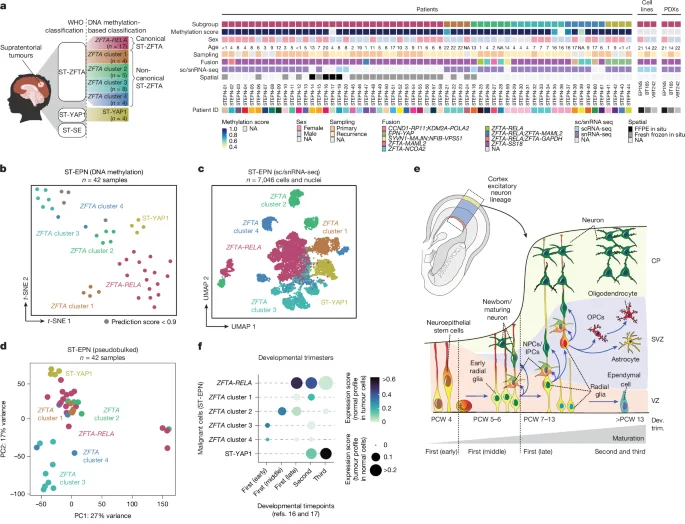
A multidimensional study integrating single-cell and spatial transcriptomics with live-cell imaging reveals two progenitor-like states—neuroepithelial-like and embryonic-like—and diverse spatial architectures in supratentorial ependymomas. Brain-resident cells can shift tumor cells toward neuronal-like, migratory phenotypes, highlighting developmental origins of heterogeneity and suggesting potential therapeutic angles.

Itaconate fuels ZFTA–RELA+ ependymoma by epigenetically sustaining its driver
science1 month ago

Itaconate fuels ZFTA–RELA+ ependymoma by epigenetically sustaining its driver

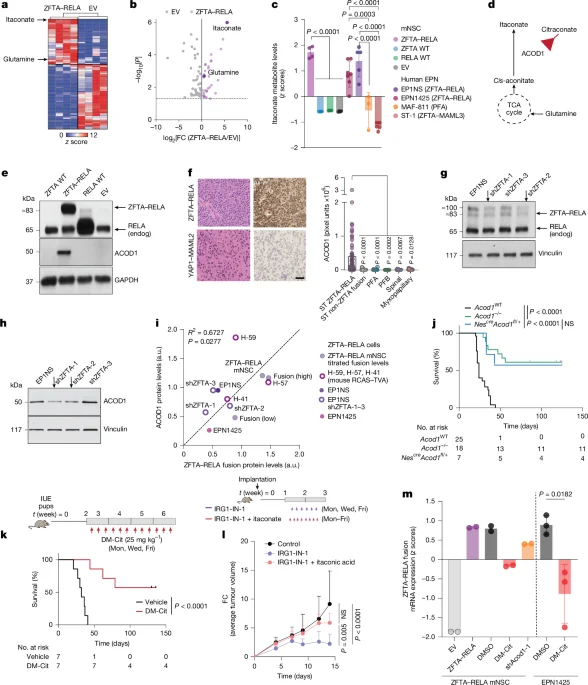
A Nature study shows ZFTA–RELA+ ependymomas produce itaconate via ACOD1, fueling a feed-forward loop that epigenetically maintains ZFTA–RELA expression by increasing activating H3K4me3 through inhibition of the KDM5 demethylase. The tumors also upregulate glutamine metabolism to supply itaconate precursors. Blocking ACOD1 or glutamine metabolism reduces pathogenic ZFTA–RELA levels and inhibits tumor growth in cell and animal models, with combination approaches (glutamine antagonism plus PI3K–mTOR inhibition) suppressing spinal metastasis. The findings position itaconate as a potential therapeutic vulnerability in ZFTA–RELA+ ependymomas and highlight oncometabolites as treatment targets.