The US economy's strong job data was misleading, as recent revisions by the Bureau of Labor Statistics show about 900,000 fewer jobs created between March 2024 and March 2025, confirming that the economic 'vibes' were accurate despite public perception.
The impact of inflation on the 2024 US election results, particularly the swing towards Trump, is complex and not straightforward. While inflation was a major concern for voters, data shows no clear correlation between higher inflation rates in metropolitan areas and increased support for Trump. Instead, perceptions of inflation, influenced by political affiliation and media consumption, may have played a significant role. Additionally, differences in inflation experiences across income groups could explain shifts in voting patterns, with lower-income voters more likely to support Republicans.
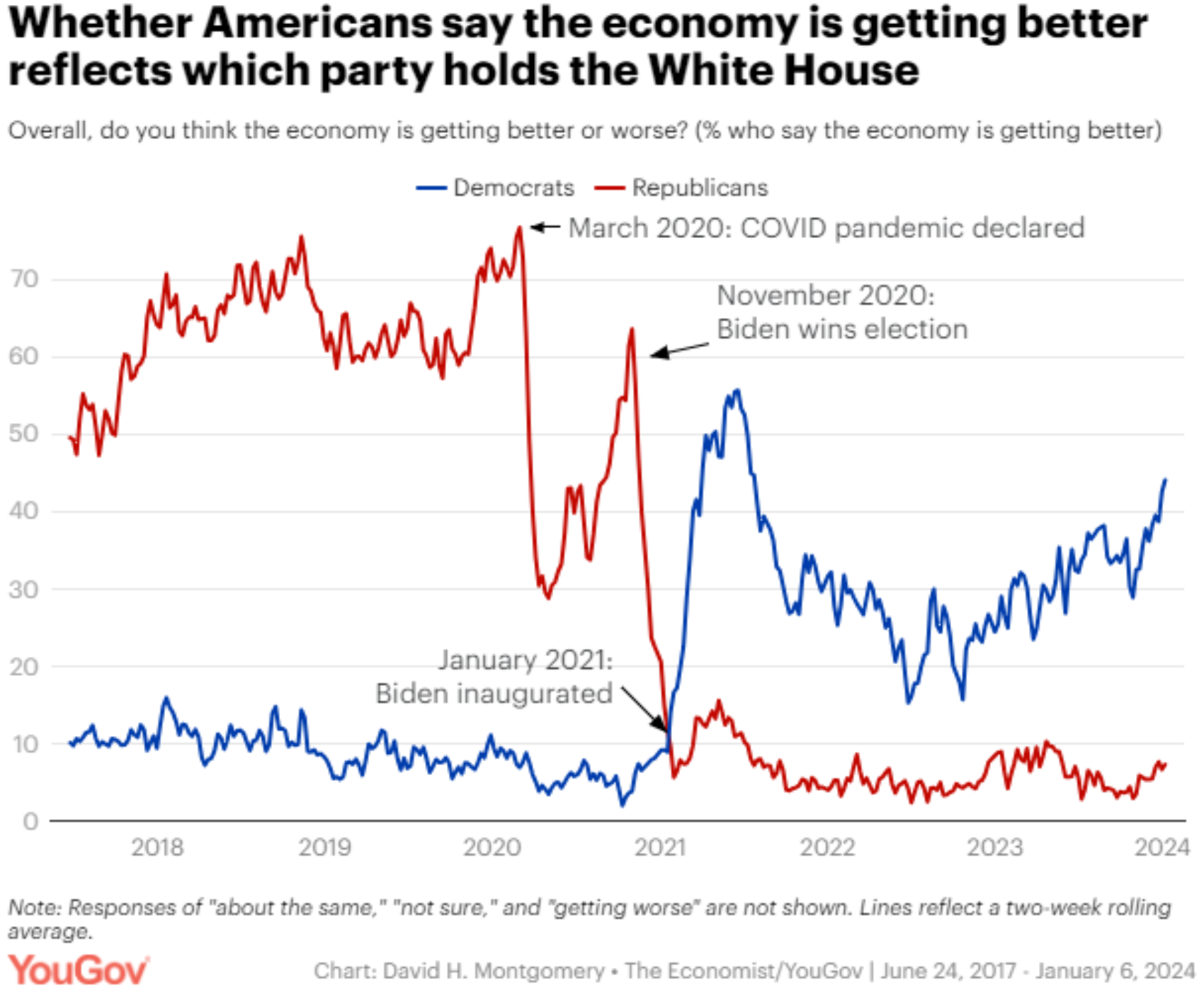
Americans' perceptions of the economy are heavily influenced by their political leanings, with a new study from YouGov showing a stark partisan divide in views on economic strength. Despite this, actual economic data indicates a more nuanced and broadly positive picture, with the U.S. economy demonstrating resilience and adaptability, positioning itself for potentially strong performance in 2024. The partisan split in economic sentiment is influenced by media consumption, personal experience, and political affiliation, leading to a perception that may stray far from macroeconomic data.