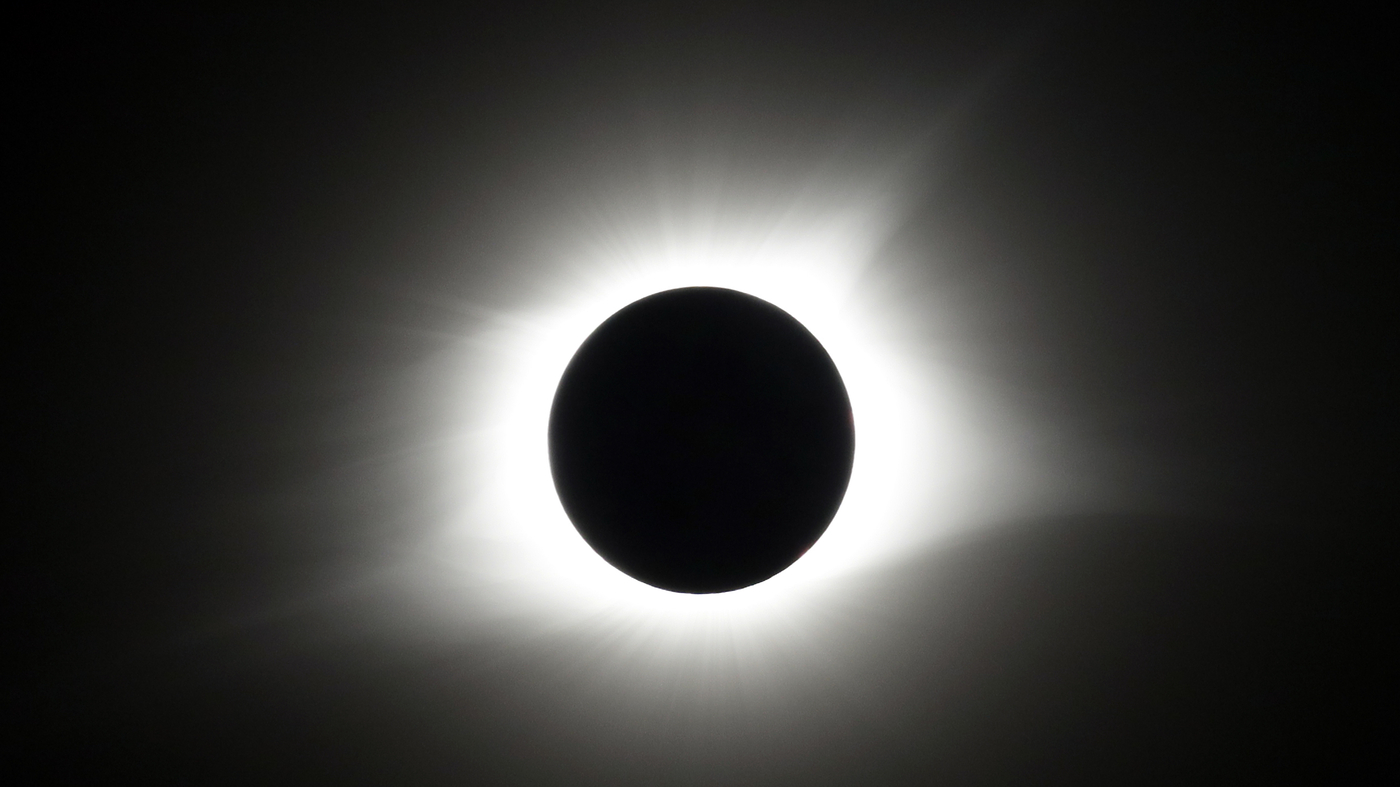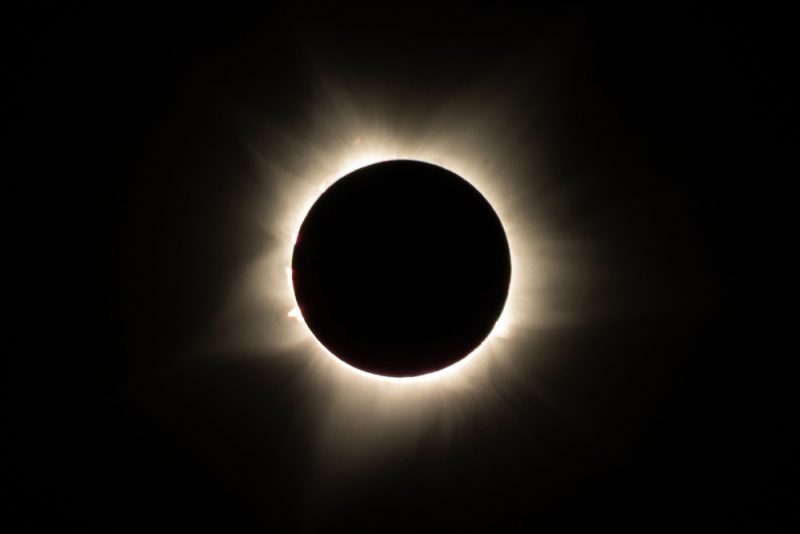
Millions of people across North America are eagerly anticipating a total solar eclipse that will be visible along a path starting in Mexico, crossing through the United States, and into Canada. Eclipse enthusiasts are gathering in various locations along the "path of totality," hoping for clear skies to witness the event, which will last over four minutes in some places. Experts advise using protective solar glasses to view the eclipse, with only a few minutes of totality allowing for safe viewing without them. Eclipse veterans describe the moments before totality as foreboding, with shadows becoming crisp and sunshine taking on an eerie quality, while the sight of the eclipse is said to inspire deep awe and a sense of community among viewers.

Small town businesses in Waxahachie, Texas, are preparing for an influx of visitors for Monday's total solar eclipse, despite the forecast of overcast skies. Local shops are hosting eclipse-themed events and hoping for clear weather to attract hundreds of thousands of eclipse chasers. Residents and visitors are excited for the rare cosmic event, with some expressing disappointment over the weather forecast but remaining hopeful for a memorable experience.
Storms across the United States may obstruct the view of the total solar eclipse on Monday, but there are still ways to enjoy the phenomenon. Eclipse chasers are advised to have a backup plan and be prepared to move to a clearer location, while also being open to experiencing the physical changes and emotional impact of the event, even in less than ideal conditions. Additionally, gathering with neighbors and friends for a celebration, complete with live streams and interactive activities, can make the eclipse a memorable experience regardless of the weather.
Eclipse chasers are going to great lengths, including booking flights and hotel rooms in multiple locations, to ensure they have the best view of the upcoming solar eclipse in the US. Some have spent thousands of dollars and traveled around the world to witness previous eclipses, and are now preparing for the upcoming event, which will last longest in Southern Texas and northern Maine. Despite the costs and efforts involved, these enthusiasts believe that the experience of witnessing an eclipse is truly worth it.
Jay Pasachoff, a renowned astronomy professor at Williams College, passed away in late 2022, leaving behind a legacy of inspiring students and enthusiasts to chase solar eclipses around the world. Known for leading expeditions to witness these celestial events, Pasachoff's passion for eclipses and his role in popularizing eclipse tourism has left a lasting impact on the scientific community and eclipse chasers alike.
On April 8, 2024, a total solar eclipse will sweep across the United States from Texas to Maine, attracting millions of people to witness the celestial event. The path of totality, where the eclipse will be fully visible, spans 115 miles and will pass through several states. Eclipse chasers, enthusiasts who travel to witness total solar eclipses, are eagerly anticipating this event, which is projected to be the largest mass travel event in the U.S. in 2024. A list of U.S. cities where the eclipse will be most visible, along with the duration and start time of totality, has been provided for eager viewers.
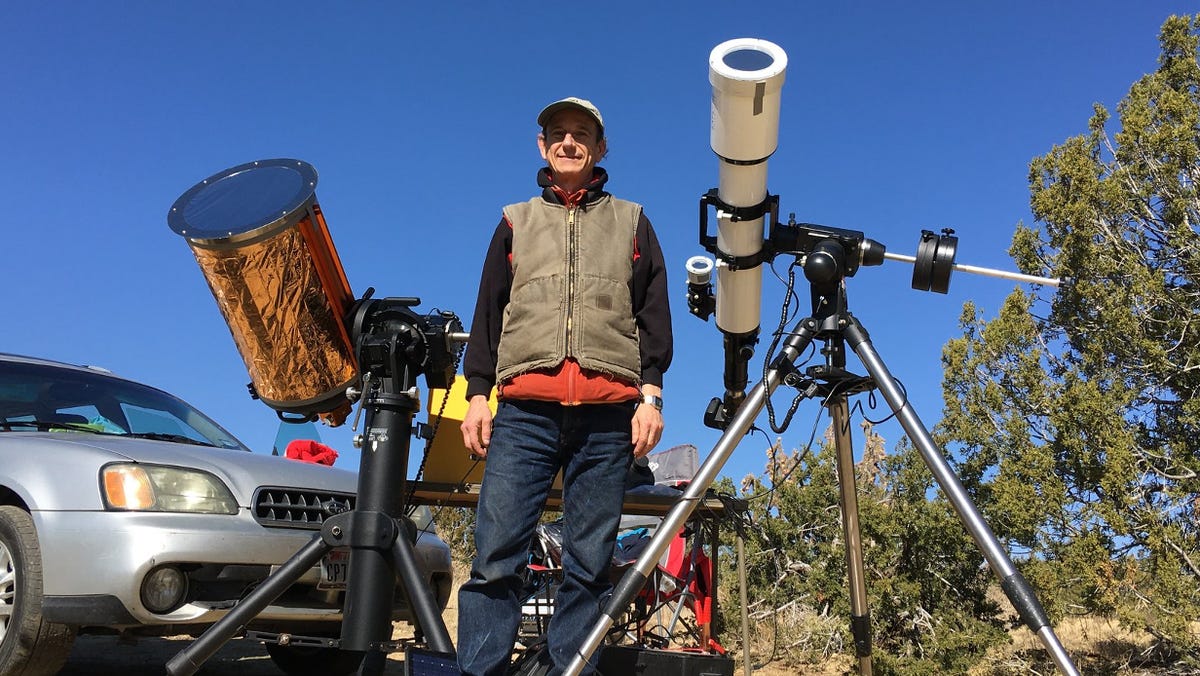
As the April 8 solar eclipse approaches, dedicated eclipse chasers are gearing up to witness the event in Mexico, known for its clear skies and optimal viewing conditions. From retired NASA contractors to physics professors, these umbraphiles are preparing for the rare experience of totality, where daylight suddenly darkens, temperatures drop, and the sun's corona flickers around a blackened disk. Despite the unpredictability of weather and the challenges of organizing eclipse trips, their passion for chasing eclipses remains unwavering, with plans already in motion for future eclipse expeditions.
A rare total solar eclipse is set to occur on April 8, visible to millions across the U.S., Canada, and Mexico, with the Sun's corona becoming visible for approximately four minutes. Scientists are eager to study its impact on Earth's atmosphere, weather, and animal behavior, while NASA's Parker Solar Probe aims to gather data on the corona's temperature. The eclipse is of great interest to researchers and amateur eclipse chasers, with the next total eclipse over the U.S. not expected until 2044.
Hotels in the path of the 2024 total solar eclipse, which will cross 13 U.S. states from Texas to Maine on April 8, are already selling out and prices are soaring. Popular destinations include Texas, Arkansas, and southeastern Oklahoma due to their clear weather forecasts. Major hotel chains are experiencing high demand, and even home-sharing services like Airbnb and Vrbo are struggling to meet the surge in bookings. However, reasonably priced accommodations can still be found if travelers look beyond the major destinations. Campsites along the eclipse path are also booking up quickly, but some are still available. Travel experts advise booking now and checking hotel cancellation policies carefully.
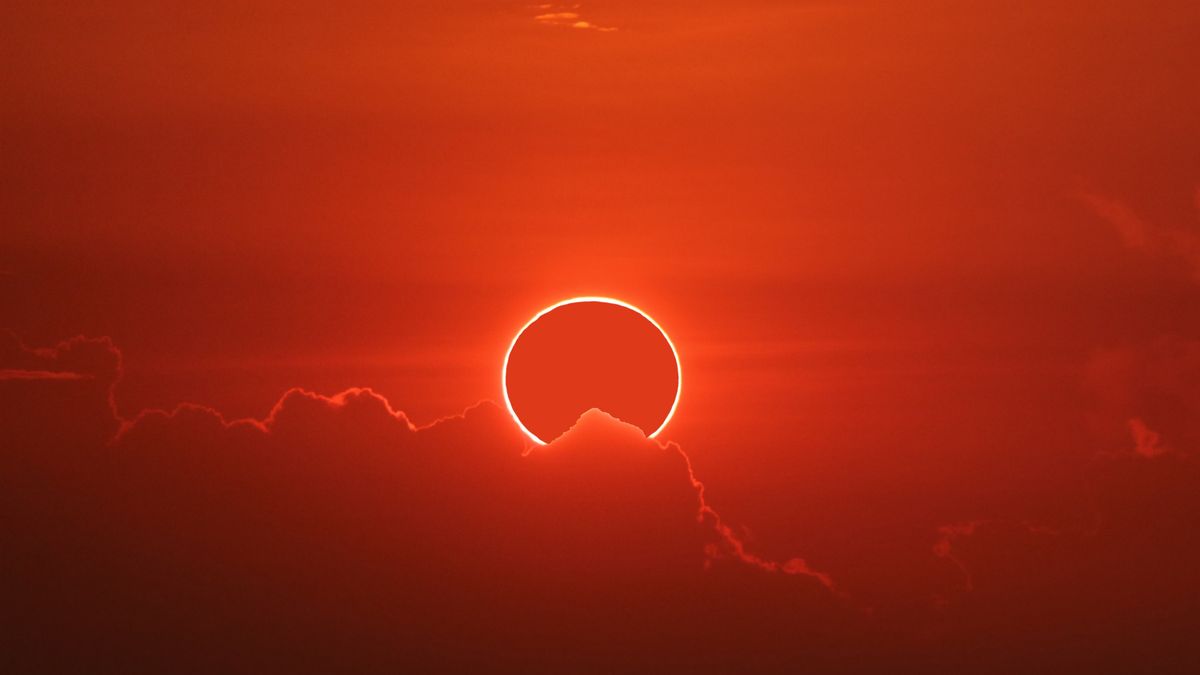
An annular solar eclipse, also known as a "ring of fire" solar eclipse, will be visible from eight U.S. states on October 14, 2023. During an annular solar eclipse, the moon appears slightly smaller than the sun, so it can't block the entire disk, resulting in a beautiful "ring of fire." The path of annularity will stretch from Oregon through Texas and beyond, and the point of greatest eclipse will occur off the coast of Nicaragua and Costa Rica. The next annular solar eclipse will occur on October 2, 2024, visible from the Pacific Ocean, southern Chile, and southern Argentina.