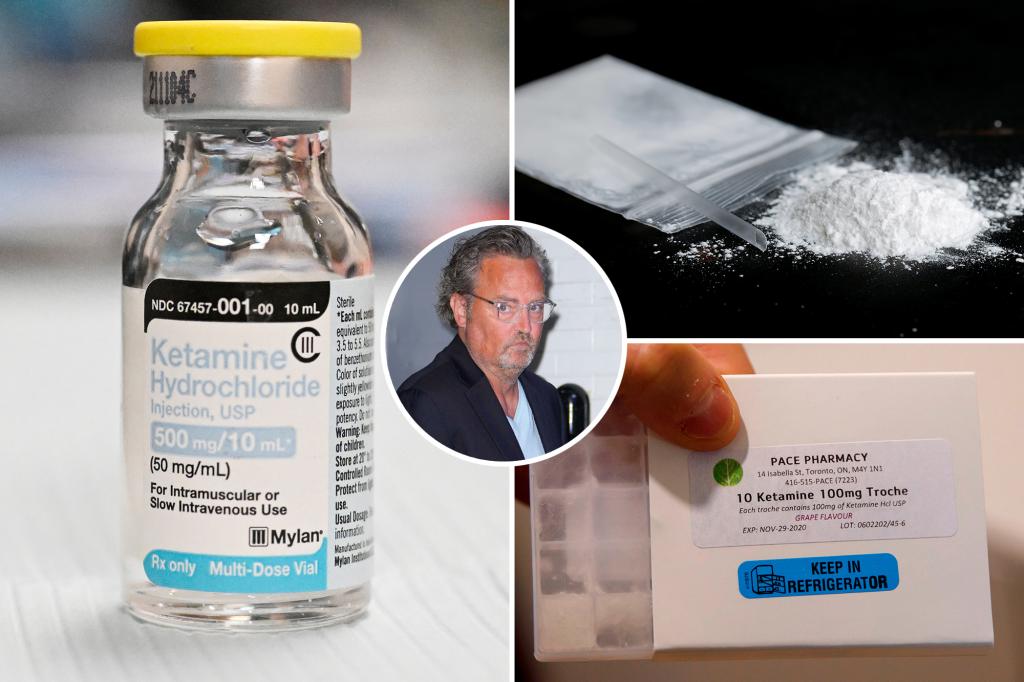
Doctors are debunking myths about ketamine following the revelation that Matthew Perry's cause of death was linked to the drug. Ketamine, primarily used as an anesthetic, has also been approved for the treatment of depression. Experts clarify that ketamine is generally safe when used as prescribed and is not powerfully addictive. They emphasize that ketamine should only be obtained and administered by licensed medical professionals, as self-administration can lead to addiction and the risk of receiving tainted products. Additionally, they warn against intranasal or micro-dosing for recreational use, as it can exceed safe limits and lead to aggressive drug-seeking behaviors. Gradual dose titrations and close monitoring are recommended for safe use.
Experts are debunking myths and misconceptions about ketamine following the death of actor Matthew Perry, whose cause of death was listed as "acute effects of ketamine." Ketamine has been used for over 10 years as a treatment for depression, PTSD, and pain, and was approved by the FDA for treatment-resistant depression in 2019. While ketamine can be addictive, experts describe it as a moderately addictive substance with a low risk of addiction, craving, or withdrawal when used in low doses in a clinical setting. Ketamine should only be obtained and administered by licensed medical professionals, as self-administration can lead to addiction and the risk of receiving tainted products. Intranasal or micro-dosing of ketamine can be dangerous, as it can exceed safe limits and lead to aggressive drug-seeking behaviors. Gradual dose titrations are recommended for starting and stopping the medication. Ketamine can become dangerous when used at home without close monitoring, mixed with other medications, or used in unsupervised settings. Guidelines for safe use of ketamine will be published soon.