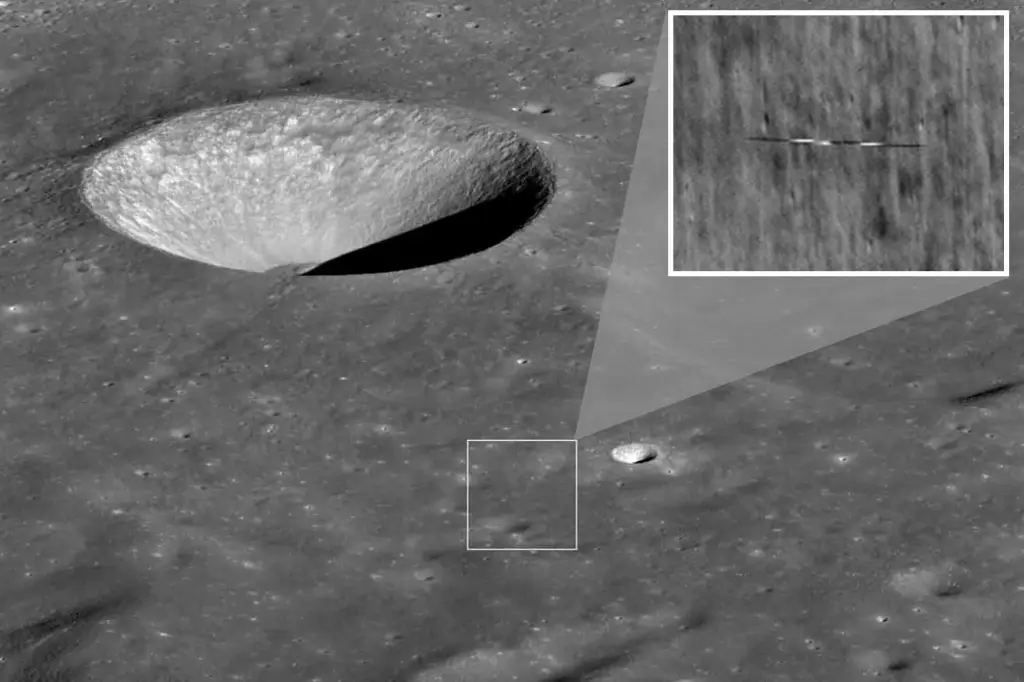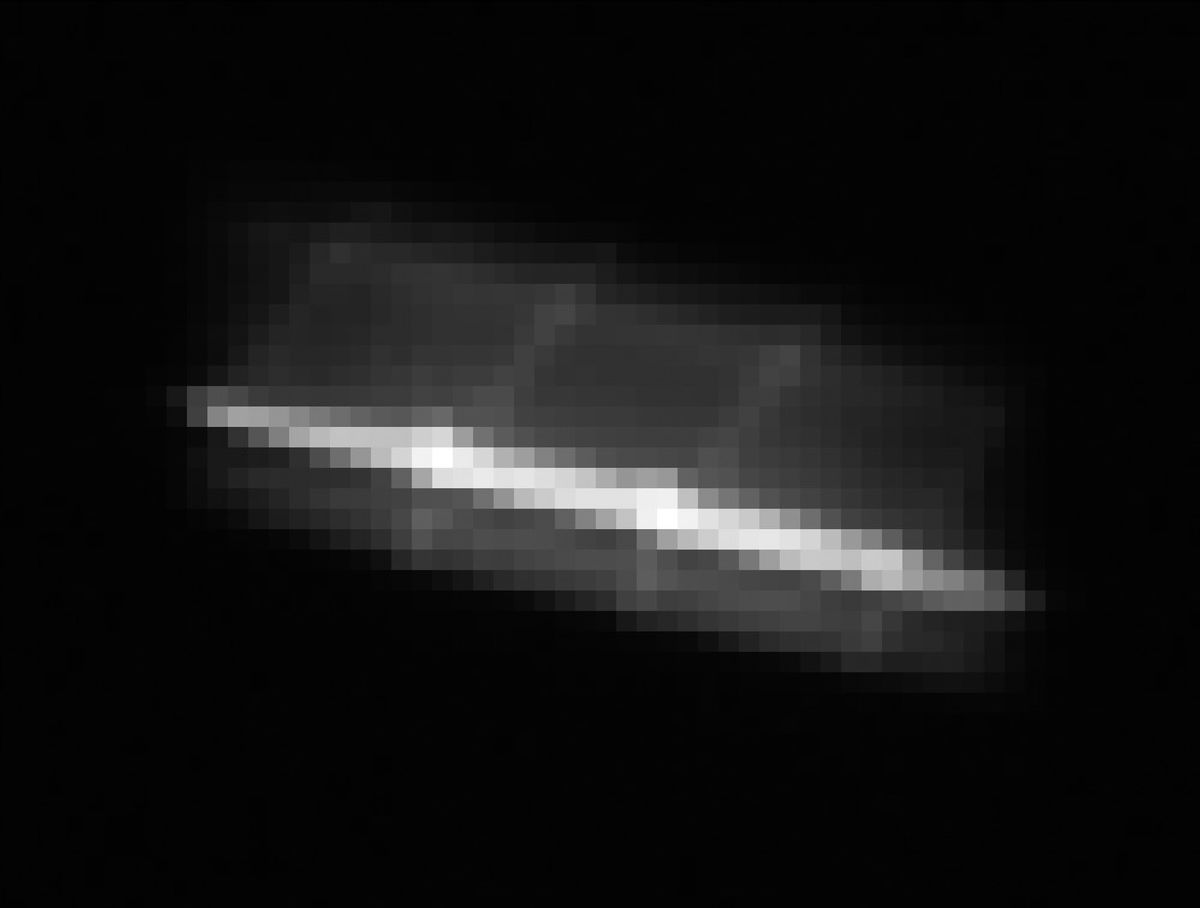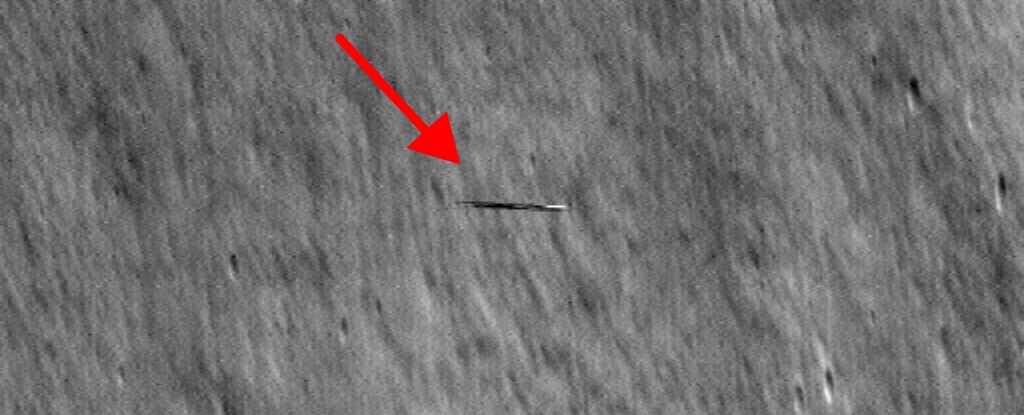
NASA's Lunar Reconnaissance Orbiter (LRO) recently captured images of South Korea's Danuri lunar orbiter speeding past the moon at a combined velocity of 11,500 km/h. The images were taken during three orbits, with the LRO positioned at varying distances and angles to capture the swiftly moving Danuri. This isn't the first time the two orbiters have imaged each other, showcasing the ongoing success of the LRO's mission to map the lunar surface in detail.
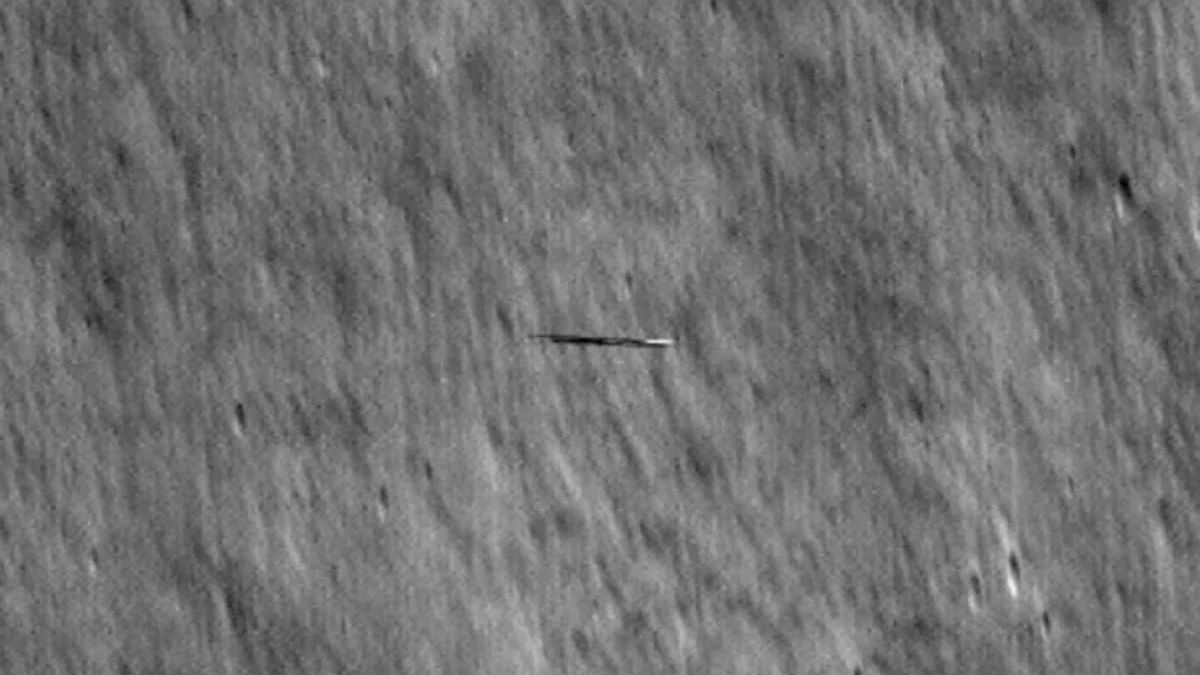
NASA's Lunar Reconnaissance Orbiter captured images of South Korea's lunar orbiter Danuri passing by the moon, creating a surfboard-like appearance due to the speed difference between the two spacecraft. The event, which occurred between March 5 and 6, marked the first time a Korean spacecraft entered lunar orbit. Despite the stretched appearance in the images, Danuri is actually a box-shaped spacecraft with solar panels. The encounter was captured due to the parallel orbits of the two spacecraft, and the images were shared by planetary science expert Paul Byrne.
NASA's Lunar Reconnaissance Orbiter captured images of a mysterious, surfboard-shaped object near the moon's surface, resembling the board of Marvel's Silver Surfer character, but it turned out to be South Korea's Danuri lunar orbiter. The distorted images were a result of the extremely fast relative velocities between the two spacecraft as they zipped past each other, with the LRO's camera's short exposure time. This marked the first time South Korea's spacecraft was captured near the moon, showcasing the "exquisite timing" required for the feat.
NASA's Lunar Reconnaissance Orbiter (LRO) captured images of Korea Aerospace Research Institute's Danuri lunar orbiter as the two spacecraft zipped past each other in opposite directions between March 5 and 6, 2024. The LRO's narrow angle camera managed to grab snapshots during three close orbits, despite the fast relative velocities between the two spacecraft. LRO, which has been studying the Moon for 15 years, has collected valuable data and is part of NASA's efforts to expand human presence in space and bring back new knowledge and opportunities.
South Korea's first lunar mission, known as Danuri, has provided surprising insights into the Moon's far side. The mission has revealed the chemical composition of lunar minerals through a gamma-ray spectrometer and captured images of craters near the Moon's poles using a NASA camera. However, the magnetic fields on the Moon's far side have baffled scientists, as they appear to be more electrically conductive than the near side. Despite one camera malfunctioning, the mission has exceeded expectations and could continue operating for months or even years longer than anticipated.
South Korea's Danuri lunar orbiter, equipped with NASA-funded ShadowCam, captured a sunlit image of NASA's Lunar Reconnaissance Orbiter (LRO) from a distance of just 11.2 miles (18 kilometers) as the probes zipped by each other in their respective orbits. The high-speed encounter required coordination and timing, and the resulting image shows LRO's solar array, radiator, and high-gain antenna. ShadowCam is being used to learn about shadowed areas at the lunar south pole ahead of NASA's Artemis 3 mission, mapping out permanently shadowed areas.