The arrival of new bitcoin ETFs has led to a 4.5% increase in total spot trading volume on centralized crypto exchanges, with Bitstamp experiencing a surge in trading volume and new users. While not listing any of the bitcoin ETFs, Bitstamp serves as a liquidity provider for the products, contributing to the increased buying and selling of crypto. Additionally, comedian Larry David expressed regret for starring in a crypto ad for now bankrupt FTX, and there is growing favoritism towards Ethereum over Bitcoin as investors anticipate potential approval of ether ETFs in the coming months.
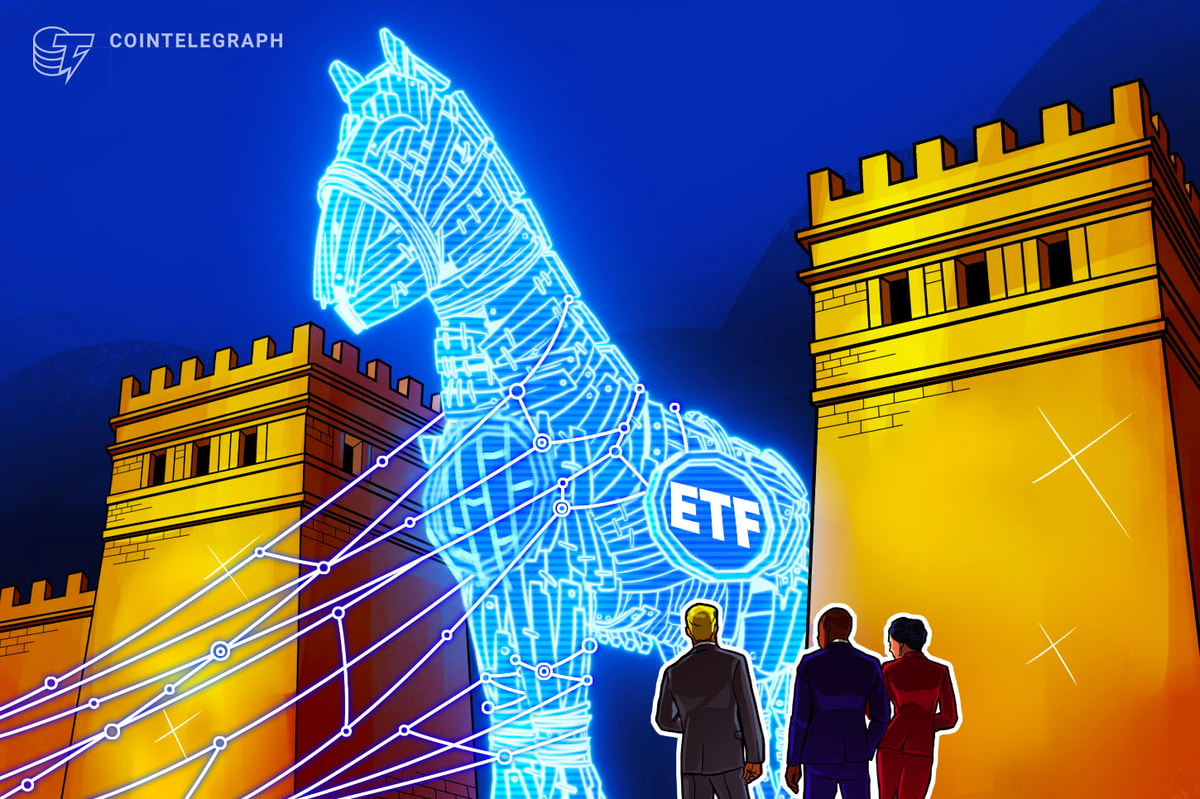
Analysts warn that the approval of a spot Bitcoin ETF in the United States could have negative consequences for centralized cryptocurrency exchanges like Coinbase. The lower transaction fees offered by a spot Bitcoin ETF would attract retail buyers and sellers, potentially leaving crypto exchanges with outdated retail trade execution and commissions. The ETF would also create more price competition in the industry, diverting money back to investors from exchanges that rely heavily on transaction fees for revenue. Coinbase, for example, earned $2.4 billion in transaction fees in 2022, accounting for 77% of its total net revenue.
The number of crypto wallet addresses holding more than $1 million worth of Bitcoin (BTC) has tripled in 2023, reaching over 81,000 addresses. However, these millionaire wallets are not necessarily owned by individual users, as many belong to crypto exchanges and financial institutions. Additionally, the number of "wholecoiners" (wallets with a balance of at least 1 BTC) has slightly increased since the beginning of the year. Bitcoin's price has been boosted by market enthusiasm for pending spot exchange-traded fund (ETF) products, with analysts predicting a 90% chance of approval by January 10. Despite the bullish sentiment, some analysts remain skeptical about a spot Bitcoin ETF approval leading to a significant trend reversal.
Prior to a U.S. court ruling in favor of Grayscale's request to convert its bitcoin trust into an exchange-traded fund (ETF), nearly 30,000 BTC, worth $822 million, were moved to addresses tied to centralized exchanges. This influx of bitcoin to exchanges may have been a result of traders anticipating a price boost following the ruling. The ruling led to a 6% surge in bitcoin prices, pushing it to $28,000. While increased inflows to exchanges can indicate potential selling pressure, mean outflows also rose to two-month highs, suggesting that the net balance held on exchanges, particularly those offering spot trading, actually decreased.
The Monetary Authority of Singapore (MAS) has implemented new measures to protect retail investors in the country's crypto industry, including a ban on lending and staking for individual traders and requiring exchanges to move customers' digital assets into a trust. This comes after MAS granted Ripple approval to offer crypto services in Singapore, while the company faces a legal battle with the US Securities and Exchange Commission. In Asia, Hong Kong is welcoming crypto firms despite China's crackdown, and South Korea is developing its own strategy to regulate cryptocurrencies.
Major financial institutions, including BlackRock, Citadel Securities, Fidelity Investments, Charles Schwab, and Deutsche Bank, are making new bets on cryptocurrencies, adding competition and momentum to an upstart industry that is under increasing pressure from US regulators. These endorsements from institutions that have a track record on Wall Street are helping to push the value of cryptocurrencies higher, especially bitcoin, which rose to its highest price in a year on Friday, to $31,389. However, the industry is facing rising peril from regulatory crackdowns, including lawsuits filed by the Securities and Exchange Commission against Coinbase and Binance.
Cryptocurrency custodian BitGo has cancelled its acquisition of rival Prime Trust after "considerable effort and work to find a path forward with Prime Trust." Prime Trust has been losing clients and deposits to competitors for weeks amid mounting concerns over its business. BitGo was almost bought by Galaxy Digital until the $1.2bn deal was cancelled in August.
The Hong Kong Monetary Authority (HKMA) is reportedly pressuring HSBC, Standard Chartered and Bank of China to take on crypto exchanges as clients. The move comes as Hong Kong aims to become a global crypto hub, with its Securities and Futures Commission accepting applications for crypto trading platform licenses. The three banks were asked by HKMA why they were not accepting crypto exchanges as clients. While no ban on crypto clients exists in Hong Kong, banks appear to be reluctant to engage with the industry for fear of legal challenges in the event of a scam.
Bitcoin traders are cautious ahead of the US Federal Reserve's interest rate decision, with most expecting a "hawkish" pause. Puts tied to bitcoin are trading pricier than bullish calls, indicating a nervous mood in the market. Meanwhile, Binance.US can continue doing business after a federal judge declined to approve a temporary restraining order freezing the US trading platform's assets. Bitcoin supply on crypto exchanges has slipped to its lowest levels since February 2018, suggesting traders and investors prefer self-custody. The spread between the Federal Reserve's benchmark fed funds rate and inflation metrics has turned positive, denting the appeal of zero-yielding assets like gold and bitcoin.
Bitcoin supply on crypto exchanges has hit a three-year low, with a recent drop following the SEC's accusations against Binance and Coinbase. The trend of decreasing supply suggests traders and investors are opting for self-custody of their bitcoin.
The US Securities and Exchange Commission (SEC) has sued Coinbase, alleging that the crypto exchange operated its platform as an unregistered national securities exchange and broker. The regulator also claims that at least 13 crypto assets that Coinbase made available to customers qualify as "crypto asset securities." The SEC's crackdown on crypto exchanges may lead to platforms avoiding potential regulatory risks involved in operating in the US and shifting their focus to countries with clearer legal requirements. However, the ongoing regulatory dynamic in the US may not have a significant effect on demand for crypto, and people who want to buy crypto will continue to find ways to do so.
JPMorgan strategists predict that US-based crypto exchanges, including Coinbase and Binance.US, may eventually have to register with the SEC as brokers and most cryptocurrencies could be treated as securities. The SEC's recent lawsuits against Binance and Coinbase for allegedly violating US securities laws could result in exchanges delisting tokens and limiting their respective blockchains' potential development, which could benefit Ethereum. JPMorgan also called for US lawmakers to develop a clear regulatory framework for the crypto industry this year to offer more transparency and investor protection.
Hong Kong legislator Johnny Ng has invited Coinbase and other global virtual asset trading operators to establish official operations in the city state amid hostility from US regulators. This comes after lawsuits brought by the US Securities and Exchange Commission (SEC) against two major cryptocurrency platforms Binance and Coinbase last week. Hong Kong's Securities and Futures Commission (SFC) has just begun accepting applications for licenses from crypto trading platforms, with several firms expressing intention to apply. Observers anticipate that the crypto exchange crackdown in the US will drive a shift in trading volume and innovation towards jurisdictions with more favorable regulations, with Hong Kong positioning itself as crypto-friendly of late.
Hong Kong legislator Johnny Ng has invited Coinbase and other global virtual asset trading operators to establish operations in the region, citing the government's dedication to establishing a strong ecosystem for crypto and fintech. This comes after the recent SEC lawsuits against significant industry players like Binance and Coinbase. Hong Kong has embraced a proactive approach towards cryptocurrencies, with the HKMA recently revealing its intention to establish the groundwork for the introduction of a retail central bank digital currency.
Polygon responded to SEC's litigations by emphasizing its global focus and confidence in future development. The crypto community welcomed Polygon's response, potentially improving sentiment surrounding MATIC, which has witnessed a significant decline in recent days. Social mentions and engagements related to MATIC have been increasing, indicating a potential rebound in network usage. However, there has been a material decline in Polygon's number of active addresses and transactions over the past few weeks.