Registered dietitian Natalie Rizzo identifies cow's milk and soy milk as the healthiest milk options available, citing their high protein content and essential vitamins and minerals. Cow's milk is particularly noted for its calcium and vitamin D, while soy milk is recommended for those who are lactose intolerant. Other milks like pea, almond, and hemp also offer health benefits, but oat milk is criticized for its higher calorie content and lower nutritional value.

The American Academy of Pediatrics (AAP) has published a report stating that "toddler milk" has no nutritional benefits for children between 6 months and 36 months of age. The report finds that toddler milk is not necessary for this age group and can be misleading to parents. Despite growing concerns from pediatricians, the toddler formula industry is booming, with sales increasing from $39 million in 2006 to $92 million in 2015. Toddler milk products are not regulated by the FDA and often contain high sugar content. The AAP recommends infants under 12 months continue to drink infant formula or breast milk, while toddlers should have a well-balanced diet of fruits, vegetables, and cow's milk for vitamin D and calcium.
A study analyzed over 200 plant-based milk alternatives and found that while 72% were fortified with calcium and vitamin D comparable to cow's milk, the majority had significantly lower protein content. Cow's milk contains about 8 grams of protein per cup, while the median protein content for plant-based milks was only 2 grams per cup. Only 12% of plant-based milks contained comparable or greater amounts of all three nutrients. Consumers are advised to read labels and consider adding other sources of calcium and vitamin D to their diets. Fortified soy milk was found to be the most similar to cow's milk in terms of nutritional profile.
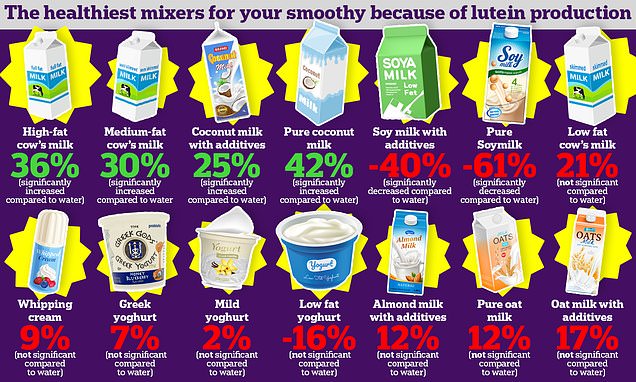
Scientists from Linköping University in Sweden have found that adding coconut milk or high-fat cow's milk to green smoothies can boost levels of lutein, an antioxidant that keeps our eyes healthy. Tests showed that oat, almond, and soy alternatives, which are popular among vegans, were no better than water. The researchers believe that the different fat, carbohydrate, protein, and fibre content of the mixers affected the amount of lutein available for the body to absorb. They plan to conduct a separate study in people to measure the amount of lutein absorbed from smoothies made with different mixers.