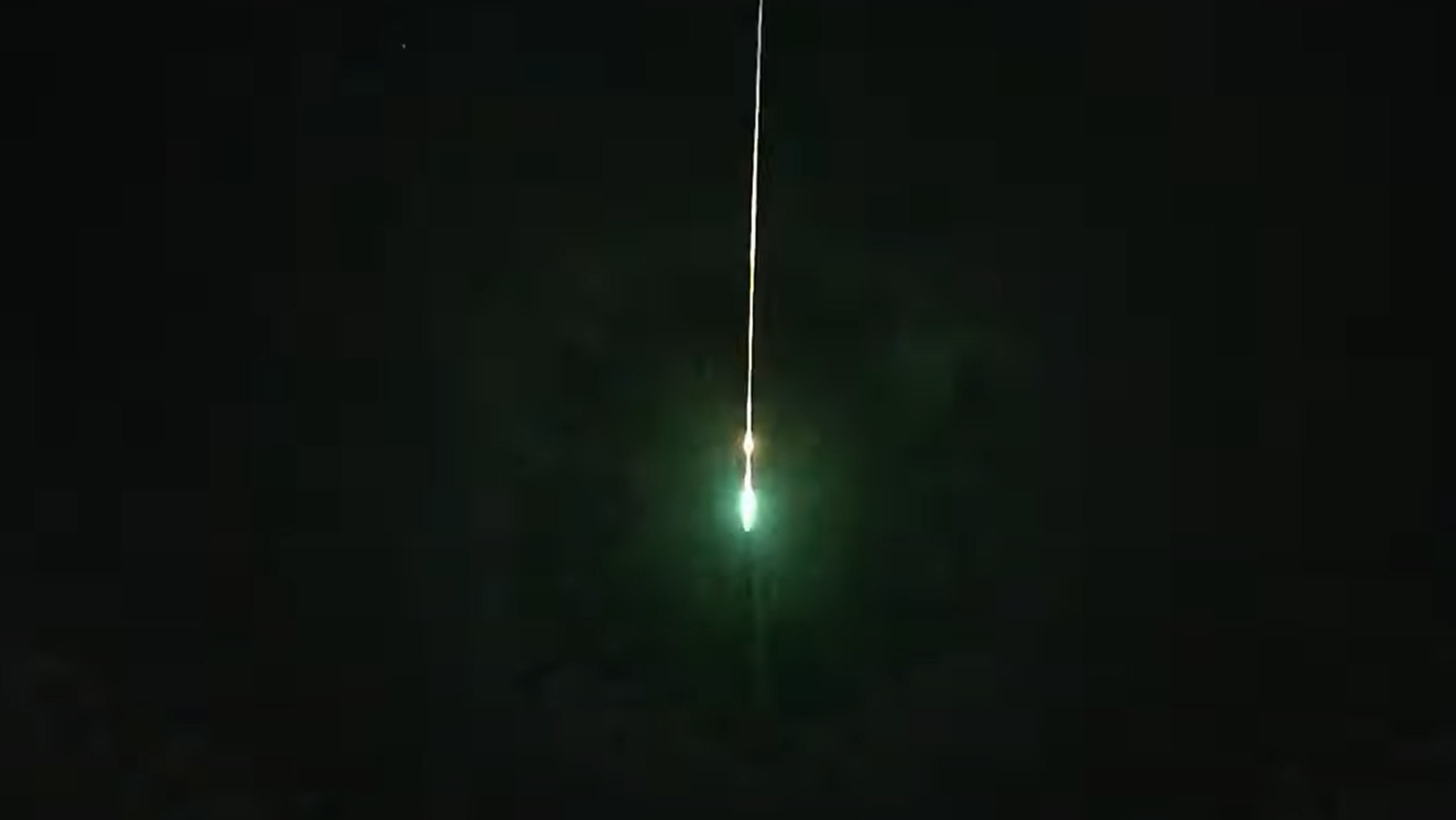
A green fireball was observed over northeastern US states on June 25, lasting two seconds and captured by various cameras, likely caused by a piece of cosmic debris entering Earth's atmosphere, unrelated to any active meteor showers.
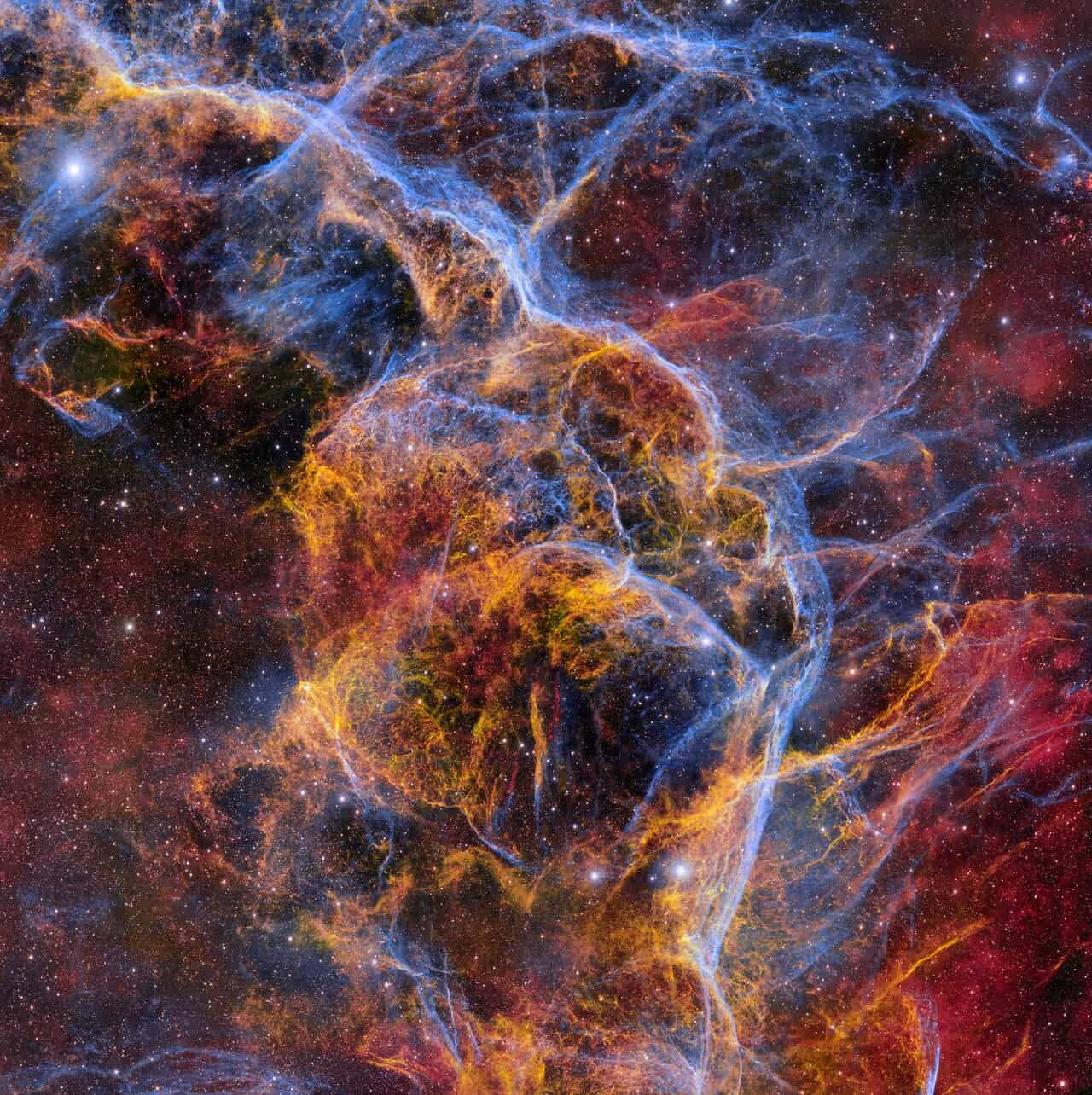
The Vela Supernova Remnant, located 800 light years away, is a colorful web of gas filaments left behind by a massive star that exploded 11,000 years ago, forming a dense neutron star remnant. The image, captured by the Dark Energy Camera, reveals the 100-light-year-wide trail of the explosion and the pulsar left behind. This sighting provides valuable insight into the life cycle of stars, the formation of neutron stars and pulsars, and the dynamics of supernova explosions, contributing to our understanding of the universe's evolution and composition.
The Maine Mineral and Gem Museum is offering a $25,000 reward for the first 1-kilogram meteorite recovered after a fireball was spotted over New Brunswick and Nova Scotia. The meteorite fall occurred at 11:56 a.m. and was followed by loud sonic booms near Calais, according to NASA, which confirmed this was the first radar-observed meteorite fall seen in Maine. The strewn field is expected to be about a mile wide and extend from just north of the town of Waite and over the border to Canoose, New Brunswick.