The Slow Formation of Earth's First Tectonic Plates: A Billion-Year Study
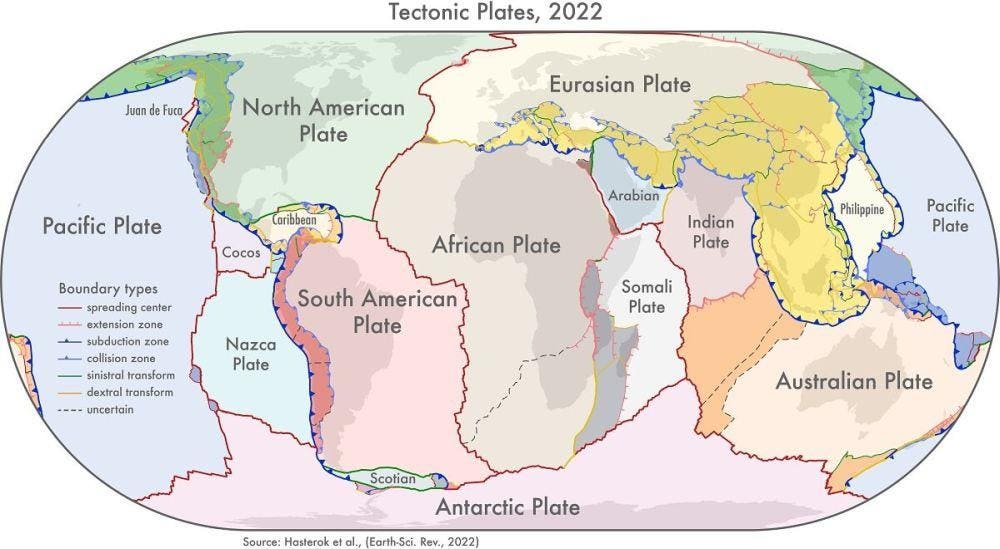
A new study from Pennsylvania State University challenges existing theories about the rapid formation of tectonic plates on Earth. By analyzing the chemical composition and ages of over 600,000 samples of the oldest known rocks, researchers developed a unique method to determine how igneous rocks were reworked and reformed over time. The study suggests that the formation of continents and tectonic plates started around 4 billion years ago and continued for one billion years, contradicting the idea of a sudden shift to tectonic activity 3 billion years ago. However, due to limited data covering the first billion years of Earth's history, further research is needed to fully understand crustal growth.