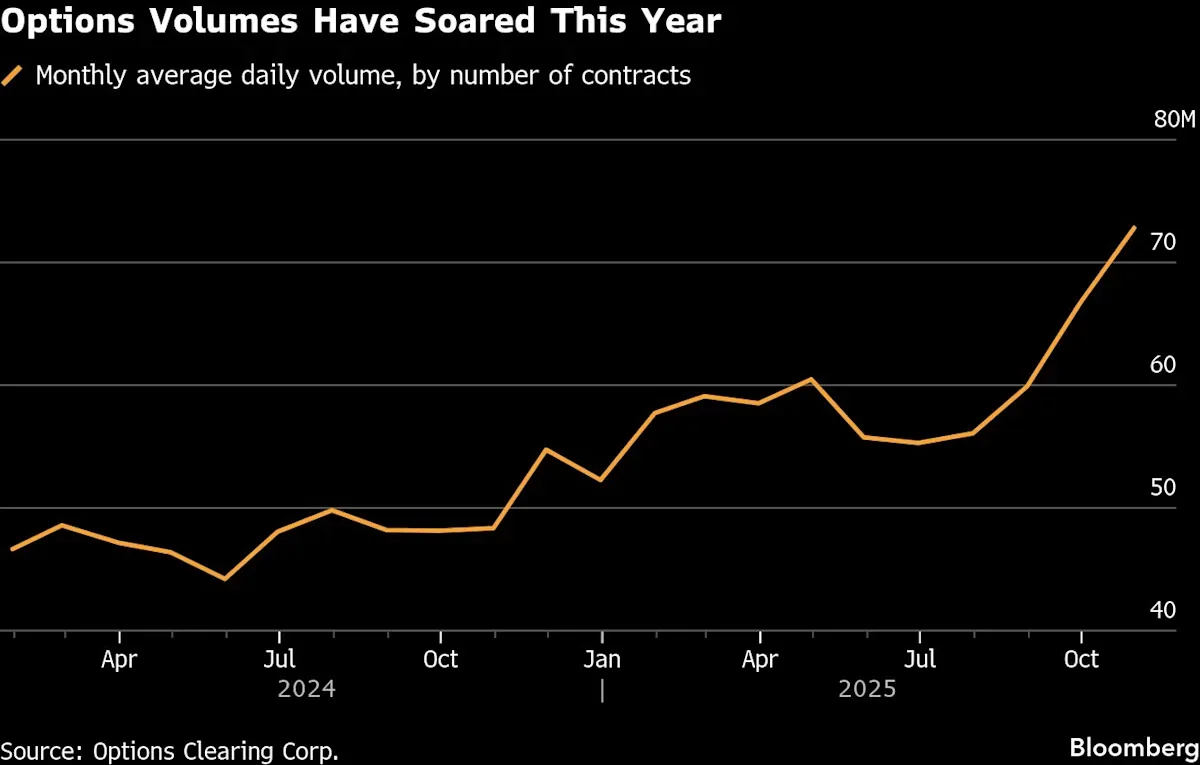
The US options market is experiencing record volumes, but concerns are rising over its reliance on a small group of banks to guarantee trades, which poses a concentration risk that could lead to significant losses if one of these banks fails, especially as market activity continues to grow rapidly.
The US options market is experiencing record volumes with a small group of banks, including Bank of America, Goldman Sachs, and ABN Amro, dominating clearing activities and contributing nearly half of the OCC's default fund, raising concerns about concentration risk and the need for increased competition and regulatory adjustments to mitigate potential systemic failures.
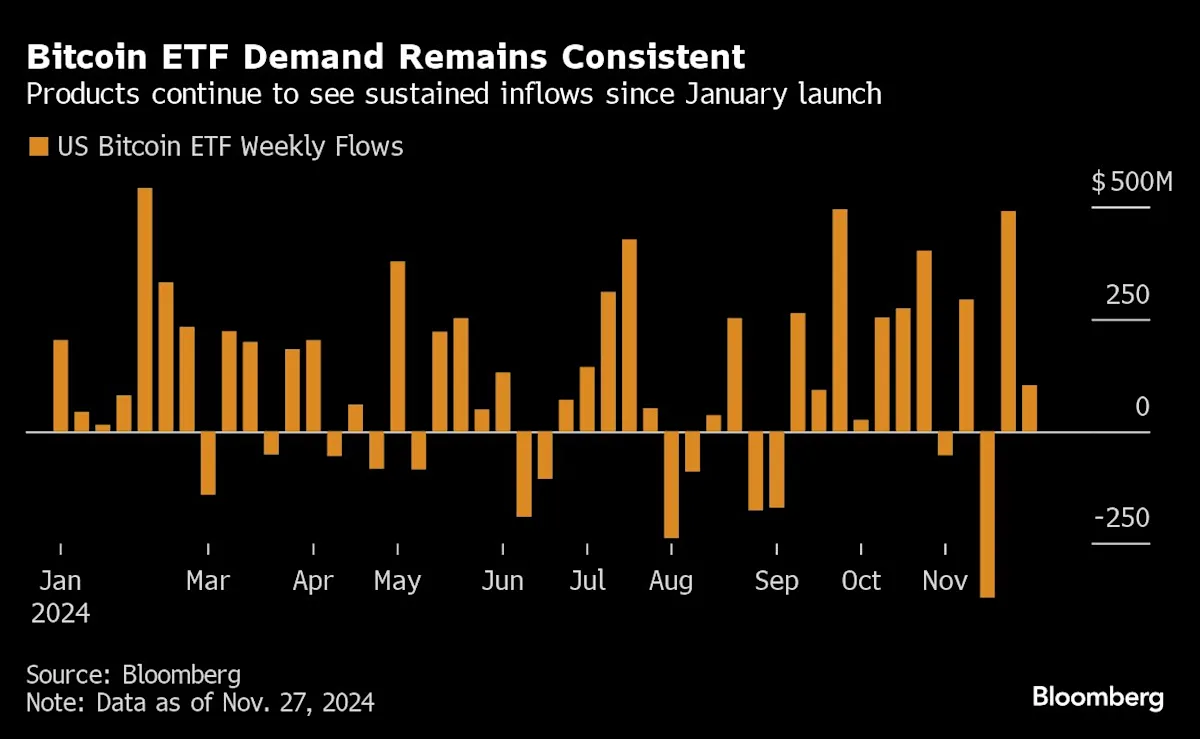
Bitcoin's increasing adoption by establishment institutions, including the potential for a US government stockpile, is raising concerns about concentration risk. With over 1 million Bitcoins held by US exchange-traded funds and significant holdings by companies like MicroStrategy, the cryptocurrency's landscape is shifting from its libertarian roots. Despite these changes, the demand continues to drive prices up, and the decentralized nature of Bitcoin's blockchain prevents any single entity from controlling its operations.
CNBC's ETF Edge provides educational and actionable advice on ETFs, with a focus on averting concentration risk in the midst of the AI revolution, helping investors build their best portfolios.
The equity market's ability to reach fresh highs without the support of mega technology stocks, known as the "Magnificent 7," is a major concern for investors. These seven stocks, including Apple, Alphabet, Amazon, Meta, Microsoft, Nvidia, and Tesla, have contributed 73% of the S&P 500 gains in the first half of 2023. Bank of America strategist Savita Subramanian highlights five key questions for investors to consider: the causes of market concentration, the differences between today's Big Tech and previous bubbles, important catalysts to watch for, the risks of saturation and changing competitive landscapes, and how to navigate these risks by looking beyond the Magnificent 7 and considering other equity opportunities.
Nasdaq is planning a special rebalancing of its Nasdaq 100 index to address the concentration risk posed by the dominance of a few large tech companies. The rebalancing, set to take effect on July 24, aims to redistribute the weights of individual stocks to reduce the aggregate weighting of the biggest stocks below 40%. The move comes as the Nasdaq 100 has surged 40% this year, largely driven by a handful of megacap tech names. While the impact on the broader stock market rally is expected to be minimal, the rebalancing could benefit investors by increasing dividends received from ETFs and mutual funds tracking the index. However, there may be short-term costs associated with the rebalancing as investors front-run the trade.