Poland supports the European Commission's migration plan while asserting an exemption, amidst ongoing political issues including the stripping of immunity from former Justice Minister Ziobro, who is involved in a probe related to Pegasus spyware, and recent espionage arrests linked to Russia and Belarus.
The White House dismissed all six members of the Commission of Fine Arts, which reviews federal construction projects, and plans to appoint new members aligned with Trump's policies to facilitate the approval of his $300 million ballroom and arch projects, bypassing traditional review processes.
California's Citizens Redistricting Commission, praised for its impartial work in creating fair electoral maps, faces a political challenge as voters are asked to approve a gerrymandered map that could diminish Republican representation, sparking debate among commissioners about fairness, political strategy, and the future of independent redistricting.
South Africa has announced the formation of a commission to investigate a police scandal, aiming to address issues within the police force and restore public trust.
A New York realtor is raising concerns about "misinformation" surrounding a significant settlement that could impact real estate practices and commissions. The National Association of Realtors (NAR) reached a settlement altering policies regarding broker commissions due to lawsuits alleging inflated fees and antitrust violations. The settlement, subject to court approval, will no longer allow listing databases to offer a commission to buyers' agents, potentially changing industry dynamics. Critics fear this could lead to increased misrepresentation and favoritism, while others see it as a step towards the "Amazonification" of the real estate industry.
Epic Games plans to launch its app marketplace for iPhone in the European Union, taking a 12% commission from sales and offering a 100% revenue share for developers during the first six months. Meanwhile, Apple faces opposition from Meta, Microsoft, X, and Match Group over its proposed anti-steering changes in the United States, with concerns raised about the commission fees on external purchases. In the EU, Apple announced a reduced commission structure, offering options for developers to pay 17% plus 3% or 10% plus 3% under the Small Business Program.
The National Association of Realtors has agreed to a seismic settlement, ending landmark antitrust lawsuits by paying $418 million in damages and eliminating rules on commissions, effectively dismantling the current homebuying and selling business model. This move is expected to reduce real estate commissions by 25% to 50%, opening up opportunities for alternative selling models. The settlement also aims to create a more competitive housing market by allowing realtors to compete on commissions and enabling buyers to shop around for lower-cost agents. The agreement, subject to a judge's approval, is set to bring sweeping reforms to the real estate industry, benefiting millions of Americans and addressing long-standing criticisms of the commission structure.
Epic Games is asking a federal court to penalize Apple for allegedly violating an injunction by imposing a 27% commission on purchases made outside the App Store's in-app payment system and other restrictions on developers. Apple claims it is complying with the injunction, allowing developers to include external links and buttons directing users to alternative purchasing methods, but Epic argues that Apple's new policies render these options useless and continue to charge unjustified fees, aiming to prevent purchasing alternatives from constraining its fees.
Epic Games has filed a new lawsuit against Apple, accusing the company of not complying with a court order to allow developers to bypass the App Store's 30% commission. Apple argues that it has complied with the order by allowing alternative payment options and communication with customers. The battle between the two companies continues, with Epic Games now fighting on behalf of the entire industry, raising concerns about potential repercussions.
Keller Williams has agreed to settle two lawsuits by paying $70 million and making changes to its business practices, following similar settlements by other real estate franchisors. The lawsuits alleged that the company and others conspired to inflate broker commission rates paid by homesellers. The settlement aims to cover KW from any current or future suits nationwide and includes changes to business practices. The plaintiffs' attorney praised Keller's leadership in deciding to settle and called for NAR and HomeServices to do the same.
Tim Sweeney, CEO of Epic Games, criticized Apple's compliance plan with the anti-steering mandate, claiming it introduces a new 27% tax on web purchases and kills price competition. Apple's plan requires a commission from web sales initiated within iOS apps, but exempts apps already selling over the web without paying Apple. Sweeney plans to contest this in court, arguing that Apple's solution doesn't comply with the injunction. While some believe Apple should allow apps to direct users to web purchases without commission, others argue that Apple's strict control over iOS is necessary to prevent adversarial software. The debate raises questions about Apple's motivations and its approach to regulatory and legislative pressure.
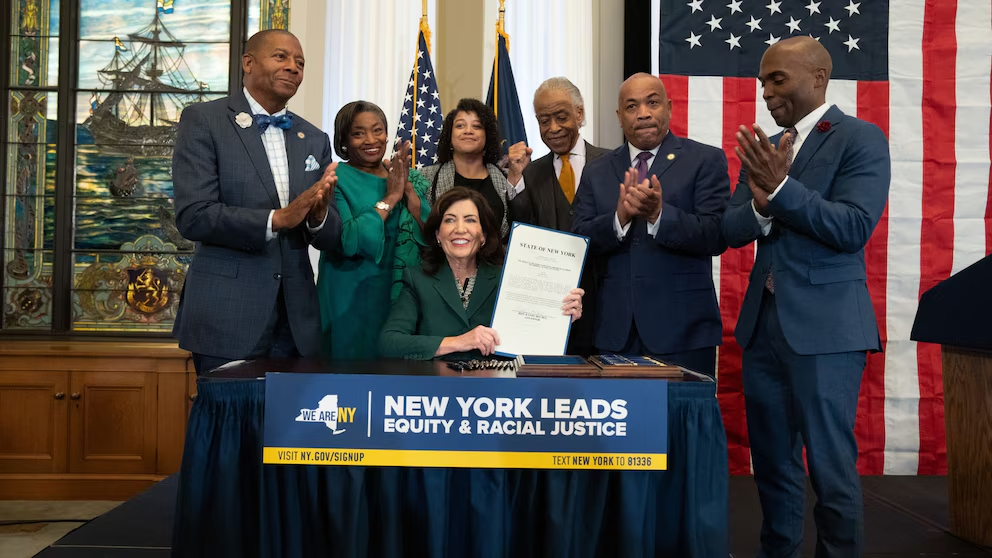
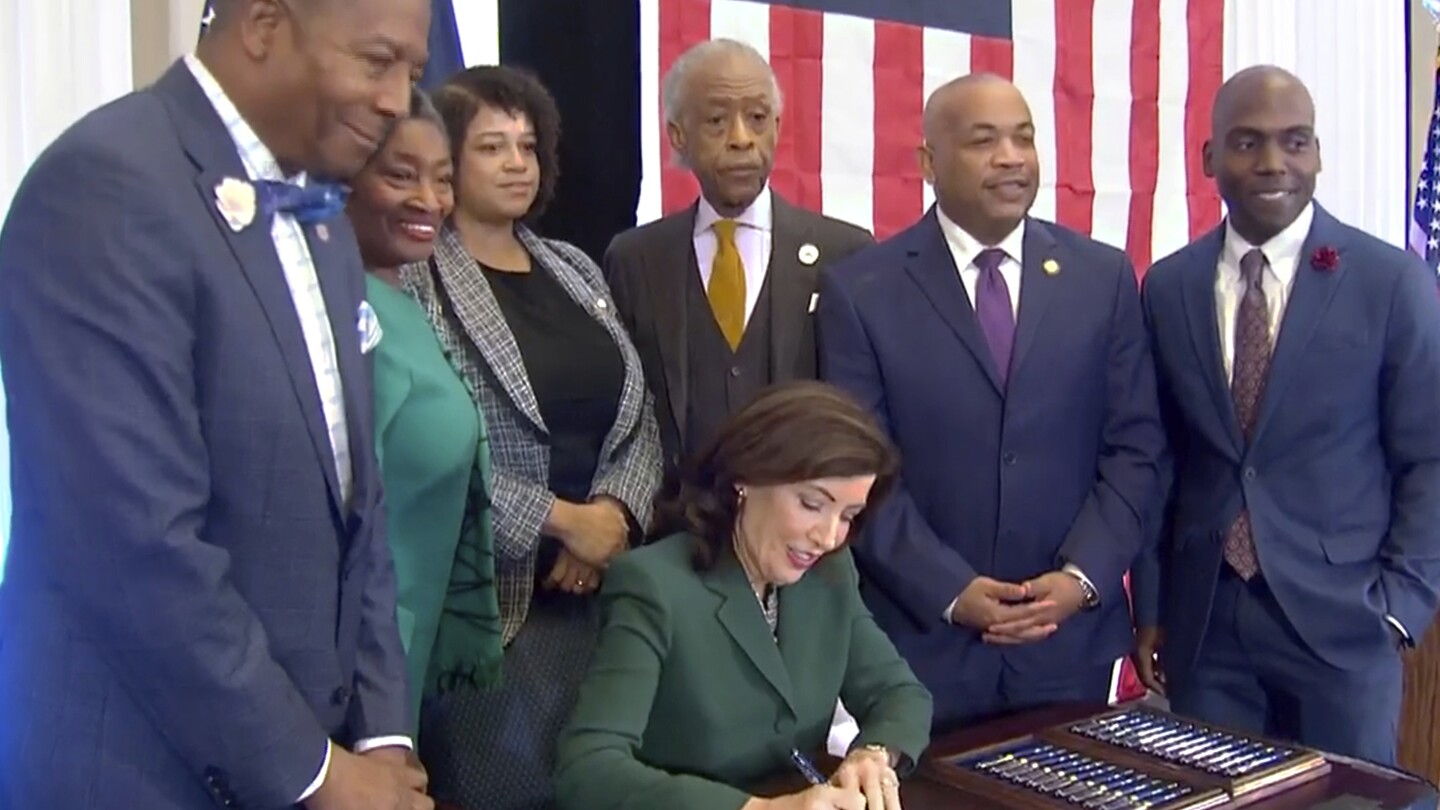
New York Governor Kathy Hochul has signed legislation to establish a commission that will study reparations and racial justice. The commission, composed of nine members appointed by state leaders, will examine the legacy of slavery, ongoing discrimination against people of African descent, and their present-day impact. It will analyze the history and lasting effects of slavery in New York, including the capture and transport of Africans, the sale and acquisition of slaves, and the treatment of slaves. The commission will also assess the negative consequences of slavery and discrimination on the descendants of slaves and submit a report with findings and recommendations to state leaders within a year. New York joins California and Illinois in creating such commissions, while several cities have implemented their own reparations initiatives.
New York state has signed a bill into law to establish a commission that will consider reparations for the lasting effects of slavery in the state. The nine-member commission will examine the institution of slavery and its ongoing impact on Black New Yorkers, with the goal of delivering a report and recommendations a year after its first meeting. While the recommendations could potentially include monetary compensation, they would be non-binding. Similar task forces have been established in California and Illinois, but New York's initiative is expected to face backlash and financial challenges. The move is seen as a step towards national reconciliation and repair.
The commission tasked with finding a new state flag and seal design has chosen its final recommendation for the new Minnesota flag. The design features a blue background to represent the state's numerous lakes, and the commission made modifications to address feedback on symmetry and the absence of green. The commission also voted for a modification to the state seal, increasing the number of yellow bars to represent Minnesota's counties and tribal nations. If approved by the Legislature, the new flag will fly on May 11, 2024.
Governor Kathy Hochul has signed a bill to create a commission in New York that will study potential reparations for Black New Yorkers. The nine-member commission will examine the effects of slavery and make non-binding recommendations on reparations, including compensation, statutory changes, and policy reforms. The commission aims to address the lingering negative effects of slavery and discrimination, with a focus on disparities in housing, policing, income, and incarceration. The commission will convene within the next six months and will have a year to draft a report, after which the legislature can act upon the recommendations.